
The global QR code market is projected to reach $15.23 billion in 2026, up from $13.04 billion in 2025 -- and enterprises are driving the majority of that growth. 57% of companies are actively increasing their QR code investment, not as a short-term marketing experiment but as permanent, mission-critical infrastructure. QR codes now serve as the connective tissue between physical operations and digital intelligence across manufacturing, logistics, retail, healthcare, and finance.
For enterprises, the question is no longer whether to use QR codes -- it is how to deploy them at scale, measure their impact rigorously, and future-proof operations for emerging compliance frameworks like the EU Digital Product Passport. This guide covers everything your organisation needs to know about enterprise QR code strategy in 2026, from bulk QR code generation and cross-department campaign coordination, to supply chain traceability, first-party data collection, and global campaign management.
QR codes have completed their transition from a pandemic-era convenience tool to permanent enterprise infrastructure. The technology now underpins product authentication, supply chain traceability, compliance reporting, customer engagement, and marketing analytics -- all from a single scannable code printed on packaging, a poster, or a product tag.
Several macro-forces are accelerating enterprise adoption:
Across all major industry verticals, enterprises that standardise on QR codes are consolidating separate tracking, authentication, and engagement systems into a single, scalable platform. The result is lower operational cost, richer customer data, and measurable campaign performance at scale.
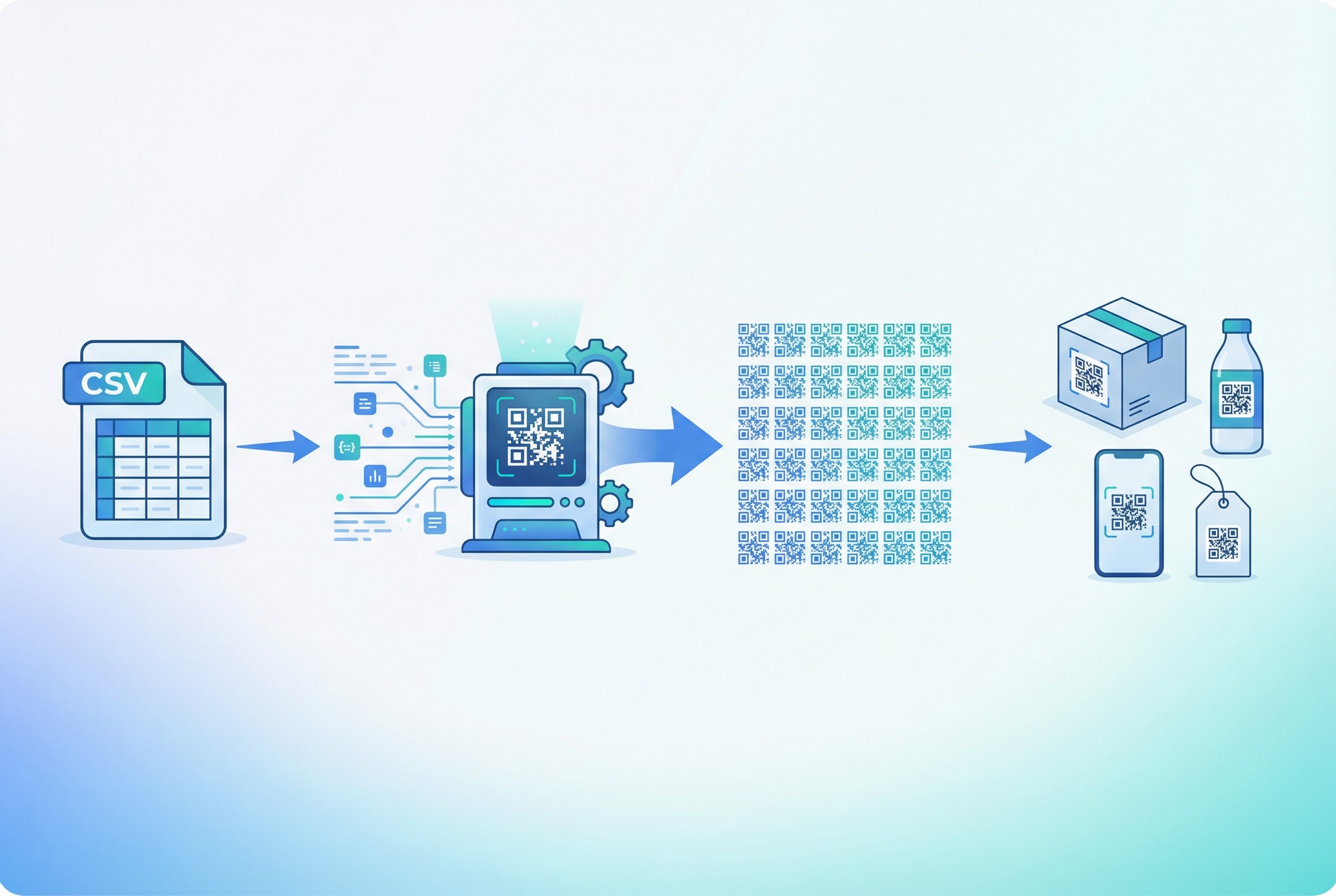
One of the highest-value enterprise applications is bulk QR code generation -- the ability to create thousands of unique, individually trackable codes in a single operation via CSV upload. Where individual QR code creation would be impractical at scale, bulk generation is essential.
The process is straightforward: prepare a CSV file with the destination URL or content for each code, upload it to the Supercode bulk generator, and download your codes as individual files or a ZIP archive. No special technical training is required -- any team member who can prepare a spreadsheet can generate thousands of unique codes in minutes.
Bulk-generated codes in Supercode are automatically organised into customisable campaign folders, making it easy for large teams to manage separate campaigns without confusion. For a full walkthrough, see our Bulk QR Code Generator guide.
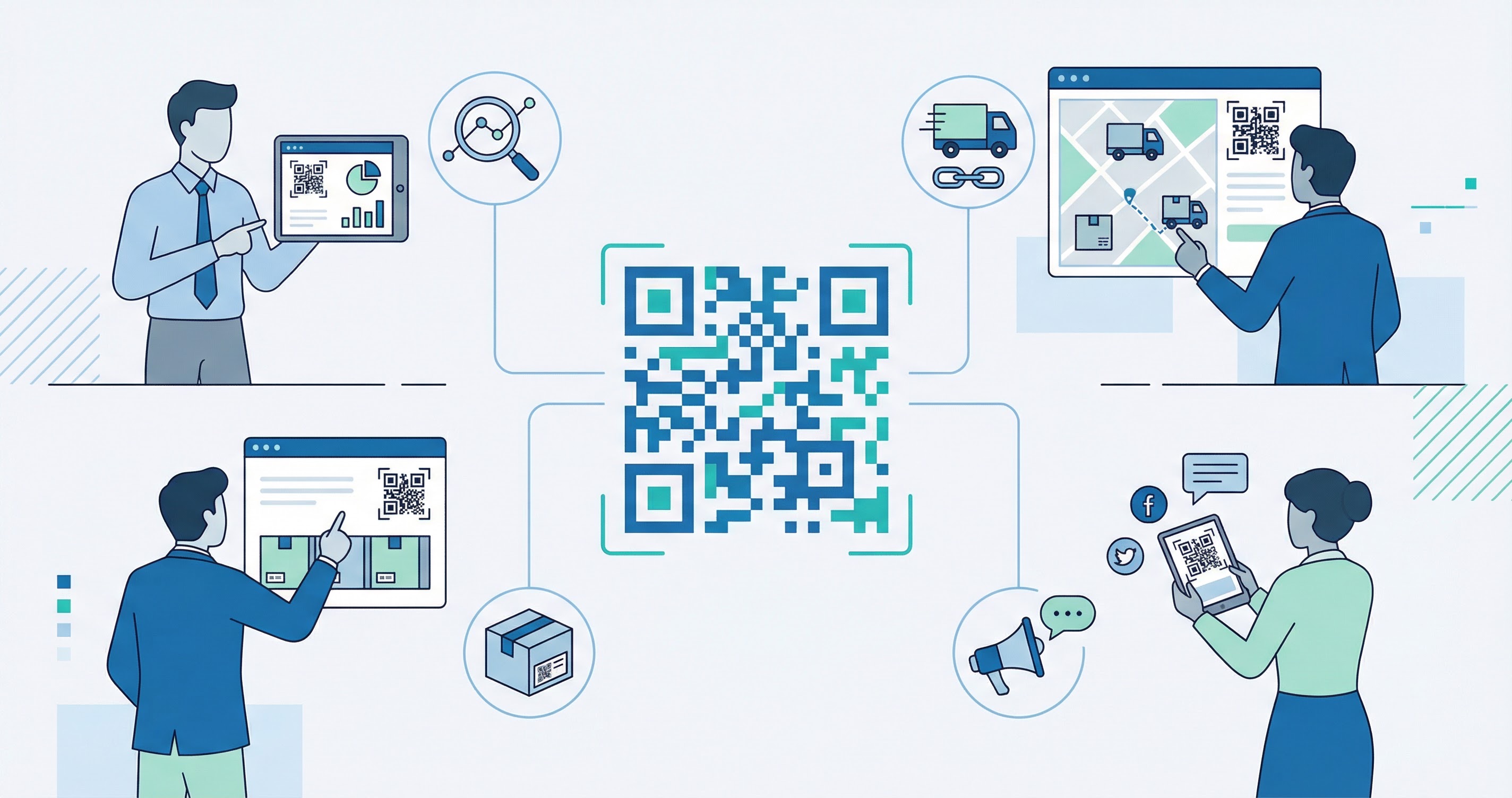
Enterprise QR code programmes deliver maximum value when they span multiple departments rather than living in a single marketing or operations silo. The same QR code placed on a product can simultaneously serve manufacturing (traceability), marketing (campaign tracking), sales (lead conversion), and customer service (self-service support).
From the moment a product is assembled, its QR code begins accumulating data. Placing a QR code on product packaging from production creates a persistent digital identity that follows the item through the supply chain. Warehouse teams scan codes to confirm inventory movements, logistics providers scan them at handoff points, and retailers scan them upon receipt. At each stage, a timestamp, location, and handler identity are recorded -- building a complete audit trail without manual data entry.
This is particularly valuable in luxury goods and fashion, where brand authenticity commands a premium and counterfeiting is a constant threat. A QR code on a handbag or a bottle of wine can verify provenance at the point of sale with a single scan.
For QR code marketing teams, the same codes placed on posters, in-store displays, or print brochures feed real-time campaign data into a shared analytics dashboard. Marketers can see which placements, cities, and demographics are driving the most engagement, while sales teams can track which scan interactions convert to purchases, sign-ups, or leads.
Using Social Media QR codes, marketing teams can grow brand followings from physical touchpoints, then hand off qualified leads to sales with full attribution data. The result is a measurable funnel from physical impression to digital conversion that traditional print advertising could never provide.
For industry-specific cross-department use cases, explore our guides for retail QR codes, restaurant QR codes, and healthcare QR codes.

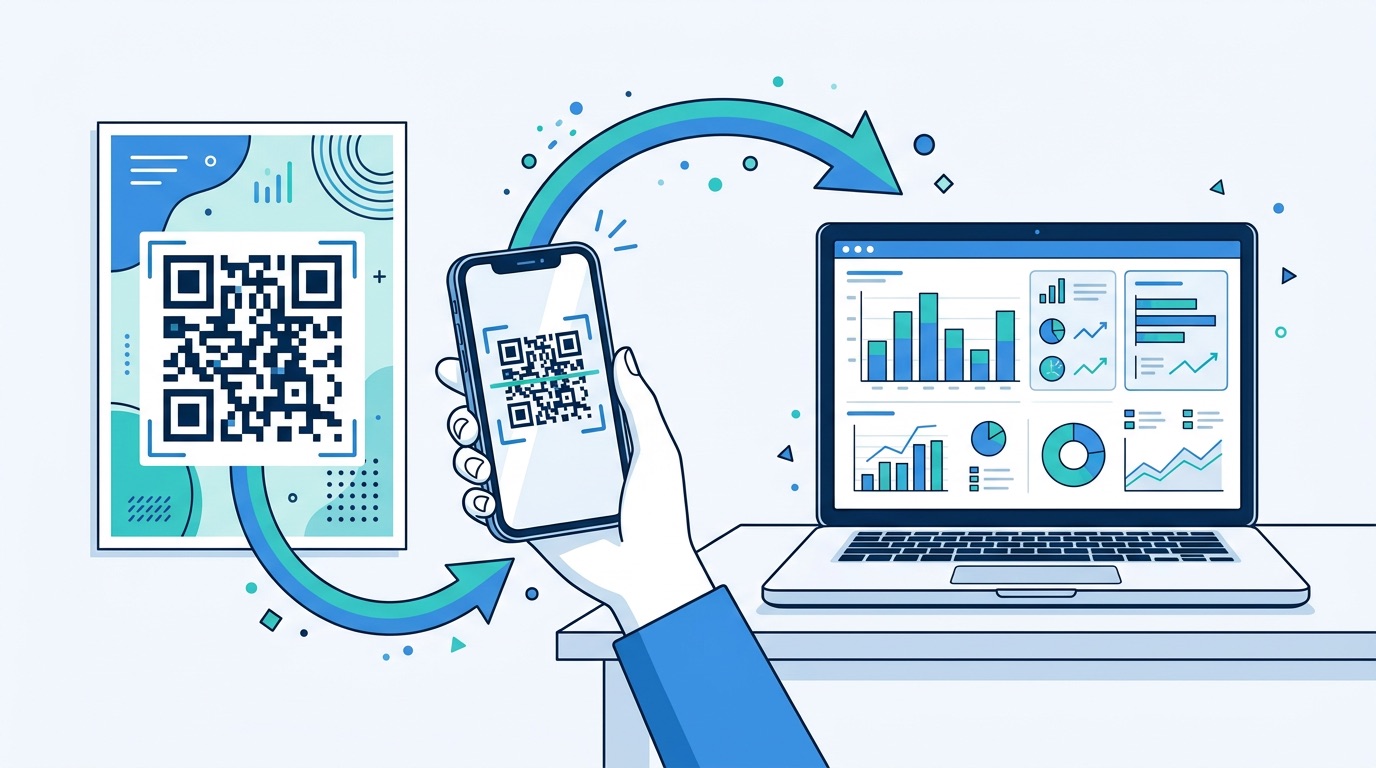
The analytics layer is what separates a professional enterprise QR code programme from a simple print-and-scan operation. With dynamic QR codes, every scan generates a data event that is captured and displayed in real time -- giving enterprise teams the campaign intelligence they need to optimise performance and justify spend.
80% of businesses have adopted dynamic QR codes specifically for their tracking and analytics capabilities. The data captured includes:
Supercode's analytics dashboard presents all of this data in a single interface accessible to all relevant teams, removing the need to aggregate data from multiple tools. For enterprises running campaigns across multiple cities or regions, the geographic scan data is especially valuable: a campaign placement generating zero scans in one location but strong engagement in another indicates a placement, creative, or demographic mismatch worth investigating and correcting.
See our QR Code Statistics 2026 report for benchmarks to compare your enterprise scan rates against industry averages. For the full analytics methodology, see our QR Code Tracking and Analytics guide.
One of the most compelling enterprise arguments for QR codes is their exceptional return on marketing investment (MROI). QR-initiated customer journeys achieve a 37% average click-through rate -- compared to 2-5% for traditional digital display advertising. This is because QR code scans are inherently high-intent actions: the user chose to scan, chose to engage, and is already holding their phone with full attention.
According to a Uniqode industry report, 62% of businesses expect QR-driven revenue growth in 2025, and 95% confirm that dynamic QR codes help them collect valuable first-party data -- a double win in an era of tightening data privacy regulation.
For enterprises comparing QR codes against other marketing channels, the MROI calculation is straightforward:
To understand pricing for enterprise QR code programmes — every feature on every plan, choose the scan volume that fits, visit Supercode Pricing or explore the full Supercode feature set. The Solutions overview covers how Supercode scales with enterprise needs from small campaigns to tens of thousands of codes.
With third-party cookies effectively deprecated across major browsers and data privacy regulations tightening globally, enterprises face a growing first-party data gap. QR codes are one of the most effective tools available to close it. Because every scan is a voluntary, consent-based action by the user, QR code data is first-party by nature -- the user chose to scan, and their subsequent behaviour on your landing page is trackable with full compliance.
The data advantage is significant: 95% of businesses confirm using QR engagements to collect first-party data, ranging from device and location signals at scan time to form submissions, product preferences, and purchase behaviour on the destination page.
Practical first-party data collection strategies using QR codes include:
For a full strategic guide on using QR codes to build your lead pipeline, see QR Codes for Lead Generation: The Complete 2026 Guide. For the customer experience side, see How QR Codes Improve Customer Experience.
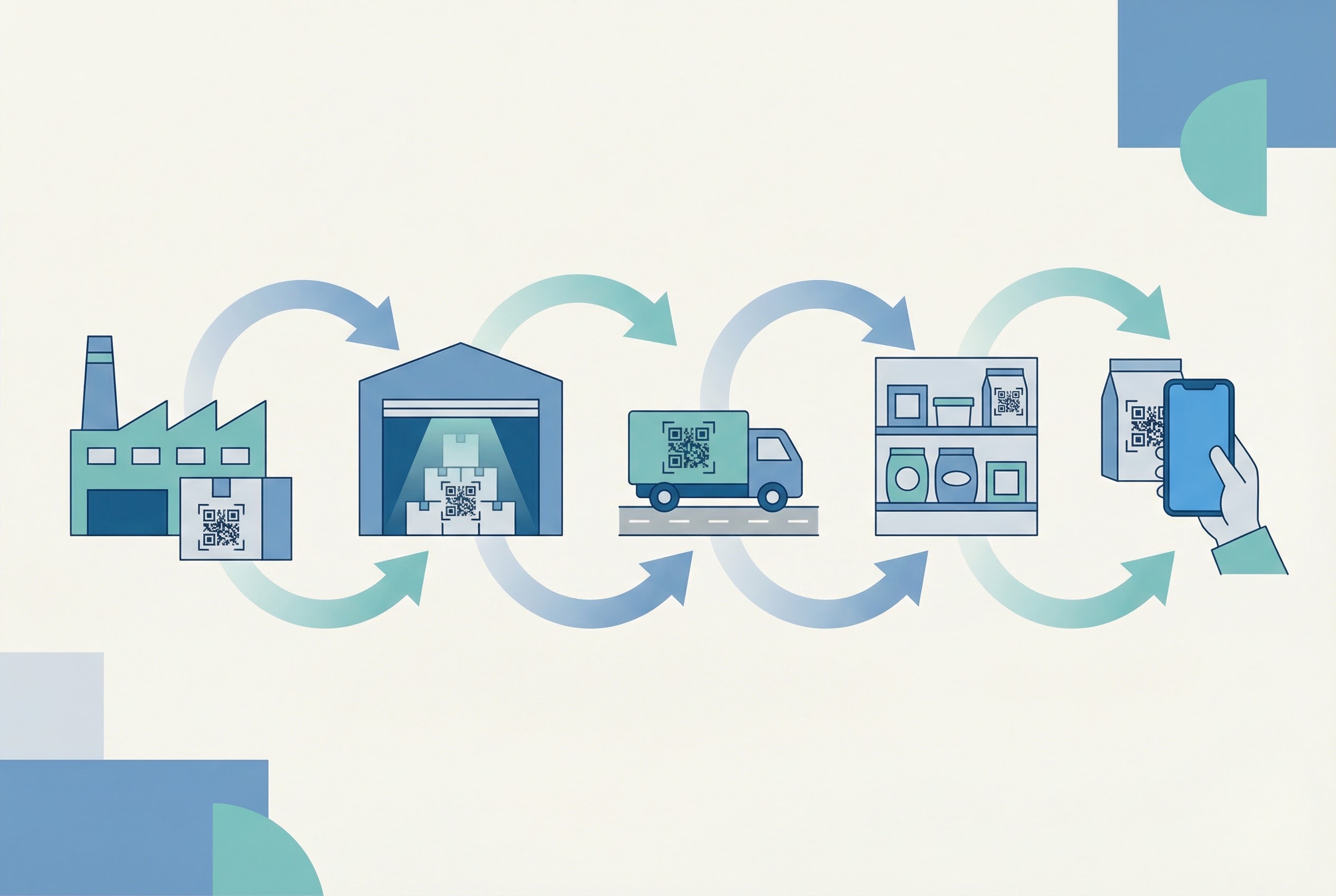
For product-led enterprises, QR codes on physical goods are becoming the standard mechanism for end-to-end supply chain traceability. A single URL QR code or PDF QR code placed on product packaging can carry the full product identity -- materials, manufacturer, certifications, batch number, and provenance -- accessible to anyone in the supply chain with a smartphone.
Key enterprise use cases for supply chain QR codes include:
Dynamic QR codes are particularly valuable here because the destination can be updated without changing the physical label. If a product's certification status changes, or a batch recall is issued, the QR code's destination URL can be updated instantly without reprinting a single label. For more on the sustainability angle of supply chain QR codes, see QR Codes for Sustainable Marketing and Why Conscious Consumers Are Embracing QR Codes.

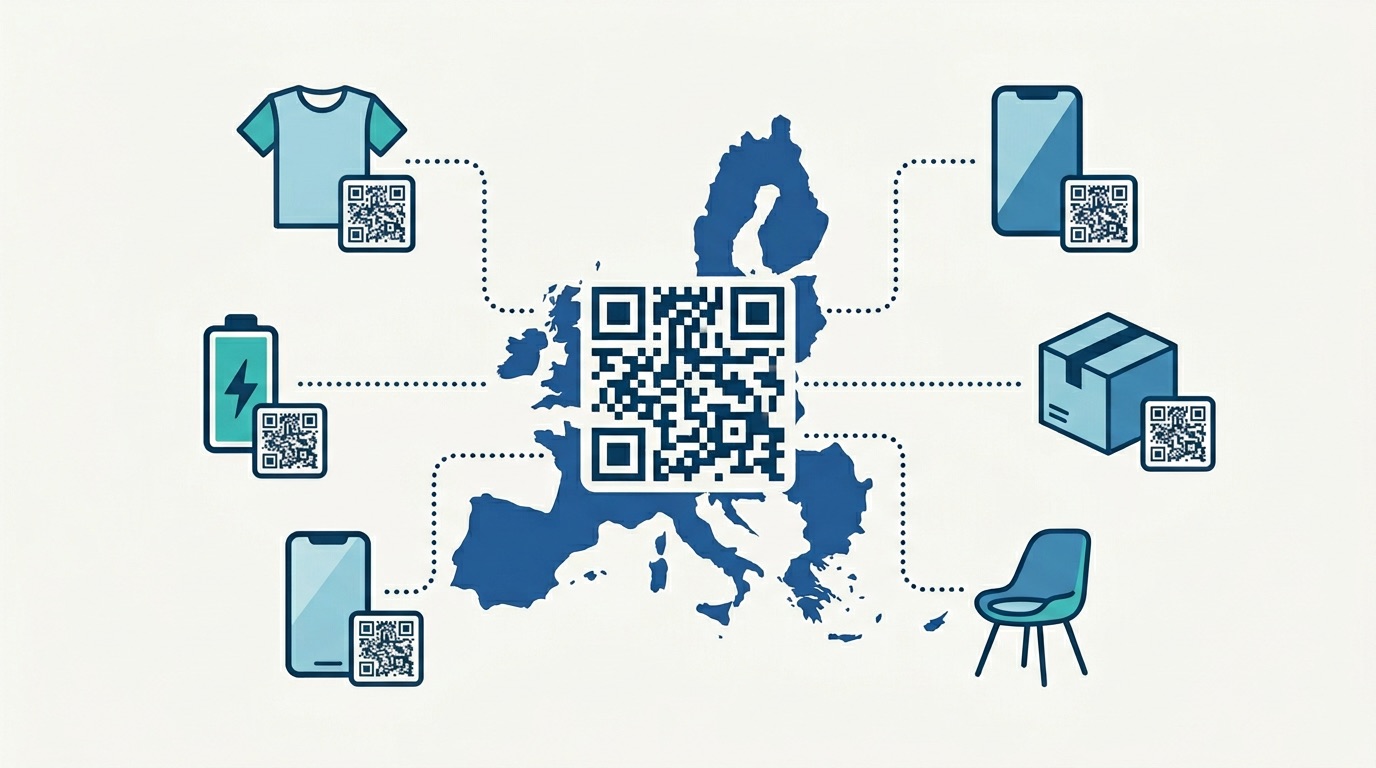
The EU's Digital Product Passport (DPP) represents the single most significant regulatory driver for enterprise QR code adoption in 2026. The DPP is a mandatory digital record -- linked to a physical product via QR code, NFC, or RFID -- that consolidates product lifecycle data including materials composition, carbon footprint, repairability, recycling instructions, and origin.
The implementation timeline is as follows:
According to ITICP's 2025-2026 DPP briefing, non-compliance can result in product blocking, significant fines, and market access restrictions. Passports must remain accessible for 5-10 years after point of sale, requiring enterprises to maintain reliable, long-lived QR code infrastructure -- not disposable campaign codes.
For enterprises in affected sectors, the DPP mandate is a forcing function to implement robust dynamic QR code infrastructure now. Dynamic codes allow the destination data to be updated as product information changes or standards evolve, without requiring label reprinting. Supercode's enterprise features -- including dynamic code management, folder organisation, and bulk generation -- are specifically designed for this kind of long-lived, data-rich deployment.
For the broader consumer sustainability angle, see our guides on QR Codes for Sustainable Marketing and QR Codes and Conscious Consumers. For fashion industry compliance specifically, the 2027 textile DPP deadline is a key planning horizon.
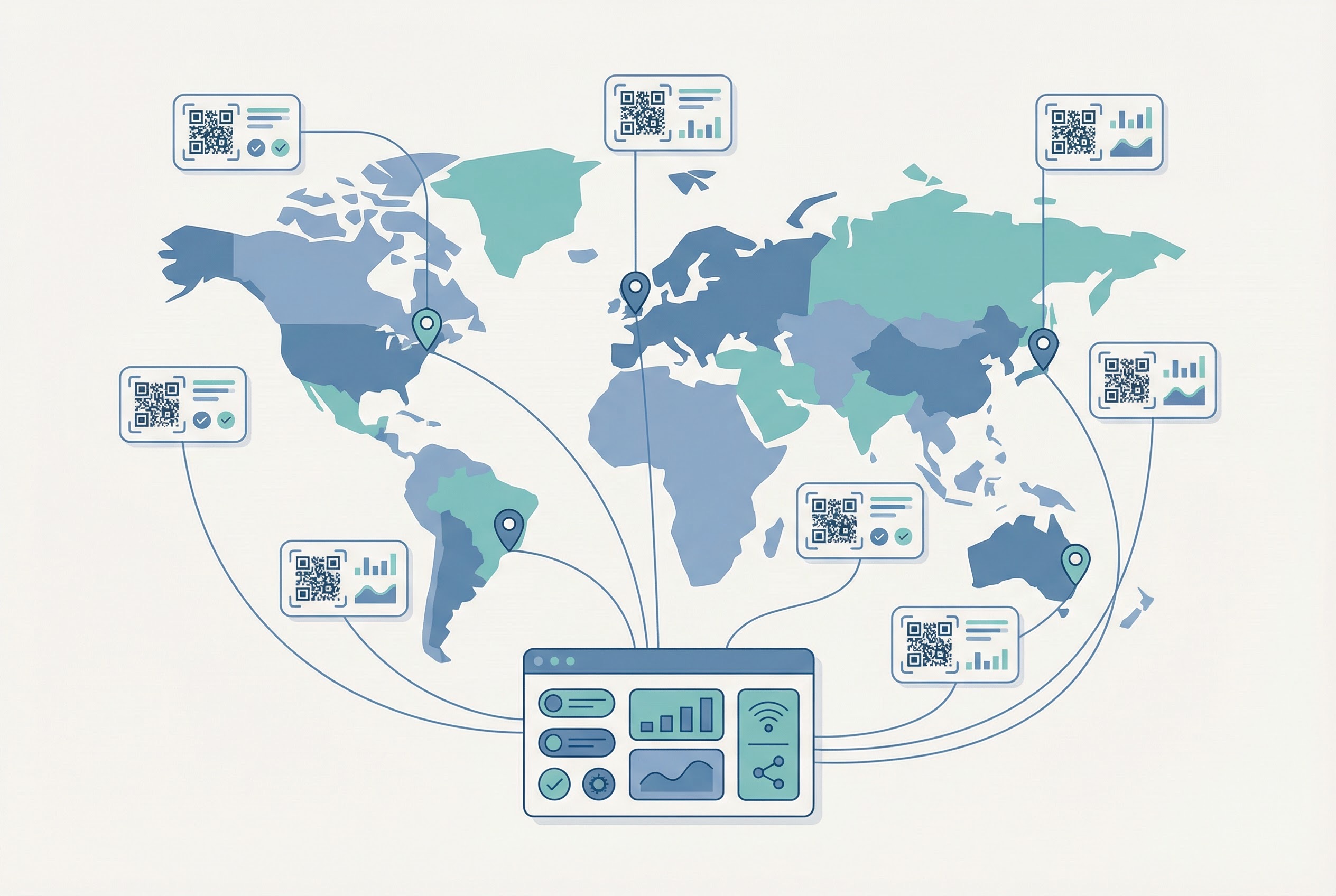
Enterprises running campaigns across multiple cities, countries, or retail locations face a management challenge that a single static QR code cannot solve. Dynamic QR codes, combined with a structured folder-based organisation system, give global marketing and operations teams the control and visibility they need to run coordinated campaigns at scale.
Assigning a unique QR code to each placement -- one per city, one per store, one per billboard -- allows teams to A/B test creative, calls-to-action, and landing pages across locations. If the London placement dramatically outperforms the Paris placement, the analytics immediately reveal whether the difference is in scan volume (a placement quality issue) or conversion rate (a creative or localisation issue). This data-driven approach eliminates the guesswork from large-scale campaign optimisation.
This is especially powerful for outdoor and billboard advertising and poster campaigns, where traditional media planning relies on estimated footfall rather than measured engagement. See 10 Mistakes to Avoid When Creating QR Codes for guidance on common pitfalls in multi-location deployments.
Supercode's campaign folder structure lets enterprise teams organise codes by region, department, campaign, or product line. Instead of scrolling through thousands of individual codes, managers see a clean hierarchy of campaigns, each with its own aggregate analytics. Role-based access controls mean regional teams can manage their own codes without visibility into other teams' campaigns -- important for franchise and multi-partner deployments.
For enterprises placing QR codes across physical materials, the full materials use case catalogue covers best practices for codes on displays, print brochures, and street advertising.
Setting up an enterprise QR code programme on Supercode takes minutes for the first code and scales to thousands of codes without changing your workflow. Here is a practical starting point for enterprise teams:
Every Supercode plan includes all features — dynamic codes, bulk generation, analytics, custom domains, and team access. The Enterprise plan provides the highest scan volume for large-scale deployments, plus priority support — everything a large organisation needs to run a professional QR code programme. For QR code security considerations at enterprise scale, including quishing prevention and access controls, review our safety guide before deploying codes in sensitive contexts.
You can also see how other enterprise-scale businesses are deploying QR codes across multiple industries by exploring the full use case library, or browse the dedicated guides for Why QR Codes Are Effective for Business and How QR Codes Improve Customer Experience.
Enterprise QR codes are used across operations, marketing, and compliance. Common applications include bulk product serialisation and inventory tracking, cross-department marketing campaigns, supply chain traceability and anti-counterfeiting, first-party customer data collection, loyalty programme enrolment, trade show lead capture, and EU Digital Product Passport compliance. Dynamic QR codes are preferred for enterprise use because their destination can be updated without reprinting, and every scan generates analytics data.
Bulk enterprise QR codes are generated via CSV upload. Each row in the CSV contains the unique destination URL or content for one code. The generator processes the file and outputs a corresponding set of unique QR codes as individual image files or a downloadable ZIP archive. Supercode's bulk QR code generator supports large batch sizes on all plans, with the highest limits on the Enterprise plan, with each code individually trackable in the analytics dashboard.
The EU Digital Product Passport is a mandatory digital record linked to physical products, containing lifecycle data on materials, carbon footprint, repairability, and recycling. QR codes are the primary physical carrier for DPP data because they are inexpensive to print, universally readable on any smartphone, and capable of linking to a hosted data record that can be updated without reprinting the physical label. The EU's central DPP registry launches in July 2026, with batteries mandated first in February 2027, followed by textiles, footwear, and other categories through 2030.
Yes. Dynamic QR codes are strongly recommended for enterprise applications. Unlike static codes, dynamic codes allow the destination URL to be updated after printing, enable full scan analytics (device, location, time), and support campaign management features like A/B testing and folder organisation. For long-lived applications like supply chain labels or product passports, the ability to update destination data without reprinting is essential. Static codes are only appropriate for permanent, non-trackable use cases like a fixed plain-text payload.
QR codes are a first-party data channel by design -- every scan is a voluntary, consent-based action. At scan time, enterprises capture device type, geographic location, and time data. On the destination page, enterprises can layer additional data collection: form submissions, loyalty sign-ups, product preference surveys, or post-purchase feedback via feedback QR codes. This data is first-party and GDPR-compliant because users actively chose to engage. Dynamic QR codes also pass UTM parameters through to Google Analytics or your CRM for closed-loop campaign attribution.
Use a folder-based hierarchy that mirrors your organisational structure: top-level folders by region or business unit, sub-folders by campaign or product line, and individual codes named descriptively by placement. Supercode's campaign folders include aggregate analytics per folder, so managers can compare campaign performance at a glance without filtering thousands of individual codes. Apply role-based access controls to ensure regional teams only see and manage their own campaigns. For setup guidance, follow the 10 Mistakes to Avoid guide before deploying at scale.
Ready to launch your enterprise QR code programme? Sign up free on Supercode -- generate your first dynamic QR code in minutes, then scale to bulk campaigns, supply chain traceability, and global analytics from a single platform. Explore QR Code Business Cards as an easy entry point for individual professionals, or jump straight to enterprise solutions for a full platform overview.