QR code marketing has transformed from a niche tech curiosity into the dominant bridge between physical and digital marketing. In 2025, over 90% of marketers reported using QR codes in their campaigns — and 94% had increased their usage in the previous 12 months, according to Bitly's 2025 QR Code Survey. That is not a trend; it is a paradigm shift. This complete guide covers everything you need to build, execute, and measure a QR code marketing strategy that drives real results in 2026.
QR code marketing is the practice of embedding scannable Quick Response (QR) codes into marketing materials — from product packaging and event signage to email campaigns and social media — to instantly connect consumers with digital content, offers, or experiences.
Unlike a printed URL, a QR code removes friction entirely. A consumer points their smartphone camera at the code and is taken directly to a landing page, video, form, loyalty programme, or any digital destination the marketer chooses. No typing, no searching — just scan and go.
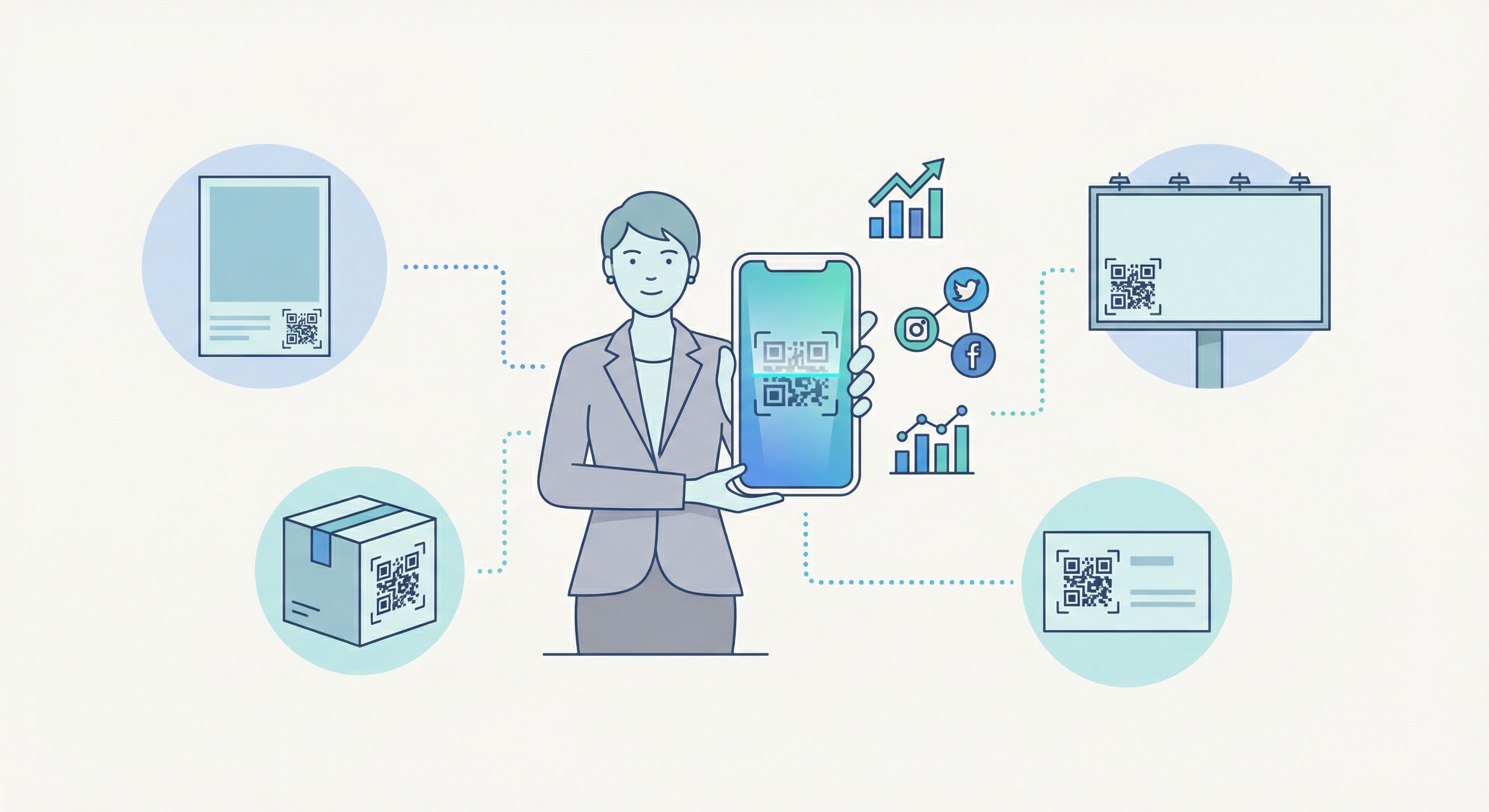
The real power of QR code marketing lies in its dual nature: it is a physical-to-digital bridge. You can print a QR code on any surface and make it interactive. A poster becomes a microsite. A product label becomes a video tutorial. A business card becomes a saved contact. Packaging becomes a loyalty enrolment. For businesses, QR code marketing offers something traditional print advertising never could: measurable, trackable engagement from offline channels.
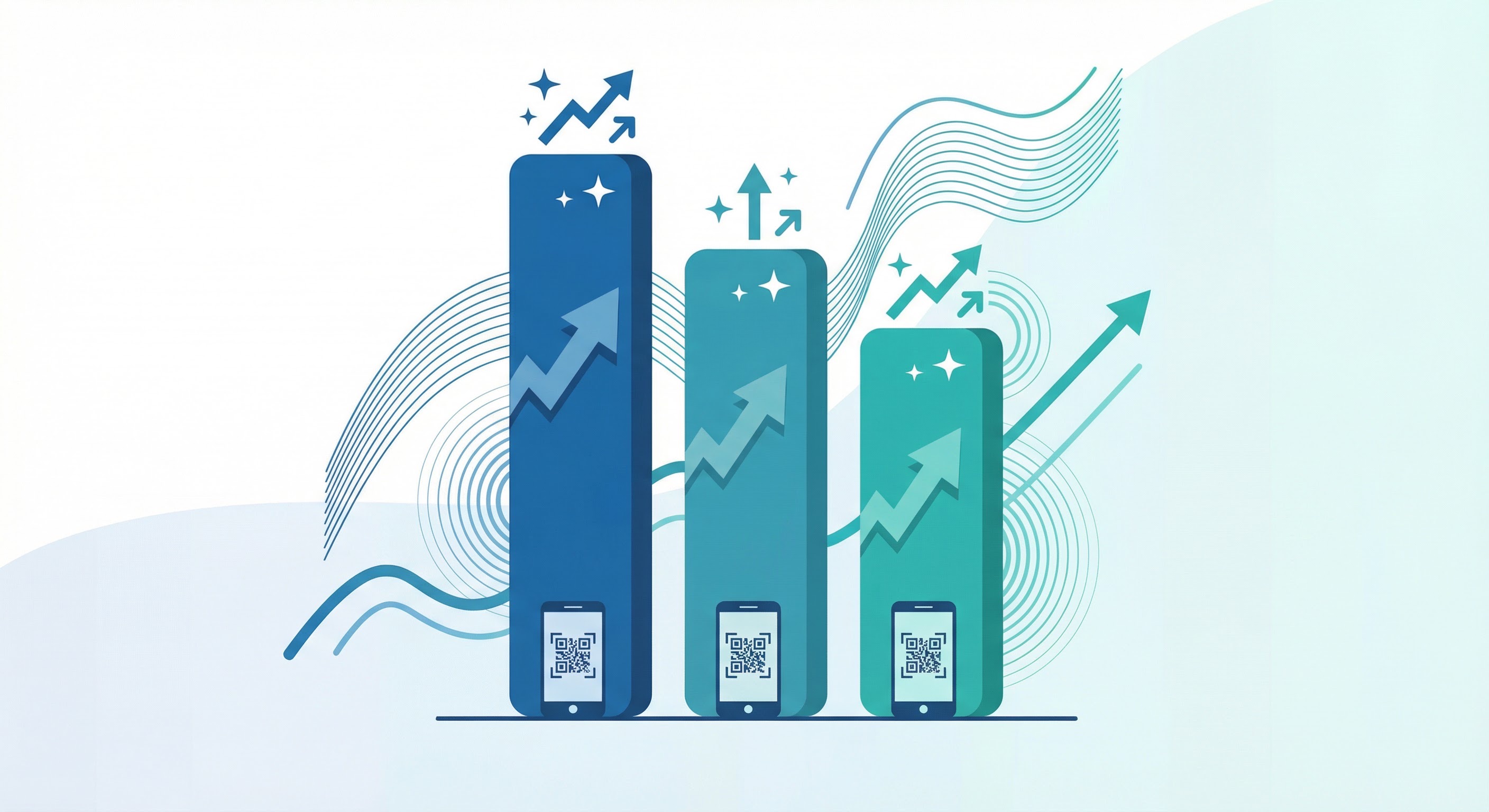
The numbers tell a compelling story. Between 2021 and 2024, QR code scan activity grew by 323%. In the U.S. alone, approximately 100 million smartphone users scanned QR codes in 2025, and the global QR code market is valued at $13 billion — projected to reach $33 billion by 2031 at a 17% annual growth rate.
What is driving this momentum?
Consumer sentiment has shifted decisively. In 2025, 88% of marketers reported that consumer attitudes toward QR codes had grown more positive — 40% said significantly more positive. Half of Gen Z and Millennials now scan QR codes at least once per week, according to TEAM LEWIS Market Research. The strategic case is clear: QR code marketing is no longer optional for serious marketers. It is infrastructure.
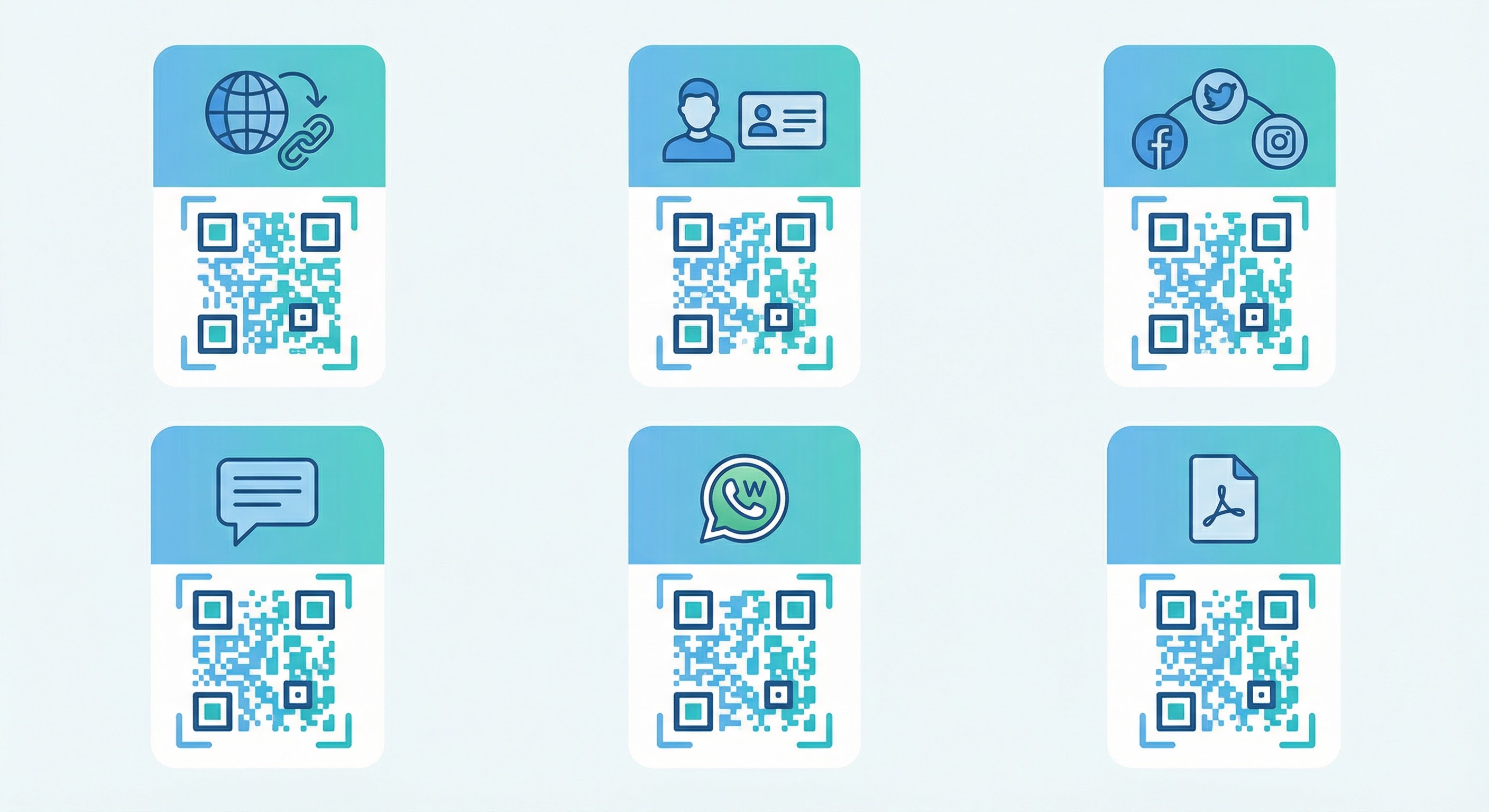
Not all QR codes serve the same purpose. Choosing the right code type for your campaign objective is one of the most important decisions you will make. Here are the seven most impactful types for marketing:
Each type can be created as a dynamic QR code, meaning the destination can be changed after printing and every scan is tracked in real time. For campaigns requiring large volumes of unique codes — events, retail promotions, or loyalty schemes — see Supercode's bulk QR code generation.
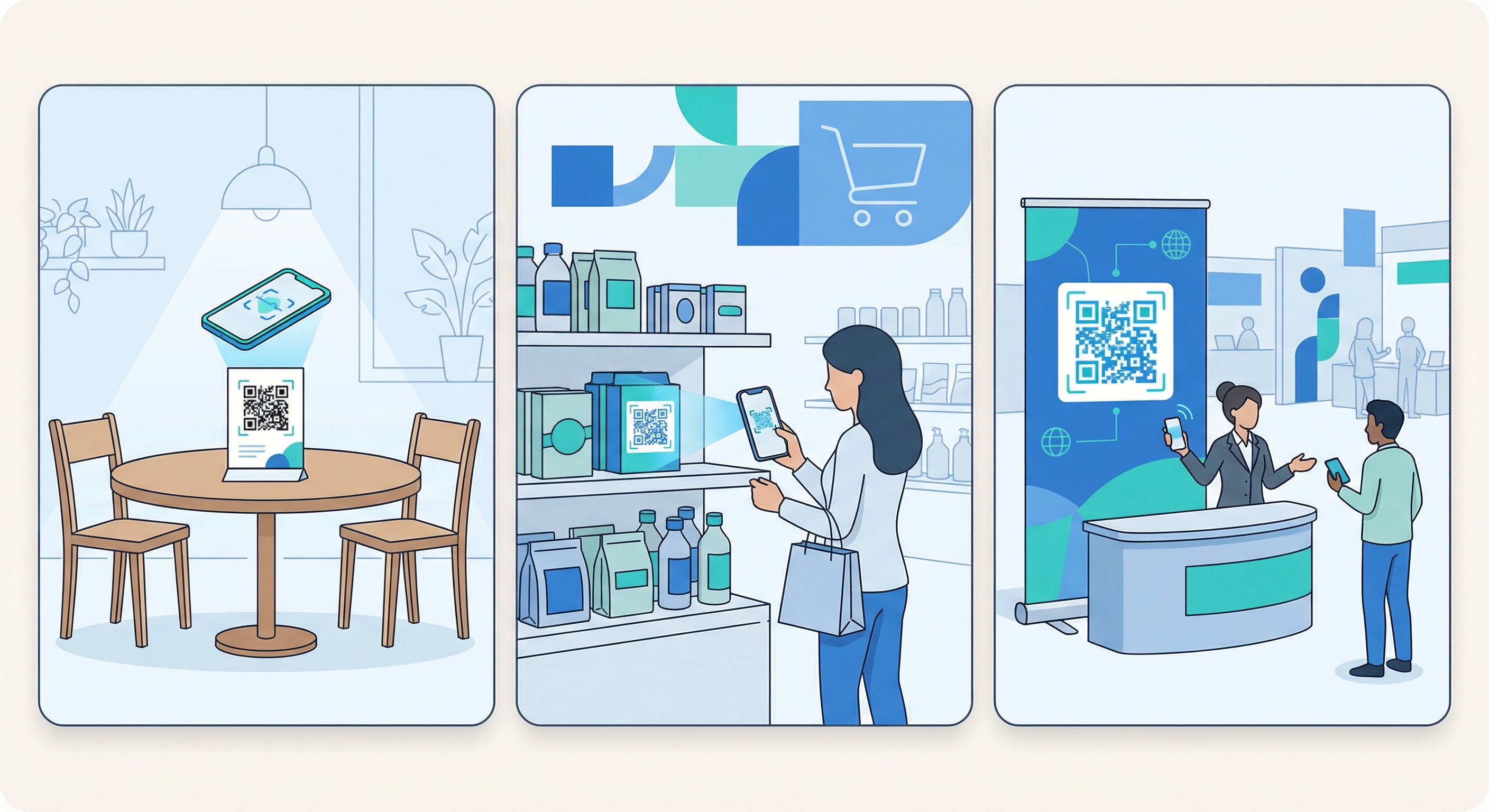
QR code marketing is genuinely cross-industry. The same fundamental technology adapts to radically different contexts and campaign objectives across every sector.
Digital menus were the gateway for most consumers' first QR scan during the pandemic — and restaurants never looked back. Today, QR codes on table tents, receipts, and takeaway packaging link to menus, ordering systems, loyalty programmes, and review forms. The restaurant industry led the global QR code payment market in 2024 with a 28% revenue share. See how restaurants use QR codes, or read our in-depth QR codes for restaurants guide.
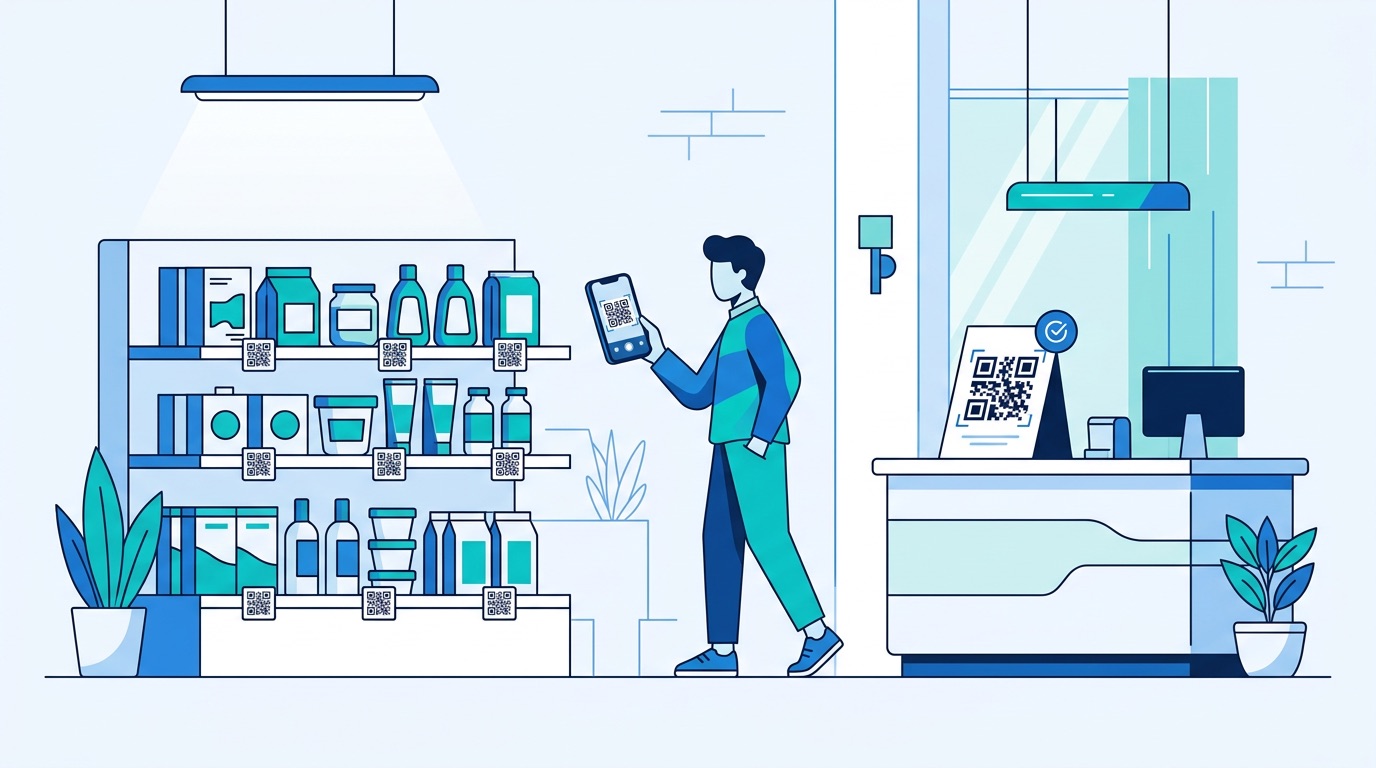
In-store QR codes enhance the shelf experience without additional staffing costs. Consumers can scan for product reviews, size guides, ingredient lists, or augmented reality try-on experiences. According to World Sync's 2024 Consumer Product Content Benchmark, 64% of shoppers have scanned a QR code while shopping in stores — and 79% say they are more likely to purchase a product when a QR code provides additional information. Discover more about QR codes in retail.
Badge QR codes replace paper schedules and enable instant networking. Attendees scan to exchange vCard contacts, access session materials, vote in live polls, or enter competitions. In Bitly's 2025 survey, 43% of marketers cited events as a top QR code deployment channel — the third most popular overall. Learn more about QR codes for events.
For-sale signs and property brochures with QR codes give house-hunters instant access to virtual tours, floor plans, and agent contact details — 24 hours a day, seven days a week, without a phone call. Read the full QR code real estate marketing guide.
Clinics and pharmacies use QR codes to share patient education materials, medication instructions, and appointment booking links — reducing front-desk load while improving patient compliance and experience. See QR codes for healthcare.
For a comprehensive look at QR code applications across every vertical, explore the 15 most practical uses for QR codes across industries and contexts.
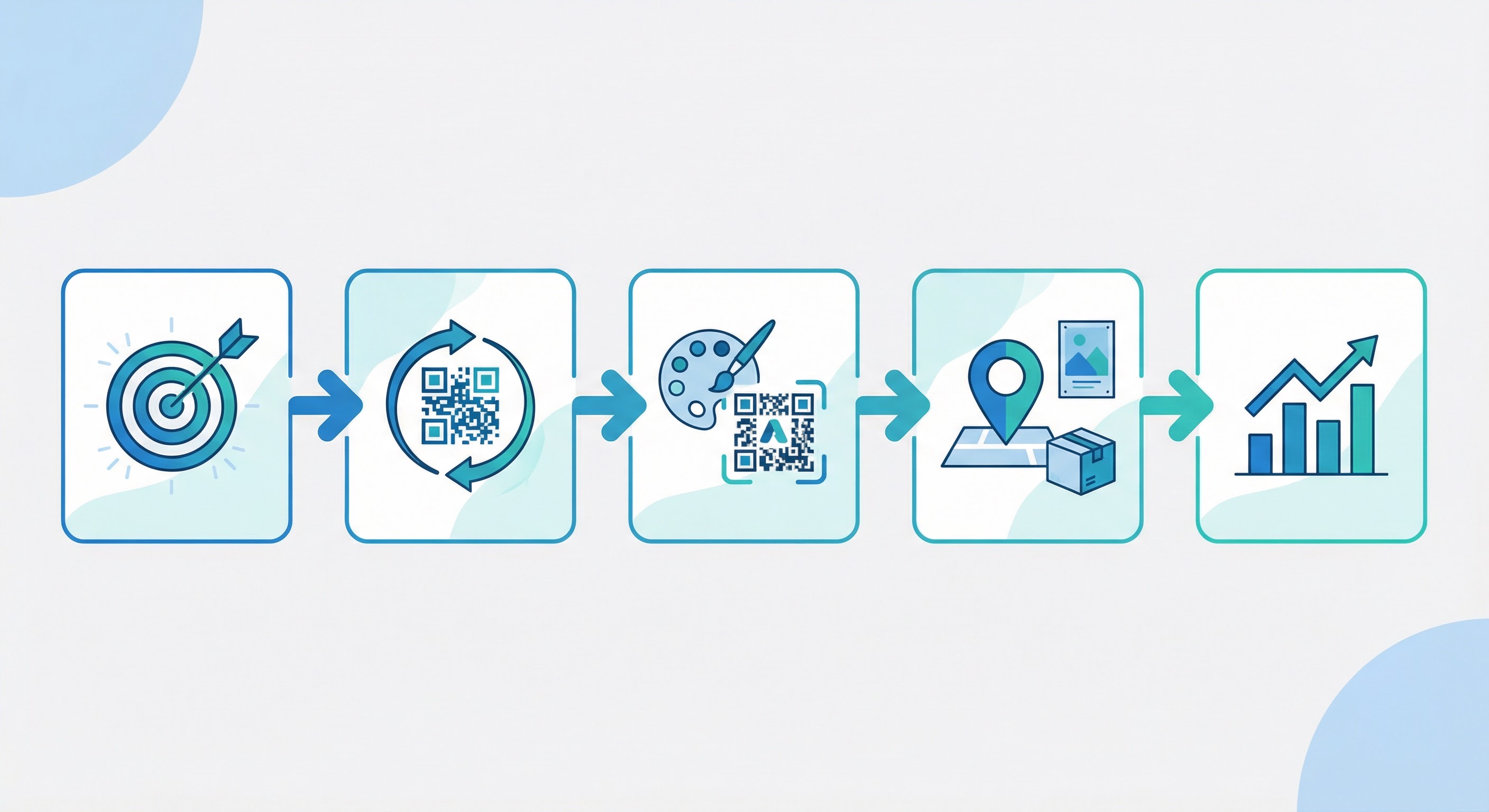
A QR code campaign without a strategy is just a printed square. Here is a proven five-step framework for building campaigns that drive measurable outcomes:
Start with a specific, measurable goal: drive website visits, collect email sign-ups, boost app downloads, increase online reviews, or reduce customer support calls. Your objective determines the QR code type, the destination content, and the success metrics you will track.
For any campaign you expect to run longer than a week, use a dynamic QR code. Dynamic codes let you update the destination URL without reprinting materials, enable full scan analytics, and support A/B testing. Explore the full comparison in our dynamic vs. static QR codes guide. They are the professional standard — and 65% of the market already uses them.
Create a branded QR code with your company colours and logo using Supercode's design tools. A branded code is more likely to be scanned — Bitly research shows that 49% of marketers identify logo integration as the most valuable customisation feature — and it reassures consumers that the code is trustworthy before they scan.
Match placement to your audience's mindset at that specific moment. A QR code on product packaging reaches post-purchase curiosity. A code on a print ad reaches consideration-stage browsers. A code at a checkout counter reaches conversion-ready buyers. Placement strategy determines scan rate more than almost any other variable.
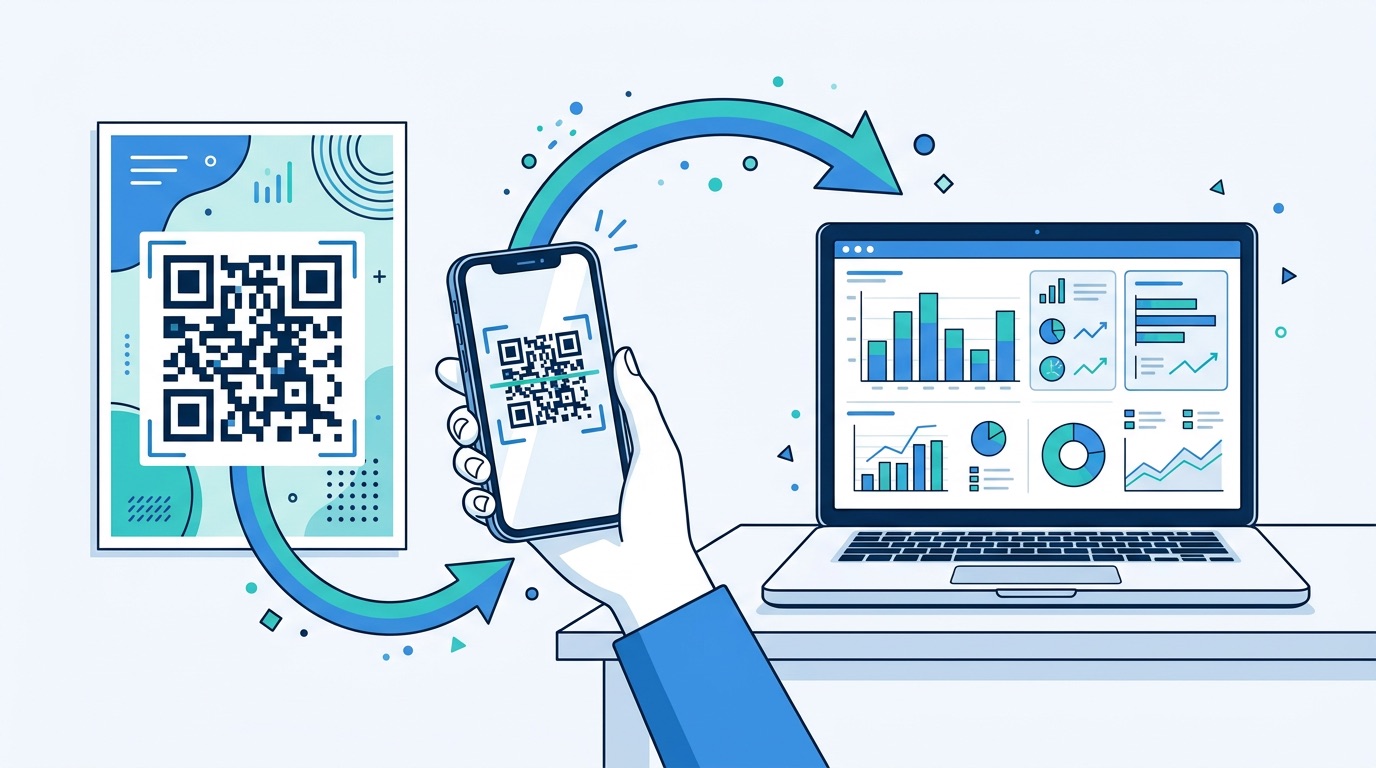
Review scan data in your analytics dashboard regularly. Monitor total scans, unique users, scan-by-device, scan-by-time, and geographic location. Use these insights to refine placements, test new destinations, and make a compelling internal case for QR marketing investment. See the full guide: QR code tracking and analytics.
A poorly designed QR code is a failed QR code. Even campaigns with perfect strategy and placement can fail if the code itself is not optimised for reliable scanning. Follow these design principles for every campaign asset:
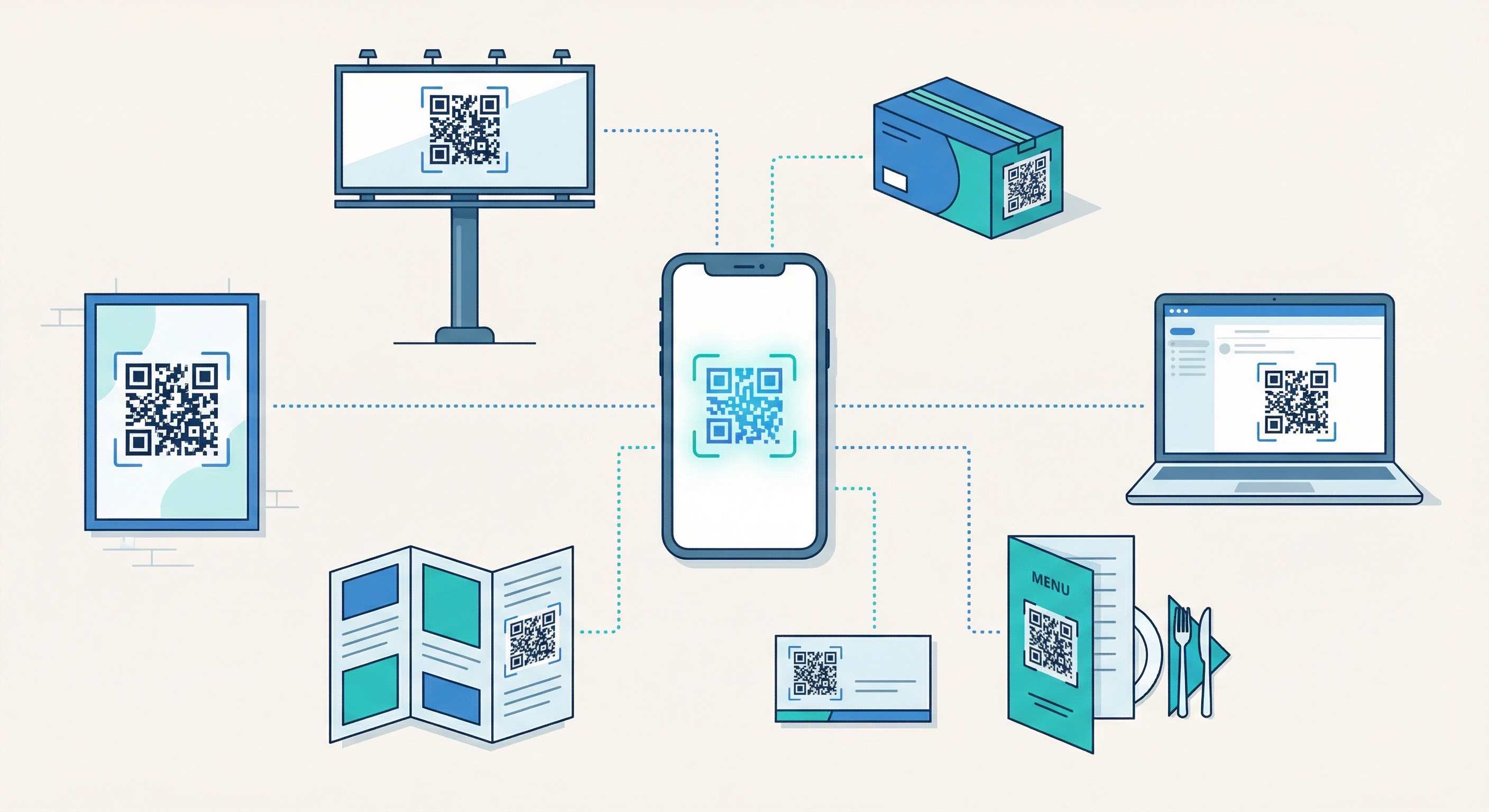
The best QR code is the one that appears at the right moment in the customer journey. Here are the highest-impact placement channels, ranked by marketer adoption:
For a complete breakdown of which materials suit which campaign types, browse all QR code material use cases on Supercode's solutions hub.
The ability to track QR code scans is one of the defining advantages of QR marketing over traditional print. Every dynamic QR code generates a continuous stream of first-party engagement data — no cookies, no third-party tracking, no consent complications. Here are the key metrics to monitor for every campaign:
Supercode's analytics dashboard provides all of these metrics automatically for every dynamic QR code. View real-time scan maps, export raw data, and redirect underperforming codes mid-campaign without reprinting any asset. For a deeper look at the methodology and reporting framework, read the full QR code tracking and analytics guide. For broader market context, review the latest QR code statistics for 2026.
The most compelling case for QR code marketing is what leading brands are already achieving with it — and the patterns that separate successful campaigns from ones that get ignored.
In 2020, Chipotle printed custom QR codes shaped like their chili pepper logo on t-shirts reading "CHI-VOTE-LE," linking to US voter registration. The shirts sold out within hours and generated earned media coverage worth millions. The campaign demonstrated that a QR code is not just a link — it can be a brand statement that drives awareness and conversion simultaneously.
Nike in-store QR codes link shoppers to product stories, athlete content, NikePlus loyalty registration, and the Nike app — turning a transactional retail visit into a relationship touchpoint. By embedding QR codes on product displays and hangtags, Nike drives app downloads, community membership, and repeat purchase behaviour from a single physical placement.
Coca-Cola's "Share a Coke" campaign incorporated unique QR codes on limited-edition bottles, directing consumers to personalised digital experiences. This demonstrated how mass-produced physical products can deliver one-to-one digital interactions — a use case now being replicated across FMCG brands globally using dynamic QR code generation at scale.
What all high-performing QR marketing campaigns share is a value exchange: the consumer scans because they expect something genuinely worthwhile on the other side. The most effective campaigns offer exclusive content, meaningful discounts, immersive experiences, or clear utility. Simply linking to a homepage is not a QR marketing strategy — it is a missed opportunity.
For more campaign inspiration, see how to use QR codes for lead generation, social media marketing, and app download campaigns.
Even experienced marketers make errors that kill scan rates and campaign ROI. Here are the most costly — and how to avoid them:
Read the full 10 QR code mistakes to avoid guide for a complete pre-launch checklist you can apply before every campaign goes live.
A static QR code has a fixed destination that cannot be changed after creation. A dynamic QR code lets you update the destination URL at any time — even after printing — and automatically tracks every scan with location, device, and time data. For any marketing campaign, dynamic codes are the professional standard because they offer the flexibility and measurability that static codes fundamentally cannot provide.
Dynamic QR codes automatically record scan data including total scans, unique users, geographic location, device type, and time of scan. In Supercode, this data is available in real time in your analytics dashboard. For downstream conversion tracking, pair QR code analytics with UTM parameters on your destination URLs to connect scans to purchases, sign-ups, or other business goals. Read more: QR code tracking and analytics guide.
The best destinations deliver immediate value to the person who scanned: a discount code landing page, an event registration form, a product video, a digital menu, a loyalty programme sign-up, or an app download link. The critical rule is that the destination must be mobile-optimised and load in under three seconds. A generic homepage rarely converts — the destination should match the specific promise or context of the campaign placement.
The minimum recommended size is 2cm × 2cm (0.8 × 0.8 inches) for materials held at arm's length, such as business cards and flyers. For posters and signage viewed from further away, increase the size proportionally — approximately 1cm per 10cm of intended scanning distance. See the complete QR code printing guide for detailed specifications by material type and scanning environment.
Yes — and you should. Branded QR codes perform significantly better than generic black-and-white codes. You can add your logo, use brand colours, and apply custom module shapes, provided you maintain sufficient contrast for reliable scanning. Bitly research shows that 49% of marketers identify logo integration as the single most valuable customisation feature. Use Supercode's design tools to build a fully branded QR code in minutes.
Highly effective. QR codes eliminate the cost gap between small businesses and large brands in digital marketing. A small bakery with a well-designed QR code on its packaging — linking to a loyalty programme — can capture the same engagement data and repeat-purchase behaviour as a global FMCG brand. Supercode's free plan includes every feature — unlimited dynamic codes, real-time analytics, and full design customisation.
Ready to launch your first QR code marketing campaign — or upgrade your existing strategy? Sign up free with Supercode. Create branded, trackable dynamic QR codes in minutes, monitor performance in real time, and connect every physical touchpoint in your business to measurable digital results.