
Customer experience is now the primary battlefield for business growth — and QR codes have become one of the most powerful tools for winning it. According to Bitly's 2026 QR code statistics report, 88% of marketers who adopted QR codes report stronger positive consumer sentiment, while 79% of consumers say they are more likely to purchase a product when a QR code provides additional information. With 99.5 million US smartphone users scanning QR codes monthly, the technology has evolved from a novelty into a core layer of the modern customer journey. This guide covers exactly how to harness that power — across feedback, loyalty, transparency, self-service, and post-purchase engagement — to build experiences that keep customers coming back.
Price and product quality used to be the primary reasons customers chose one brand over another. That dynamic has fundamentally shifted. The Forsta 2025 State of CX Report found that 63% of US consumers and 62% of UK consumers will abandon a brand after just one or two bad experiences — regardless of prior loyalty. Meanwhile, 71% of US consumers say they would choose a trusted brand even at a premium price.
The gap between what executives believe and what customers actually feel is striking. Nine out of ten executives report that their customer loyalty has grown in recent years. But only four out of ten consumers agree. Closing this perception gap requires more than good intentions — it requires fast, frictionless, data-driven touchpoints that meet customers where they are: on their phones.
That is precisely the role QR codes now play. They are not just a link-delivery mechanism. They are a real-time bridge between physical environments and digital experiences, enabling businesses to gather feedback, reward loyalty, surface transparency data, and personalize engagement — all from a single scan. Explore the 15 most practical QR code uses for business to see the full breadth of what is possible.
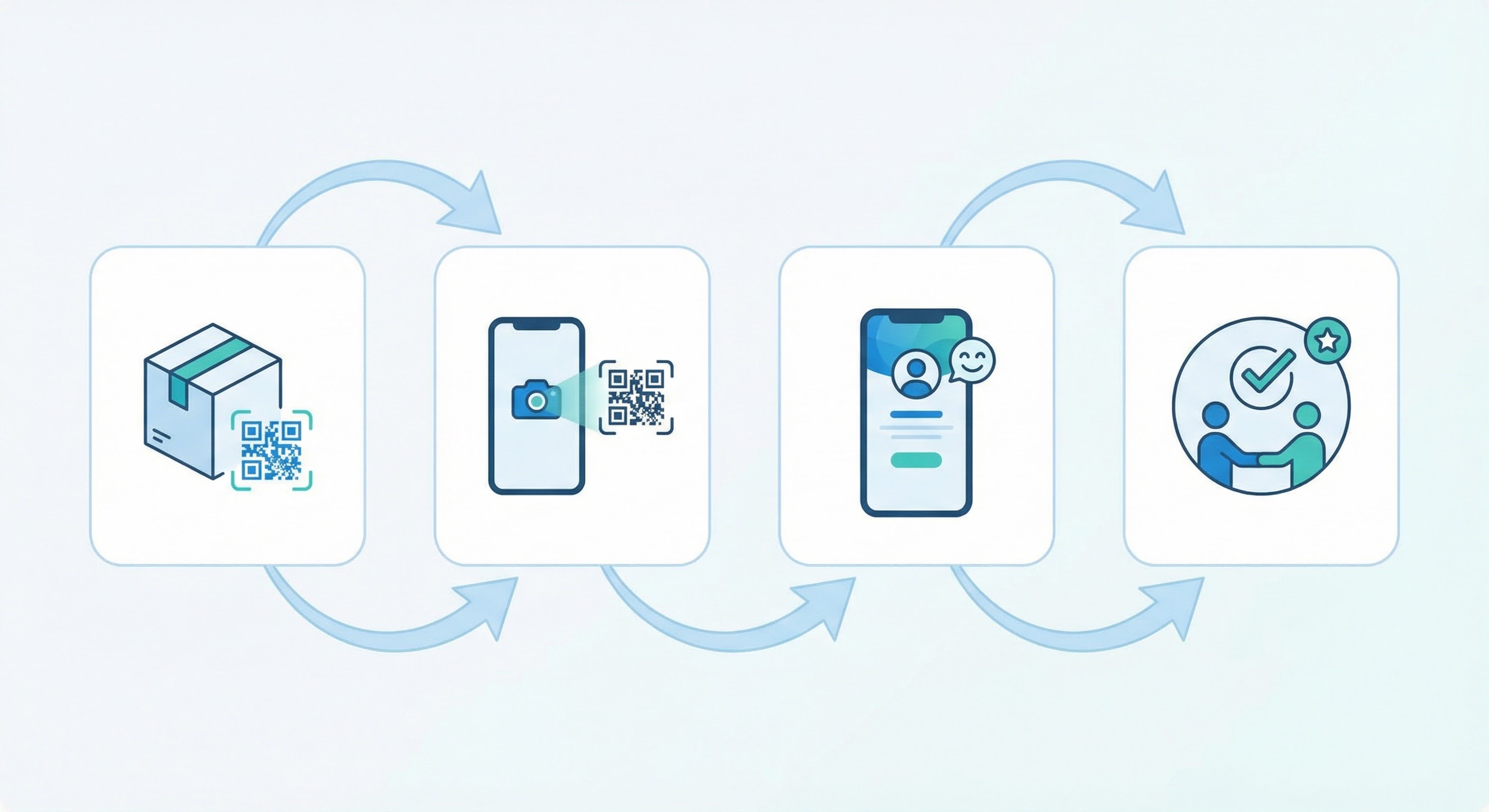
The fundamental challenge of modern customer experience is stitching together the physical and digital worlds seamlessly. A customer walks into a store, picks up a product, sits at a restaurant table, or attends an event — and the brand has only seconds to connect that moment to a richer digital experience.
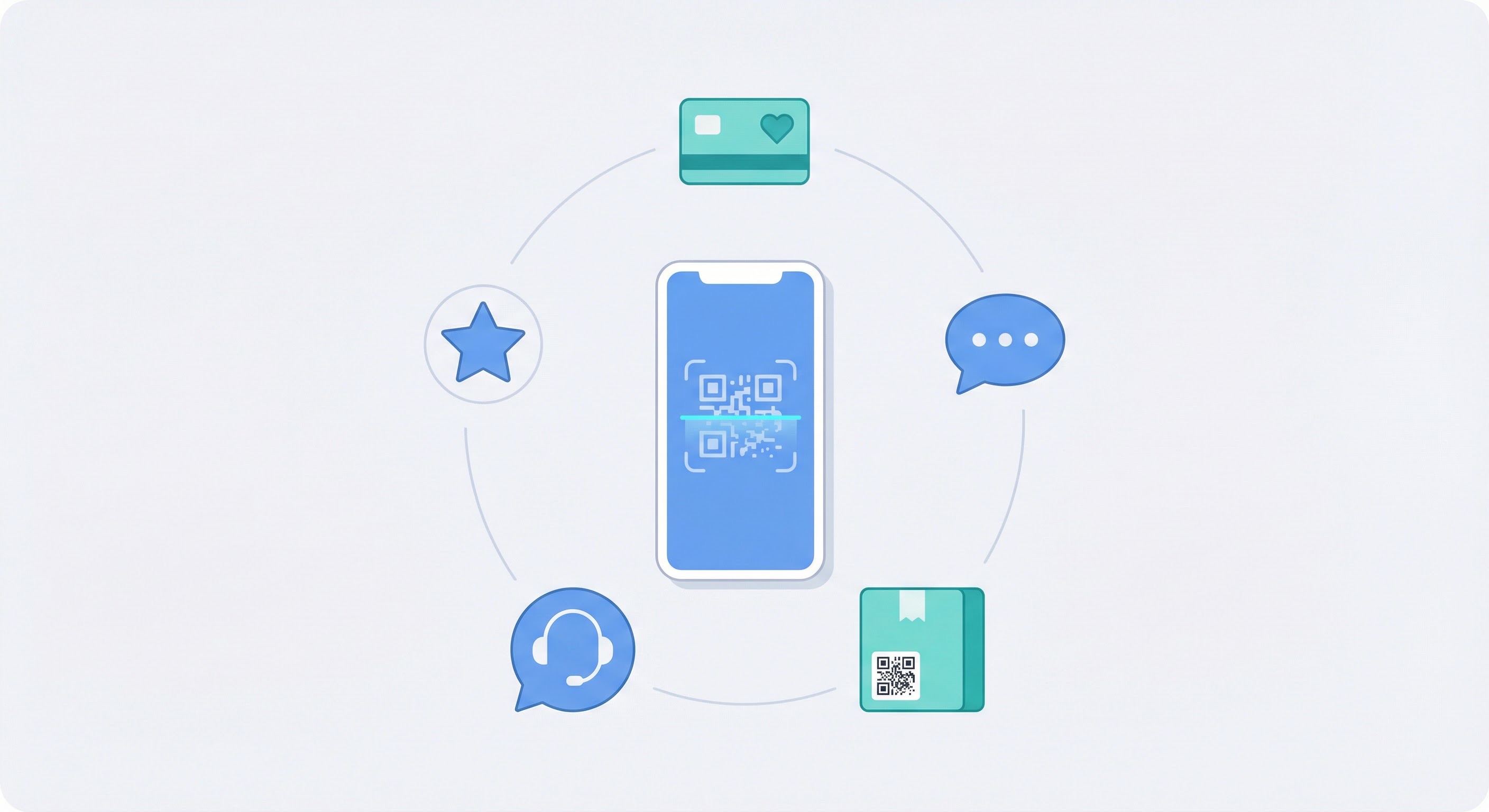
QR codes solve this problem elegantly. A single scan can:
According to Krofile's 2026 QR code statistics, 84% of mobile users globally have scanned a QR code at least once, and roughly 59% of smartphone users scan them on a weekly basis. This near-universal adoption means QR codes are now a reliable, expected touchpoint — not an experimental one.
The key is deploying dynamic QR codes — codes whose destination can be updated without reprinting. This gives businesses the agility to keep experiences fresh and relevant long after the physical material has been deployed. Learn how QR code marketing strategy ties these touchpoints into a cohesive campaign.

The most actionable feedback is feedback collected in the moment — when the experience is still fresh, the emotion is real, and the insight is accurate. Traditional feedback methods (email surveys, follow-up calls, mailed questionnaires) introduce delay that blunts signal quality. By the time the survey arrives, the customer has moved on.
A feedback QR code placed at the right touchpoint — a checkout counter, a restaurant table, a hotel lobby, a product package, or a service receipt — captures the experience while it is happening. Customers scan, rate, and comment in under 30 seconds. No app download. No login. No friction.
The benefits extend beyond data collection. The act of being asked for feedback signals respect and attentiveness. Forsta's 2025 CX research found that consumers are increasingly going silent about experiences — negative feedback rates have dropped significantly since 2021, meaning businesses that do not proactively invite feedback are flying blind. A QR-based feedback loop reopens that channel.
Advanced platforms route responses intelligently: satisfied customers are nudged toward a public review on Google or Trustpilot, while dissatisfied customers are directed to a private resolution channel — preventing public complaints and giving the business a chance to recover the relationship before the customer leaves.
Industries that benefit most from QR feedback codes include restaurants, hospitality, retail, and healthcare — anywhere the gap between the in-person experience and online reputation is consequential.
Transparency has moved from a nice-to-have brand value to a purchasing driver. Forsta's 2025 research found that 71% of US consumers will actively choose a trusted brand over a cheaper competitor, and only 19% of consumers currently trust brands to use their personal data responsibly — creating a massive opportunity for brands that proactively demonstrate openness.
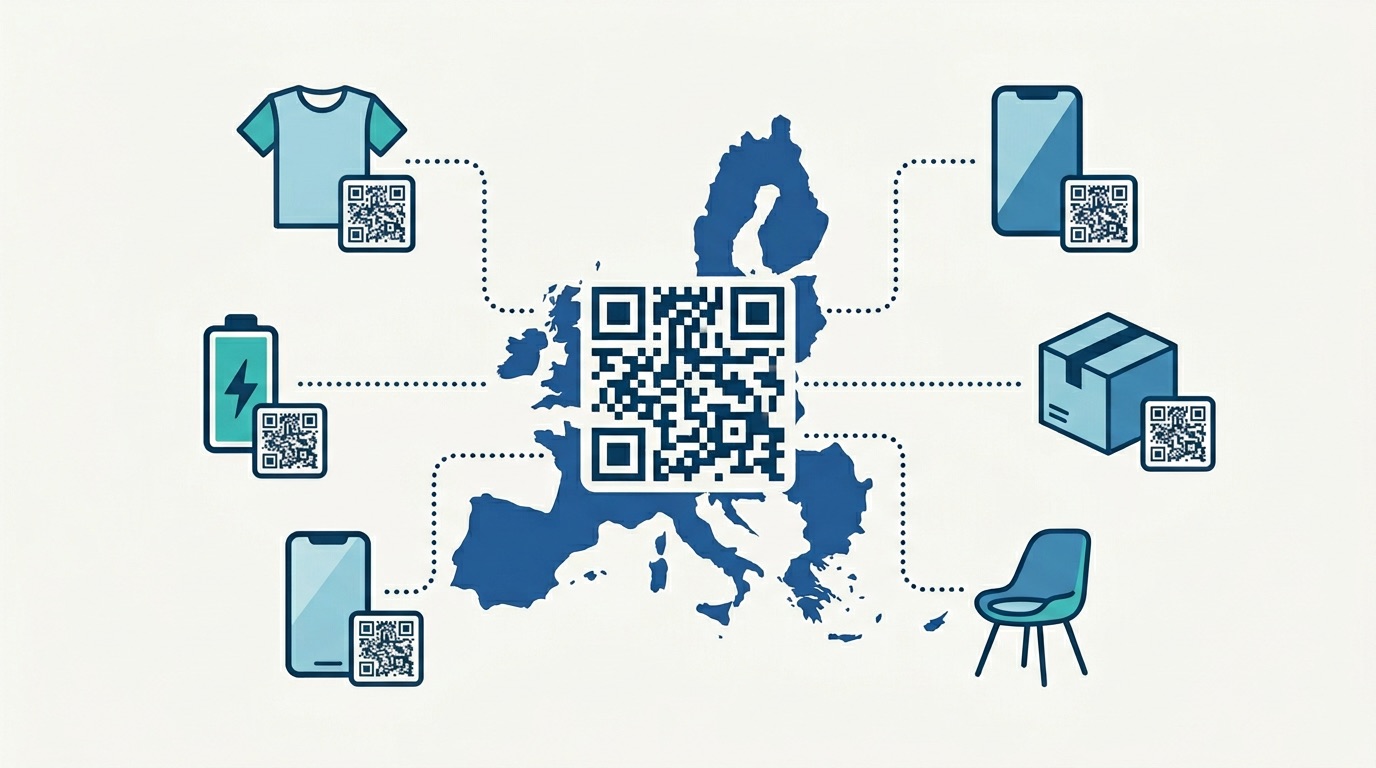
QR codes are uniquely suited to delivering transparency at scale, particularly on physical products where space is limited. A QR code on a product label can open a rich digital experience revealing:
Brands in food and beverage, fashion, and cosmetics are already deploying this approach extensively. Food packaging QR codes provide nutritional breakdowns, allergen warnings, and recipe suggestions. Fashion brands are using QR codes on clothing tags to share garment care guides, brand story videos, and resale or recycling instructions.
For a deeper look at how transparency through QR codes is reshaping consumer expectations, see our guide on QR codes for sustainable marketing and how conscious consumers are responding to scan-based transparency in 2026.
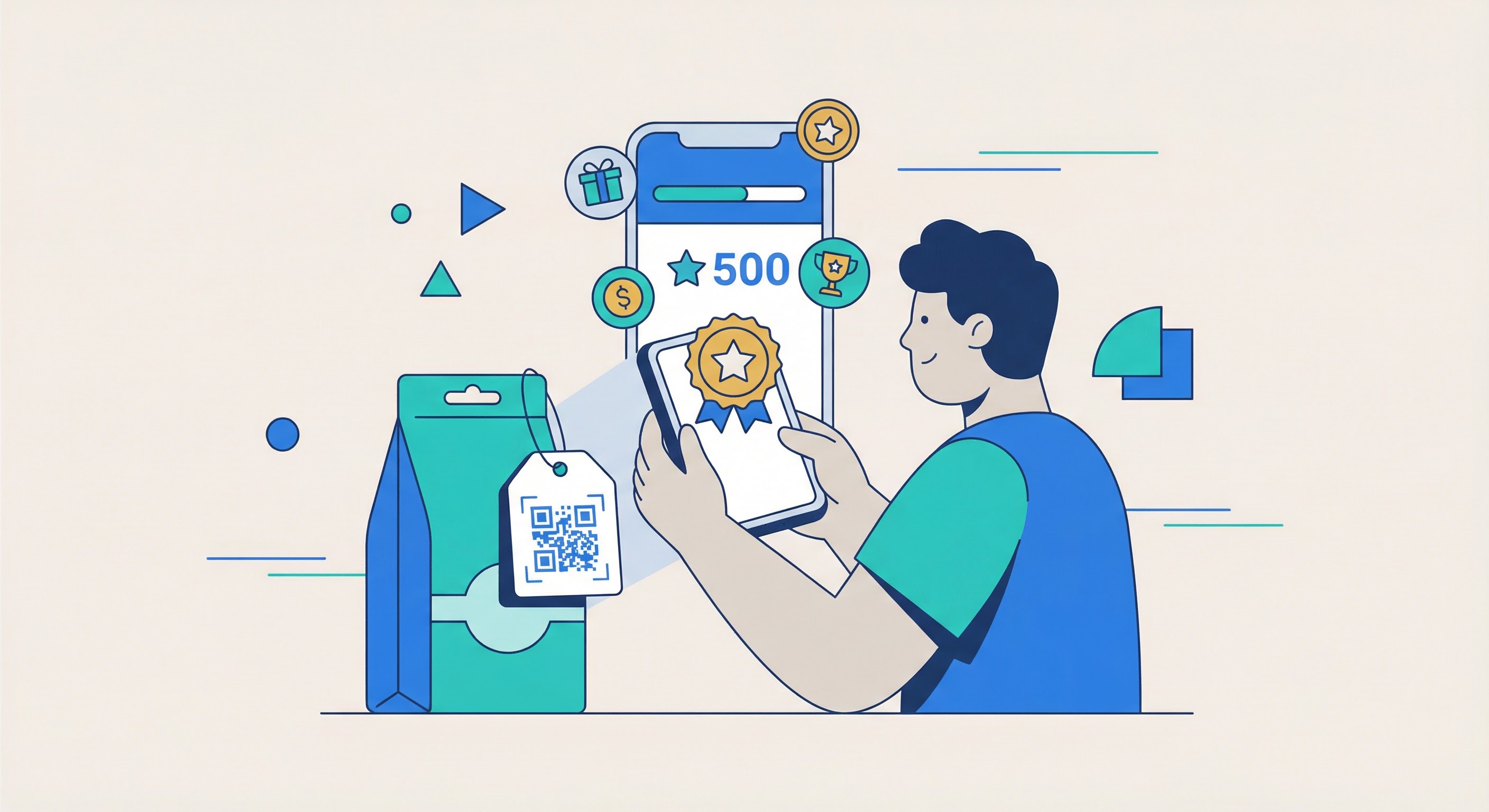
Loyalty programs are among the highest-ROI investments in customer experience. The Global Customer Loyalty Report 2025 found that loyalty programs generate 5.2 times more revenue than their cost — up from 4.8x the prior year — with 14.3% of programs achieving over 800% ROI. Customers enrolled in loyalty programs spend 12–18% more per transaction than non-enrolled customers, and 76% of consumers say they spend more on a brand when they belong to its loyalty program.
The problem has never been loyalty program value — it is enrollment friction. Paper punch cards get lost. Apps require downloads. Web portals demand email registration flows that lose customers at every step. A QR code removes all of that friction in one scan.
With a URL QR code or a dedicated loyalty QR code placed at the point of sale, on branded merchandise, on receipts, or on product packaging, customers enroll instantly. Dynamic codes let businesses:
Gamification substantially increases participation. Scan-to-reveal offers, "scan for a surprise discount," and location-based scavenger hunts that require visiting multiple physical touchpoints all create memorable, shareable experiences that build community alongside loyalty.
Labor costs are rising and customer patience for queues is falling. Self-service experiences — when done well — score higher on customer satisfaction than staffed interactions for routine tasks like checking product specs, accessing Wi-Fi, or viewing a menu. QR codes are the invisible infrastructure that makes self-service effortless.
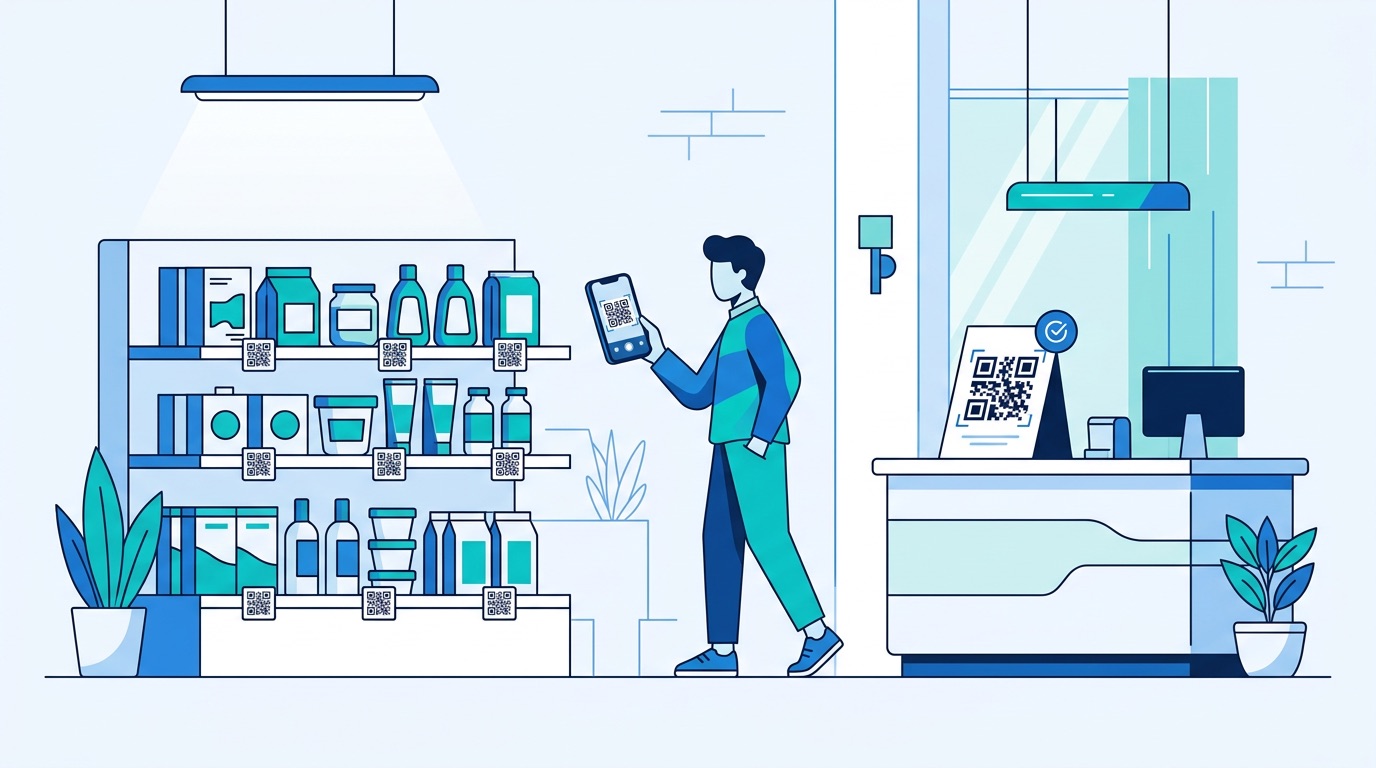
In retail, QR codes on shelf talkers, shop windows, and display units let customers access extended product information, watch video demonstrations, read reviews, and check inventory — all without waiting for a sales associate. This frees staff to handle high-value interactions that genuinely require human judgment.
In food service, the impact has been even more dramatic. A QR code on a table or counter eliminates the physical menu entirely, reducing print costs, enabling real-time price and availability updates, and streamlining the ordering flow. The digital menu QR code is now standard practice in restaurants globally — and our guide on QR codes for restaurants covers the full ordering and payment implementation.
For events, conferences, and trade shows, QR codes on badges, printed programs, and booth signage allow attendees to instantly download speaker materials, connect on LinkedIn, book meetings, or register for follow-up sessions — turning passive attendees into active leads. See how QR codes transform event management.
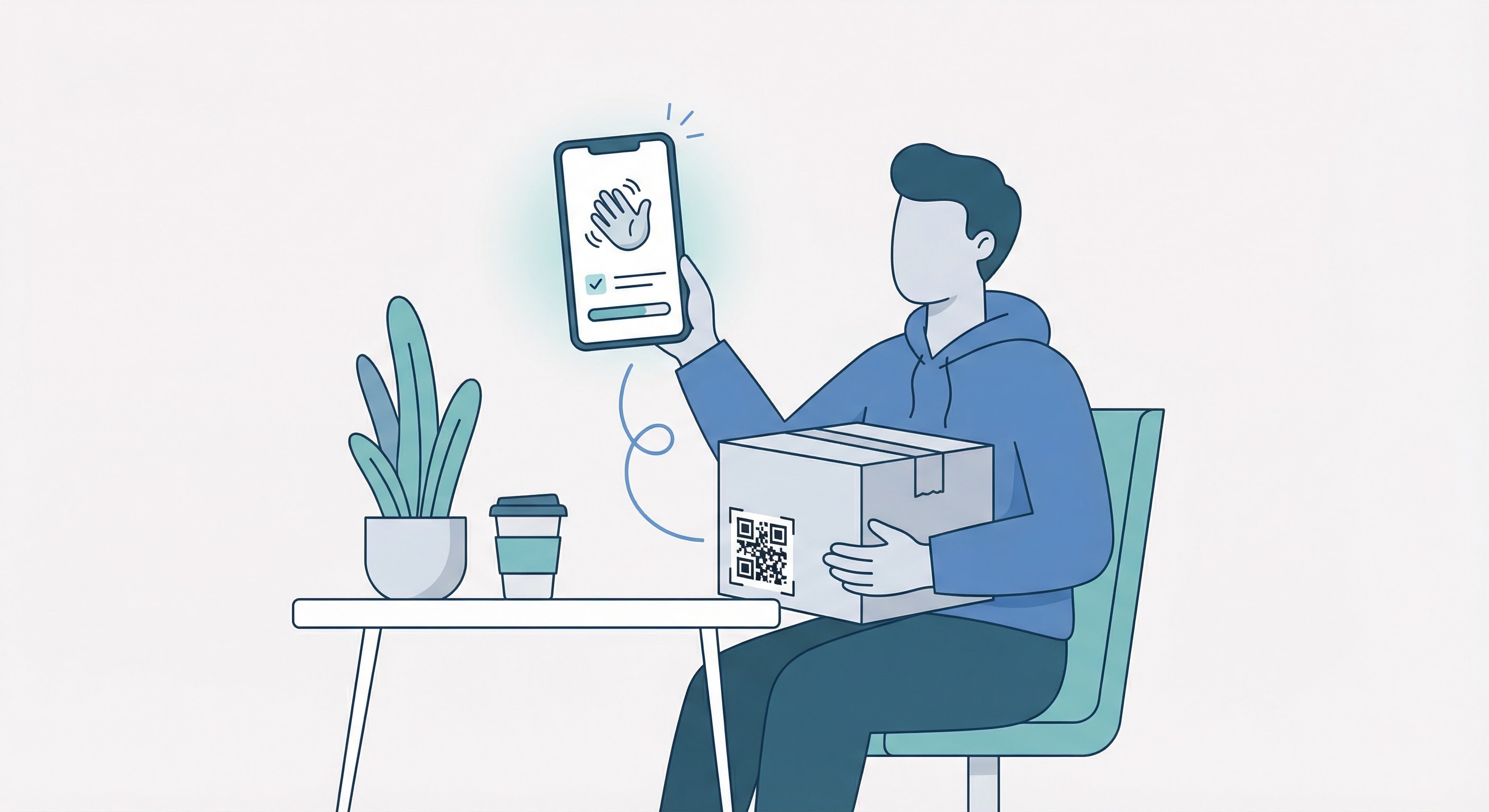
The post-purchase period is one of the most underutilized phases of the customer experience. Most brands go silent after the transaction — exactly when customers are most receptive to upsells, referrals, and loyalty engagement. A QR code on the product, packaging, or packing slip turns the unboxing moment into a CX opportunity.
Personalized post-purchase QR experiences can include:
Product packaging QR codes and food packaging QR codes are particularly effective because they are encountered at the highest engagement moment — when the customer is physically interacting with the product. The Bitly 2026 report found consumers most frequently scan QR codes for product information (43%), making this touchpoint one of the most scanned in commerce.
Because dynamic QR codes allow URL updates without reprinting, the same physical code can serve different purposes over the product lifecycle — driving setup content at launch, shifting to a review request at week two, and promoting a refill or next purchase at week six.
Customer support is one of the highest-stakes moments in the entire customer relationship. Forsta's 2025 CX data found that 59% of consumers expect a brand response within 24 hours, with 67% expecting proactive follow-up — yet few businesses consistently meet this standard. A missed support interaction is often the final straw before a customer churns.
QR codes dramatically lower the barrier to initiating a support interaction. Rather than searching a website for a phone number or waiting on hold, a customer scans a code and is instantly connected. Support QR codes can route to:
Strategically placed support QR codes — on products, in instruction manuals, on printed brochures and packaging inserts, and at hotel room key cards or welcome booklets — intercept the frustration moment before it escalates to a public complaint. The result is fewer negative reviews, faster resolution times, and stronger customer retention.
Some of the most creative customer experience wins come not from serving customers better on your own terms, but from surprising them with unexpected value through partnerships. Co-promotional QR codes — where a scan on one brand's product or packaging unlocks an offer or experience from a complementary partner — create delight that neither brand could generate alone.
The mechanics are simple: print a QR code on your product packaging, a coffee cup, or event collateral that routes to a co-branded landing page. The landing page can offer:
This approach works especially well for brands with adjacent but non-competing audiences — a coffee brand partnering with a morning news app, a gym partnering with a nutrition supplement brand, or a hotel partnering with local tour operators. Each scan delivers value beyond the immediate purchase, reinforcing brand affinity and creating memorable moments.
Dynamic QR codes are essential here — as partnership terms or offers change, the code destination updates instantly without any physical reprint. This keeps co-promotional campaigns cost-efficient and agile across different campaign phases. See how QR code marketing campaigns can be structured for maximum co-promotion impact.
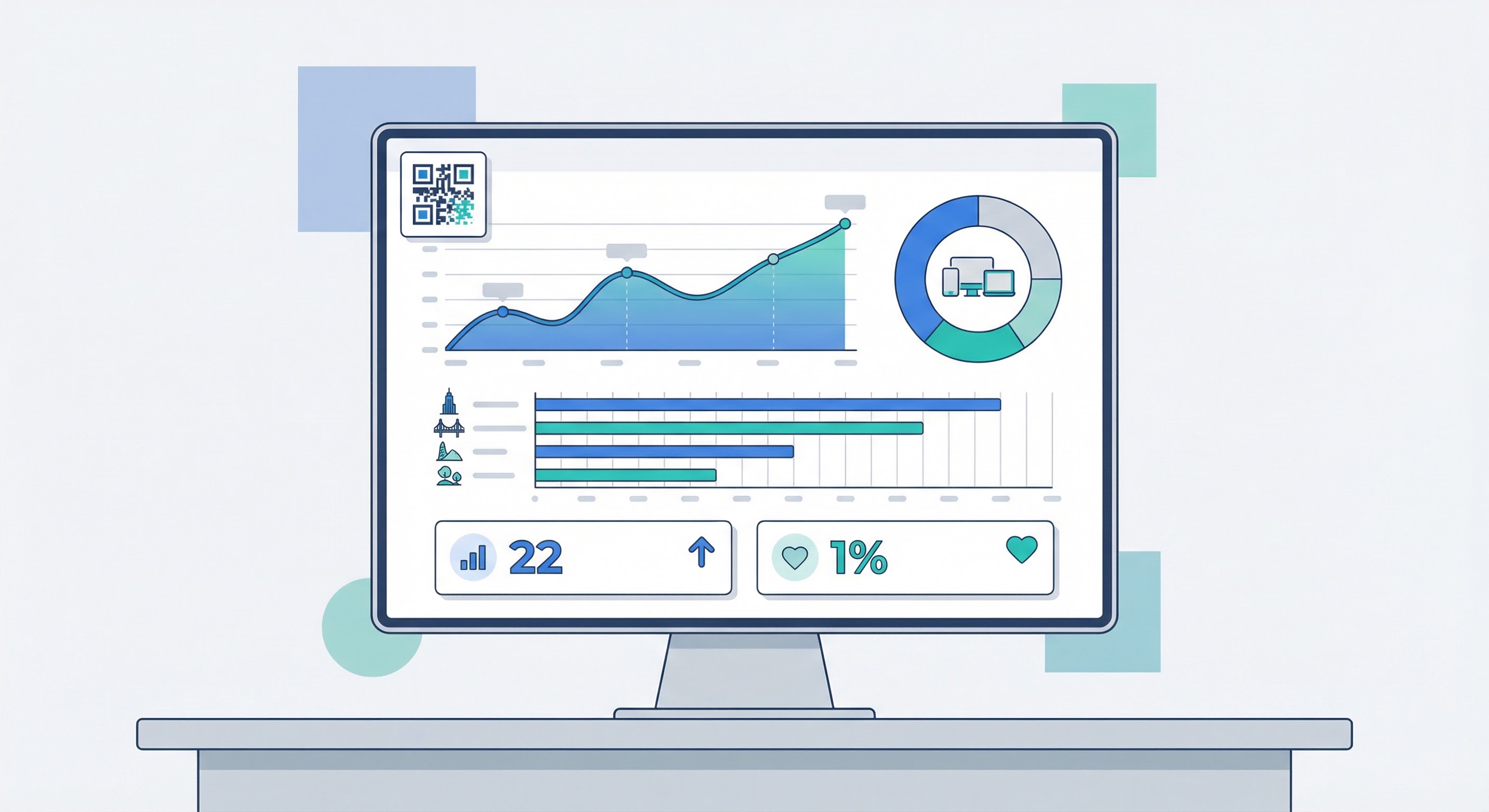
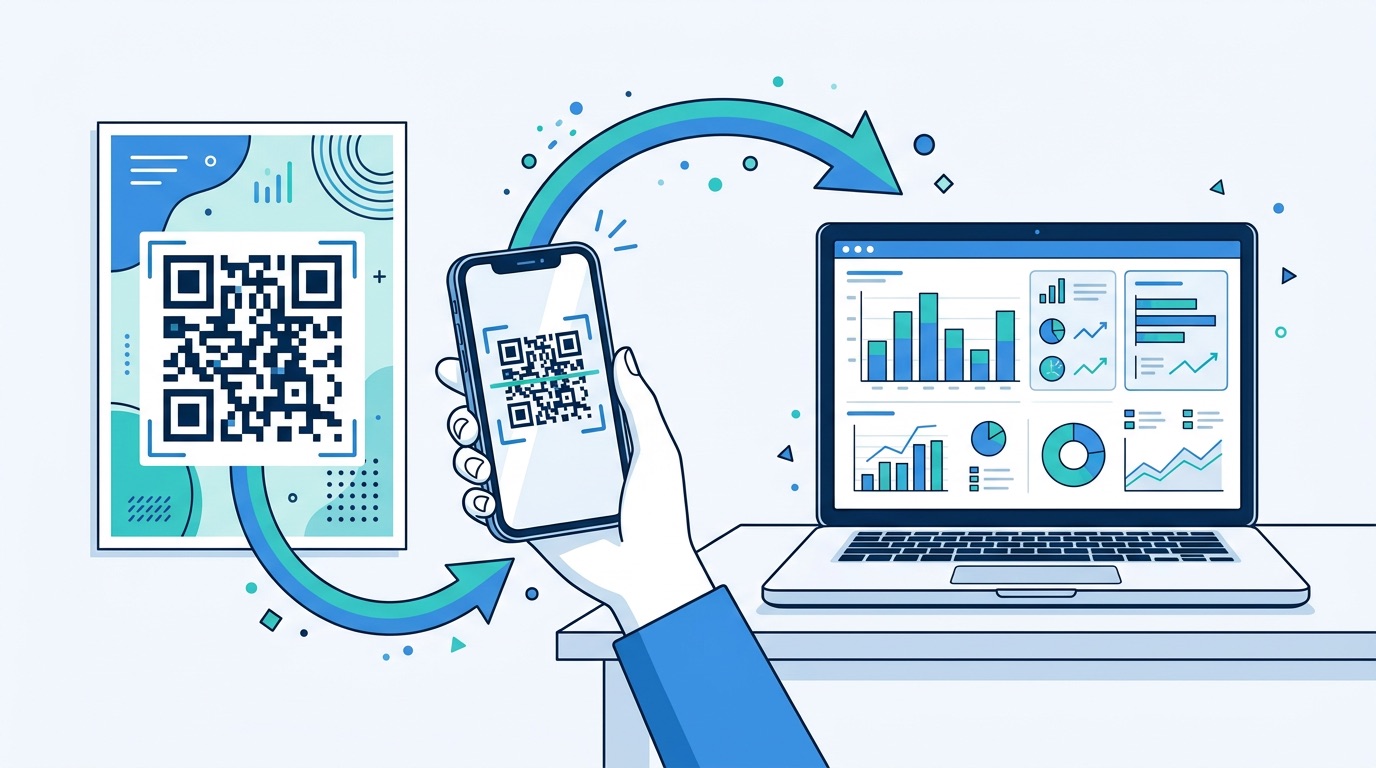
Deploying QR codes across your customer experience touchpoints generates a rich stream of behavioral data that most physical interactions never capture. Every scan carries metadata: timestamp, device type, operating system, geographic location, and — when linked to your CRM — customer identity. Aggregated, this data creates a map of exactly where, when, and how customers are engaging with your physical-digital experiences.
QR code analytics enable CX teams to answer questions that were previously unanswerable:
Our QR code statistics 2026 analysis shows that 94% of marketers report increasing QR code usage in the past year — but the real advantage goes to the businesses that use scan data to close the feedback loop, not just run campaigns. Compare scan rates across touchpoints, A/B test destinations, and build a continuous improvement cycle driven by actual customer behavior rather than surveys alone.
Supercode's analytics dashboard provides real-time scan tracking, geographic breakdowns, device analytics, and scan-over-time graphs — all without requiring any technical integration. Every QR code you create is automatically instrumented from day one.
Building a QR-powered customer experience layer does not require a large budget or technical team. With Supercode, you can create, customize, and deploy professional QR codes in minutes. Here is how to approach it by CX goal:
All Supercode QR codes include real-time analytics, unlimited scans, and full design customization. View pricing — every feature on every plan, starting free, or explore all capabilities on the product page. For a broader look at how QR codes are being used across industries, explore the full QR code use cases guide and our QR codes for lead generation tutorial.
QR codes improve customer experience by removing friction from key interactions — making it instant to submit feedback, join loyalty programs, access product information, get customer support, or unlock exclusive content. A single scan replaces multi-step journeys that previously required apps, searches, or staff intervention.
Place a feedback QR code at the point of experience — at checkout, on tables, at service completion, or on packaging inserts. The code should route to a short, mobile-optimized survey. Keep it to 2–3 questions for maximum completion rates. Use a dynamic QR code so you can update the survey destination without reprinting.
Yes — and in most cases they outperform plastic loyalty cards. A QR code on a poster, packaging, or receipt eliminates the need to carry a card, app, or remember a phone number. Customers enroll or earn points with a single scan. The Global Customer Loyalty Report 2025 found loyalty programs now generate 5.2x more revenue than their cost, and reducing enrollment friction is one of the fastest ways to accelerate that return.
Use the analytics dashboard built into your QR code platform. Track total scans, unique scans, scan location, device type, and time-of-day trends. Compare scan rates across different touchpoints and campaign periods to identify what is driving engagement. For feedback-specific QR codes, correlate scan volume with NPS or CSAT scores over time.
Virtually every consumer-facing industry benefits, but the highest-impact verticals are restaurants, retail, hospitality, and healthcare — industries where in-person touchpoints are frequent, staff-to-customer ratios are constrained, and the cost of a bad experience is high.
QR codes from reputable platforms are safe. The risk comes from third-party codes in public spaces — a phenomenon called "quishing" (QR phishing). When deploying your own QR codes, use a trusted platform like Supercode, ensure landing pages are HTTPS-secured, and never redirect customers to pages that request sensitive data without clear branding context. For more detail, see our guide on QR code safety in 2026.
The businesses winning on customer experience in 2026 are the ones that make every physical touchpoint smarter. QR codes are the simplest, most cost-effective way to do it — connecting in-person moments to digital engagement, capturing real-time data, and building the loyalty loops that turn one-time buyers into long-term advocates.
Ready to upgrade your customer experience? Create your first QR code free with Supercode — no design skills required. Add your logo, choose your colors, set your destination, and deploy in minutes. Every code comes with built-in analytics, unlimited scan tracking, and the flexibility to update your destination URL at any time.