Lead generation is the lifeblood of every growing business — and QR codes have quietly become one of the most cost-effective tools to power it. According to the QR Insights 2025 Industry Report, 95% of businesses using QR codes report valuable first-party data collection, and over 90% of marketers now incorporate them into campaigns. With 2.2 billion people worldwide actively scanning QR codes — representing 29% of all smartphone users — the technology has crossed the threshold from novelty to essential infrastructure for lead generation funnels.
Unlike traditional lead generation tactics that require expensive ad spend or manual outreach, QR codes enable frictionless, self-qualifying lead capture across every physical and digital surface your audience encounters. This guide covers nine proven strategies for using QR codes to generate, qualify, and convert leads in 2026 — with practical tips, design advice, and real campaign examples for each approach.
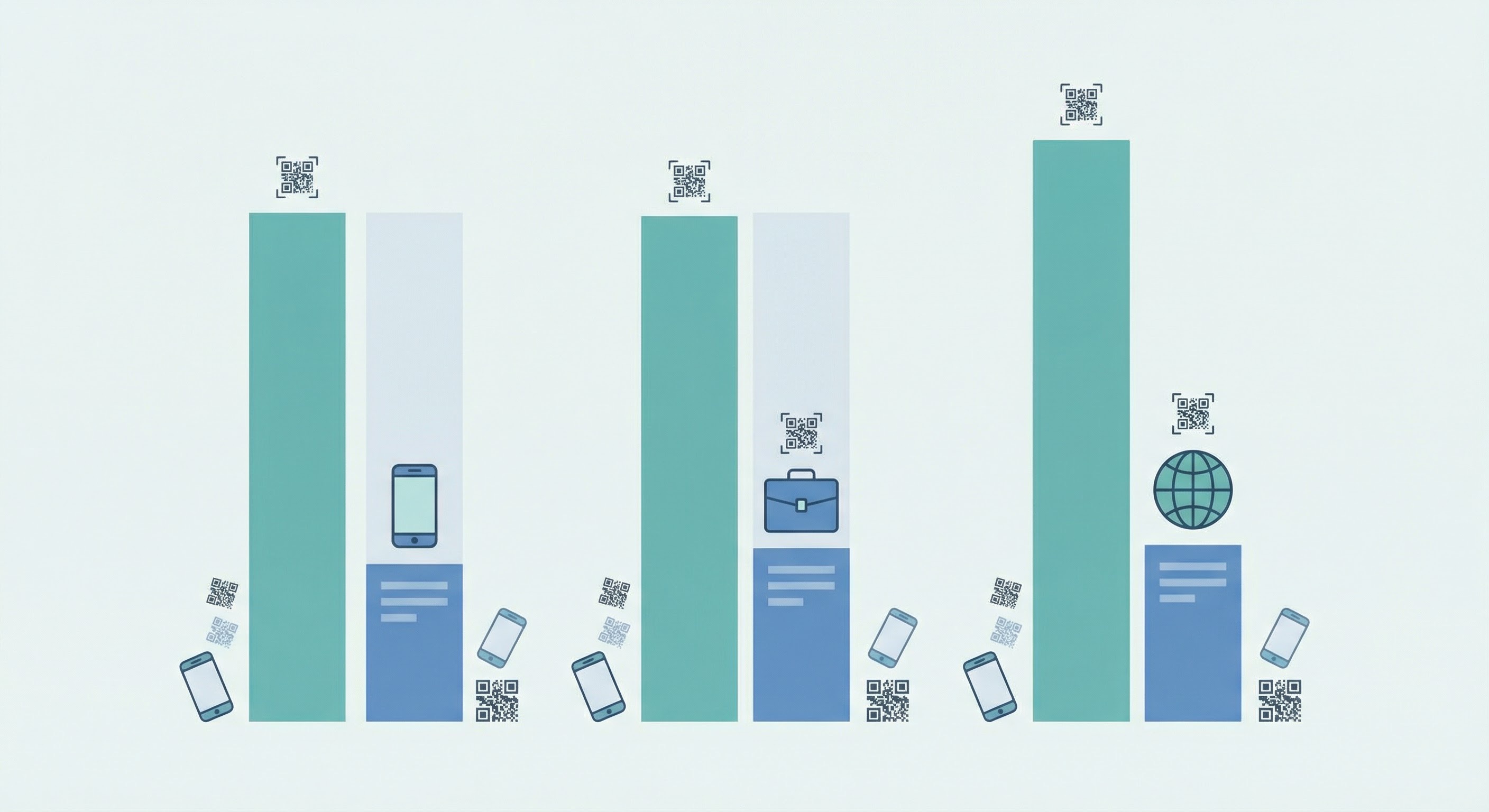
QR codes have evolved dramatically from their logistics origins into a versatile marketing and sales channel. Here is what the data says about their lead generation impact in 2026:
What makes QR codes particularly powerful for lead generation is the combination of low friction and high intent. A prospect who takes the effort to scan a code is actively signalling interest — they are a warm lead, not a cold contact. Compare that to passive display advertising where engagement rates hover around 0.1%. Explore the full picture of QR code uses for business to see how lead generation fits alongside other high-value applications.
The economics are equally compelling. A QR code campaign requires no per-click budget, no ongoing ad spend, and no platform fee beyond your QR code tool subscription. Every scan is essentially free traffic — and with dynamic QR codes, you can update the destination URL at any time without reprinting materials, making campaigns endlessly iteratable.
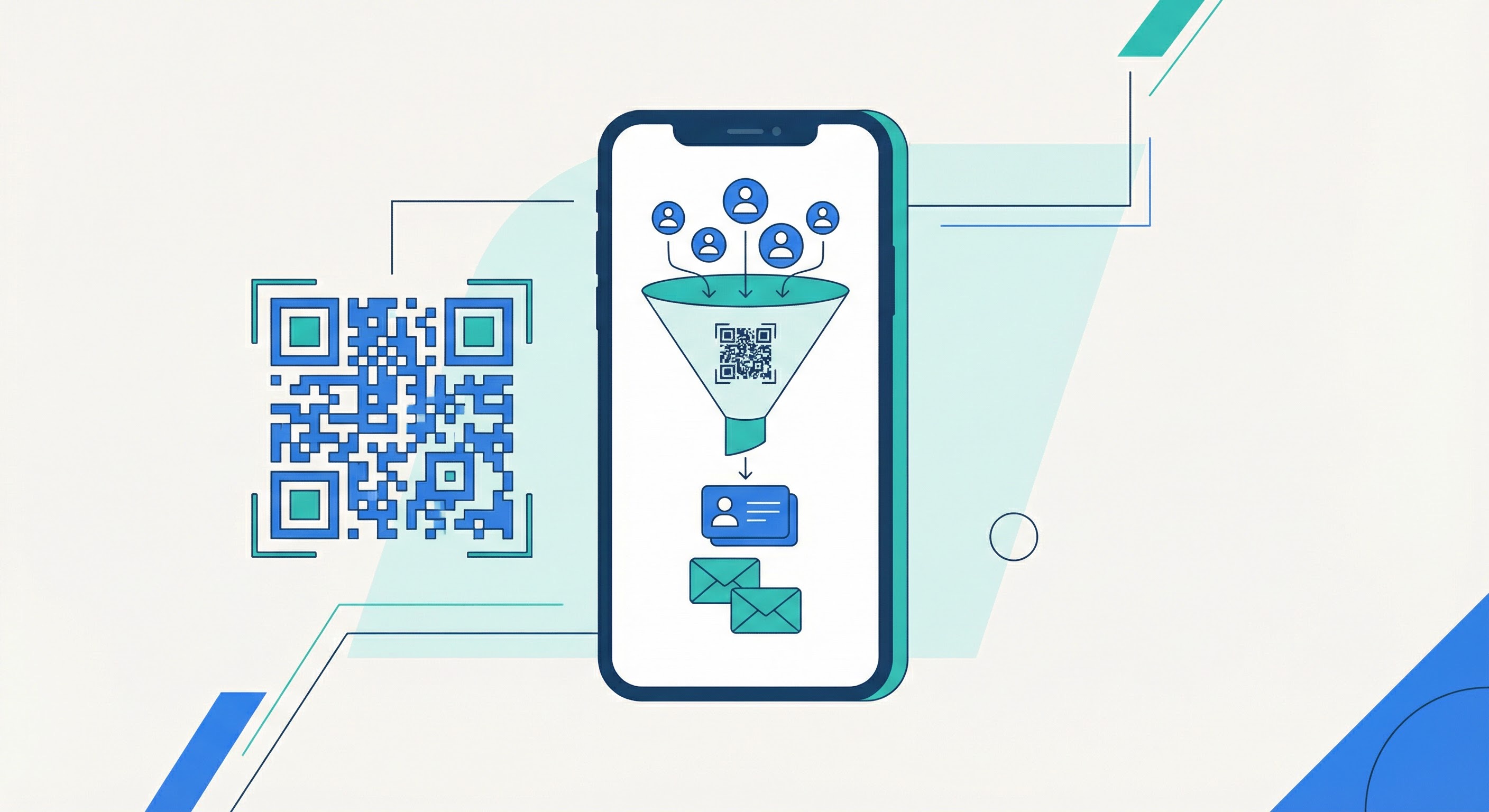
The mechanics are simple: a QR code acts as a frictionless bridge between a physical touchpoint (a business card, poster, trade show banner, product package) and a digital destination (a lead form, contact page, email composer, or landing page). Instead of asking prospects to type a URL or remember a phone number, you give them a single scan that instantly opens the right destination on their device.
There are two categories of QR codes relevant to lead generation:
For lead generation, dynamic QR codes are almost always the right choice. The scan data they provide — who scanned, when, where, and on what device — forms a layer of intelligence that makes your follow-up more targeted and your ROI measurement concrete. Learn how to track and analyze QR code performance to close the loop between scan and conversion.
The lead generation flow typically works like this:
Now let us look at the nine most effective QR code lead generation strategies — each with practical implementation tips.
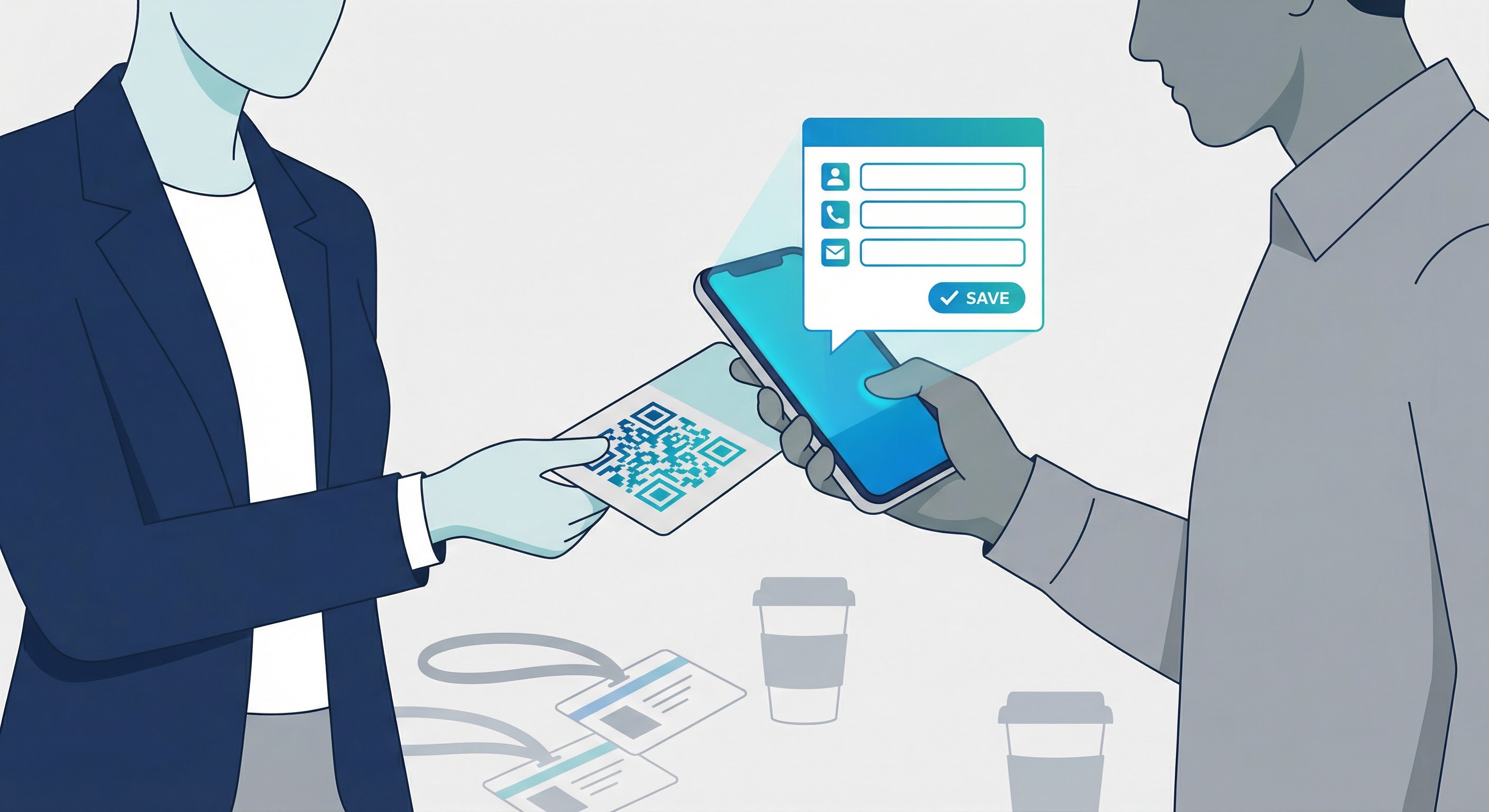
The humble business card is still one of the most widely exchanged networking tools in existence — but it has a fatal flaw: most cards end up in a drawer and are forgotten within a week. A vCard QR code solves this by letting the other person save your full contact details directly to their phone in a single scan. Name, title, company, phone, email, website, and even a profile photo — all automatically pre-filled in their contacts app.
This matters enormously for lead generation because it eliminates the most common failure point: the prospect never follows up because they cannot find your details. Once your information lives in their phone, you become searchable, callable, and messageable on demand.
For the deepest lead generation impact, combine vCard QR codes with a CRM integration so each new scan triggers an automatic follow-up sequence. Read our complete guide to QR code business cards for advanced design and placement strategies.
An email QR code pre-populates the recipient's email app with your business address and a subject line — all the prospect needs to do is tap "Send." This removes the biggest barrier to inbound email lead generation: the effort of composing a message and figuring out who to address it to.
Email QR codes are particularly effective in physical environments where typing is inconvenient:
Implementation tip: Write a pre-filled subject line that automatically tags the email for your CRM. For example: "Subject: New Inquiry — [Event Name]" helps your sales team instantly categorize and prioritize inbound leads. Double-check the email address is correct before printing — a typo here means every lead goes nowhere.
For businesses running multiple campaigns simultaneously, bulk QR code generation allows you to create hundreds of unique email codes with different subject lines for different locations or campaigns, without manual repetition.
Phone numbers are among the most valuable lead data points a business can collect — they enable direct outreach, SMS campaigns, and WhatsApp marketing. An SMS QR code pre-populates the prospect's messaging app with your phone number and a starter message. When they hit Send, you receive their number automatically — no form, no data entry, no friction.
This method is especially powerful for:
SMS has a 98% open rate and a response rate roughly 8x higher than email, making the phone numbers collected via QR codes exceptionally valuable. QR Code Chimp's 2026 statistics show that SMS-linked QR codes consistently achieve some of the highest conversion rates across QR code types.
Implementation tip: Pre-fill a short, friendly opener like "Hi, I'd like to find out more about your services" so prospects understand exactly what they're sending. Include a clear call-to-action frame: "Text us for a free quote" or "Scan to join the VIP list."
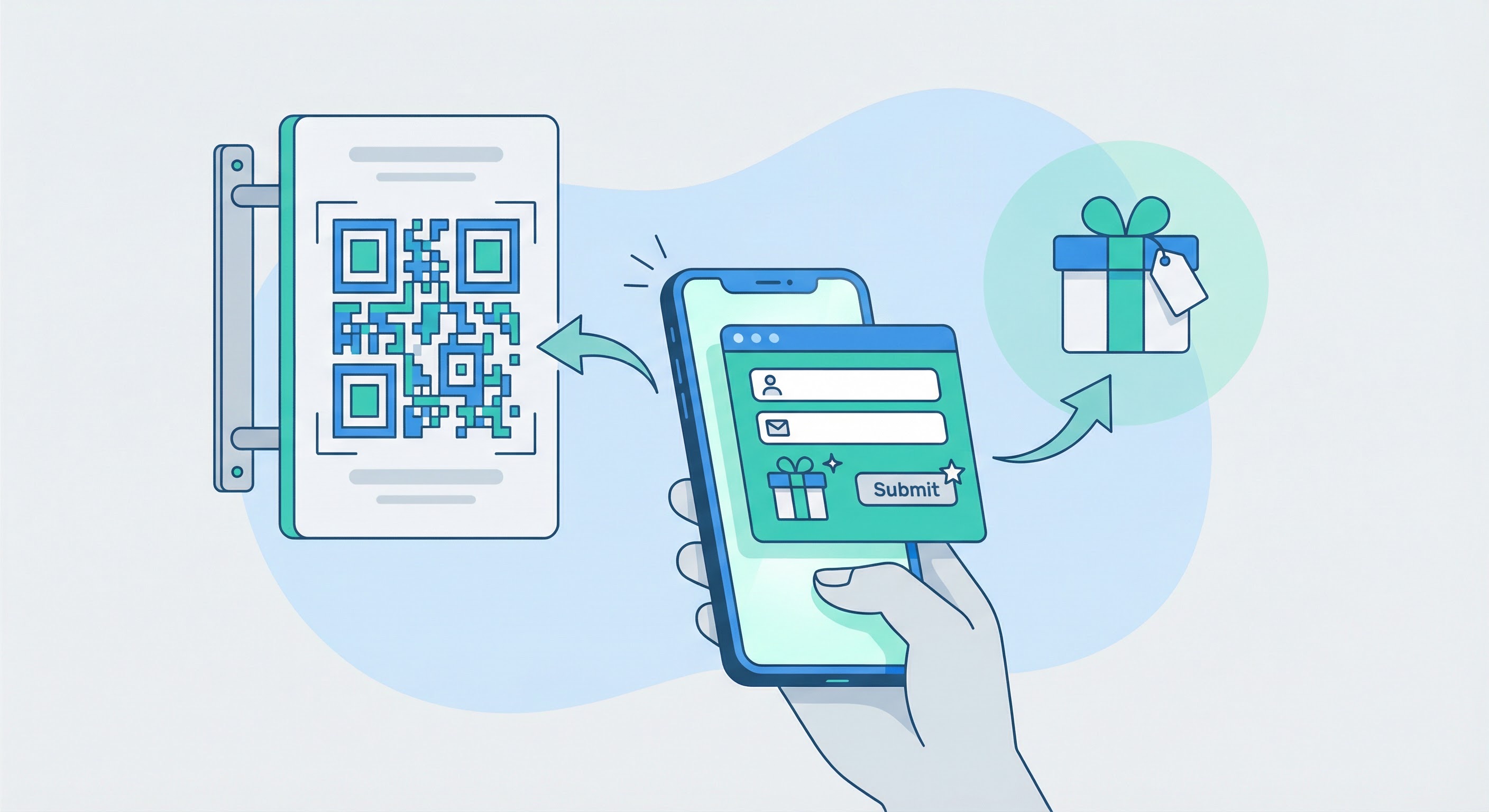
A URL QR code pointing to a custom lead capture form is one of the highest-converting lead generation strategies because it combines convenience with incentive. Rather than asking prospects to search for a landing page, you deliver it instantly via scan — and by offering something valuable in return for their details, you dramatically increase form completion rates.
Keep the form to three fields maximum: name, email, and one qualifying question (e.g., company size, area of interest). Every additional field reduces completion rates by an estimated 10-15%. Use progressive profiling to gather more data over time via follow-up interactions rather than overwhelming the prospect at first contact.
Your landing page should mirror the promise in the QR code's call-to-action frame. If the code says "Scan to get your free guide," the landing page headline should confirm that immediately. Disconnects between the promise and the destination are the primary reason for high bounce rates on QR-driven traffic.
For businesses running campaigns across multiple locations or channels — like a franchise or retail chain — bulk QR codes let you generate unique form codes for each location with individual scan tracking, giving you granular data on which stores or markets generate the most leads.

Trade shows and live events are among the highest-value lead generation environments in existence — attendees self-select as people actively researching solutions in your space. But the traditional lead capture tools (paper sign-up sheets, manual badge scanning, exchanging business cards) are slow, error-prone, and create data silos that are painful to transfer into a CRM.
QR codes transform trade show lead capture into a streamlined, real-time process. Deploy them across every surface in your booth:
For event marketing, the most effective tactic is to offer a tangible incentive for scanning — a prize draw entry, a discount, or access to exclusive post-event content. This dramatically increases scan rates beyond those who are simply curious. When you combine an incentive with a well-placed code, conversion rates at trade shows routinely exceed 20-30%.
Post-event follow-up: Because dynamic QR codes track every scan, you can export a timestamped list of who engaged with which codes and when. Use this as a prioritized call list — the people who scanned the demo request code are higher intent than those who scanned the general info code. This kind of qualification is impossible with traditional business card collection.
See how QR code marketing strategy ties event campaigns into a broader multi-channel funnel, including how to connect scan data to your CRM and email automation tools.
Out-of-home (OOH) advertising — billboards, bus stops, subway posters, magazine ads — has traditionally been the hardest channel to attribute to lead generation. A QR code changes that completely by adding a measurable, scannable call-to-action to every physical ad placement.
Placing QR codes on billboards and street advertisements transforms passive brand impressions into active lead generation events. Every scan is a tracked, timestamped interaction — giving you geographic performance data, time-of-day patterns, and an audience segment you can retarget digitally.
Best practices for OOH QR code lead generation:
In magazine and newspaper advertising, QR codes can direct readers to video demonstrations, extended editorial content, or time-limited offers that are impossible to include in print. This bridges the gap between print readership and digital conversion. The Lacoste campaign during live tennis broadcasts — placing a static QR code in the corner of the TV frame — demonstrated that even broadcast media can use QR codes to generate leads at scale.
For B2B companies, the most valuable lead action is a demo request or discovery call booking. QR codes dramatically shorten the path to this conversion by placing a direct link to your booking page on any physical material your prospects encounter.
This works exceptionally well in the following B2B contexts:
QR codes for business services have proven particularly effective in account-based marketing (ABM) contexts because dynamic codes allow you to create unique URLs for each target account, track which companies engaged, and prioritize follow-up based on actual scan data rather than assumptions.
For B2B teams using WhatsApp as a sales channel, a WhatsApp QR code lets prospects open a pre-filled conversation with your sales team in one tap — ideal for high-touch industries where real-time messaging is preferred over email forms. Combine this with your social media marketing strategy to create a consistent cross-channel lead capture experience.
Two of the most underutilized QR code lead generation tactics are competition campaigns and product waitlists — both of which create natural viral sharing incentives that extend your reach far beyond your initial placement.
A well-designed QR code competition works as follows: prospects scan a code on a billboard, in-store display, flyer, or social media post, which directs them to an entry form requiring their name, email, and optionally a phone number. The prize should be high enough in perceived value to justify the data exchange — product bundles, gift cards, event tickets, or exclusive experiences all perform well.
The viral multiplier comes from the social sharing mechanism: "Share this code with a friend for a bonus entry" creates organic distribution at zero additional cost. Every shared scan is a new lead that came from a peer recommendation — the highest-trust source of introduction.
For product launches, sold-out items, or new location openings, a "be the first to know" waitlist QR code creates urgency and captures high-intent leads who have self-identified as your most enthusiastic potential customers.
Deploy these via URL QR codes linking to a dedicated waitlist landing page. Once the product or service launches, you have a warm list of pre-qualified leads to notify first — dramatically reducing the cost-per-acquisition compared to cold outreach or paid advertising.
For campaigns with multiple entry points (different stores, events, or media placements), the app download QR code strategy provides a useful model: each placement gets its own unique code, allowing you to identify your highest-performing channels and double down on them.
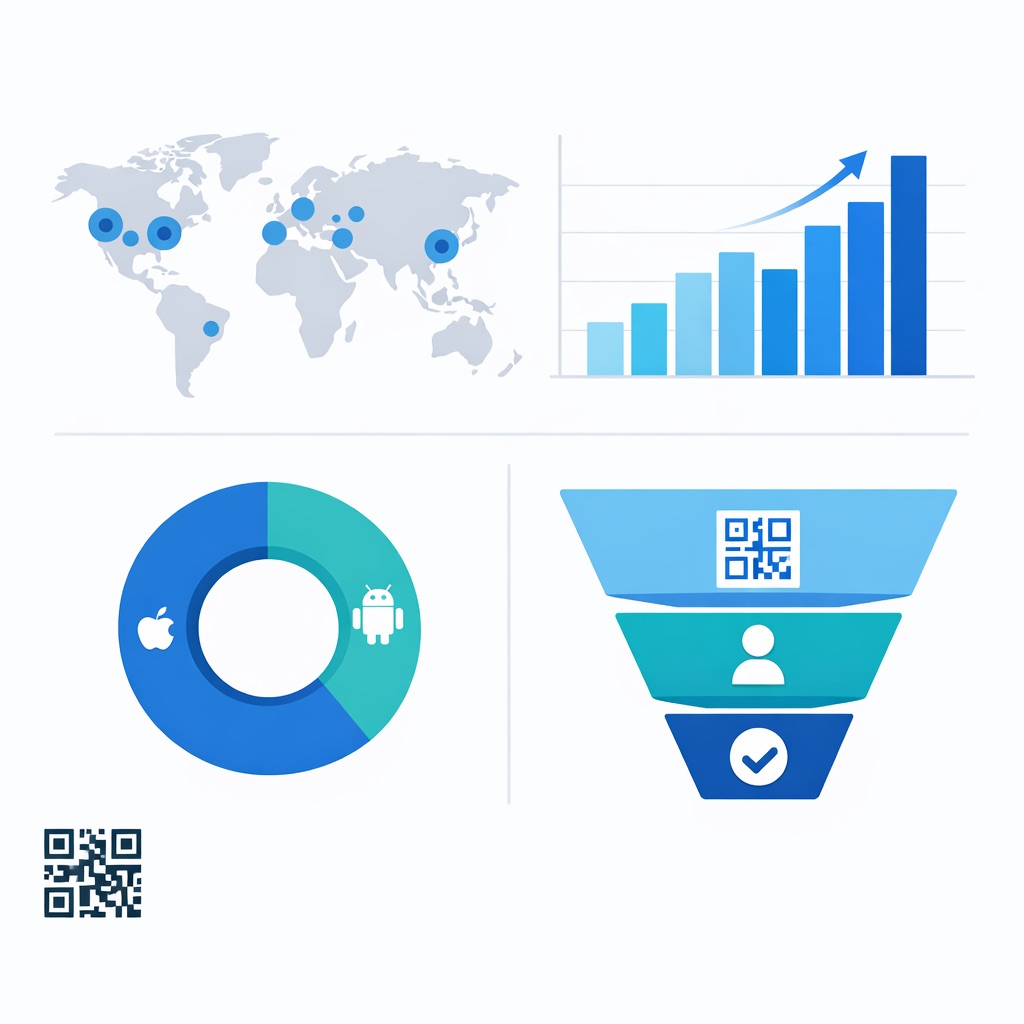
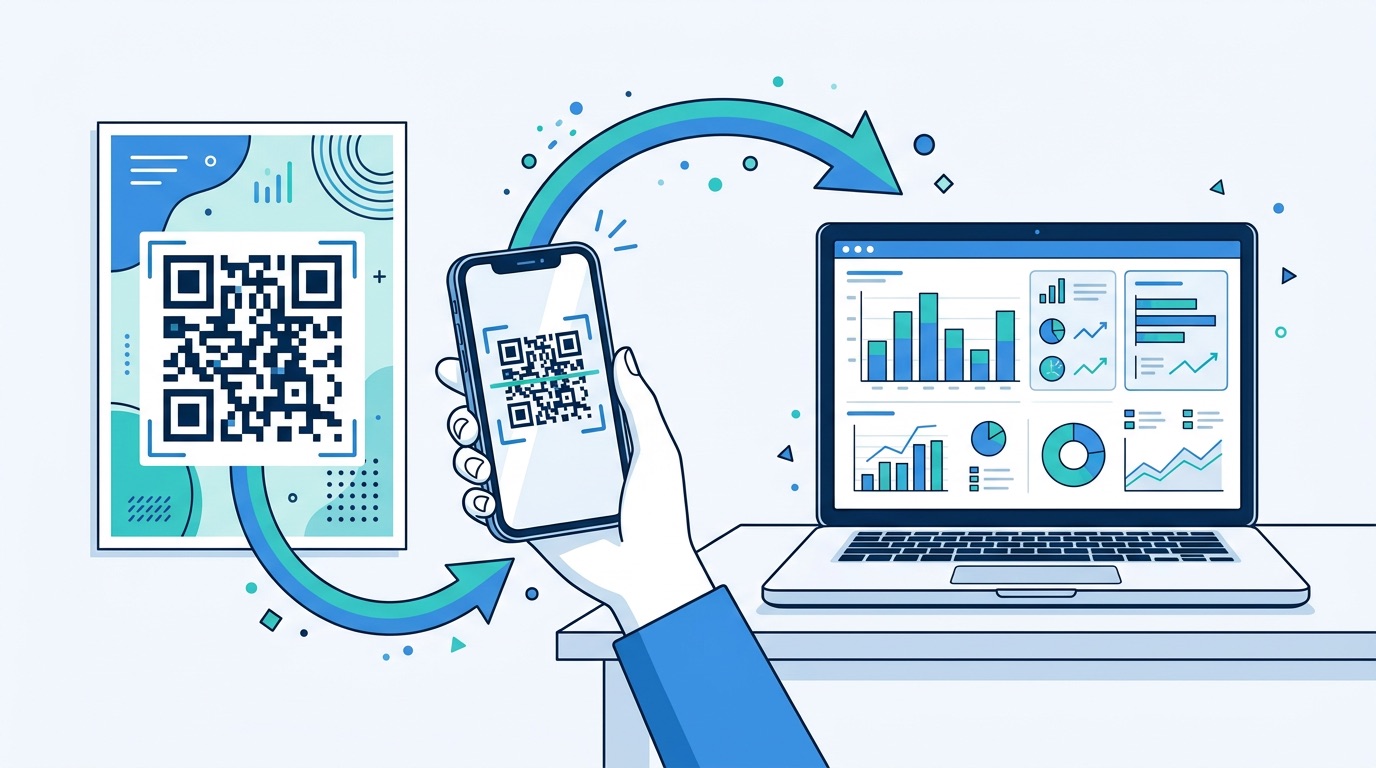
A QR code that generates leads but cannot be measured is only half as valuable as one you can optimize. Dynamic QR codes — available on every Supercode plan, including the free plan — provide a real-time analytics dashboard with the data you need to continuously improve campaign performance:
The most important optimization lever is A/B testing your QR code destinations. With dynamic codes, you can update the destination URL and immediately see whether a new landing page, form design, or offer converts at a higher rate. Run tests for at least two weeks before drawing conclusions to account for day-of-week variation. See our detailed QR code tracking and analytics guide for a step-by-step approach to building attribution models.
Three metrics every QR lead gen campaign should track:
For campaigns using multiple QR codes across different surfaces and locations, bulk QR code generation and folder organization in Supercode keeps your campaign assets organized and analytics segmented by placement from the start. Review our guide to common QR code mistakes to ensure your tracking setup is correct before launch.
QR codes capture leads by directing prospects who scan the code to a specific action: completing a lead capture form, saving contact details via a vCard, sending a pre-drafted email, or opening an SMS to your business number. Each of these actions passes the prospect's contact data to your CRM or database. Dynamic QR codes also track the scan event itself, giving you timestamped data even before the prospect completes an action.
The best QR code type depends on your goal. For capturing email addresses and phone numbers, URL QR codes pointing to a lead form are most versatile and widely used. For networking and contact exchange, vCard QR codes are most effective because they remove all friction from saving contact details. For high-volume campaigns with multiple placements, dynamic QR codes are essential because they allow destination updates and provide per-code analytics without reprinting.
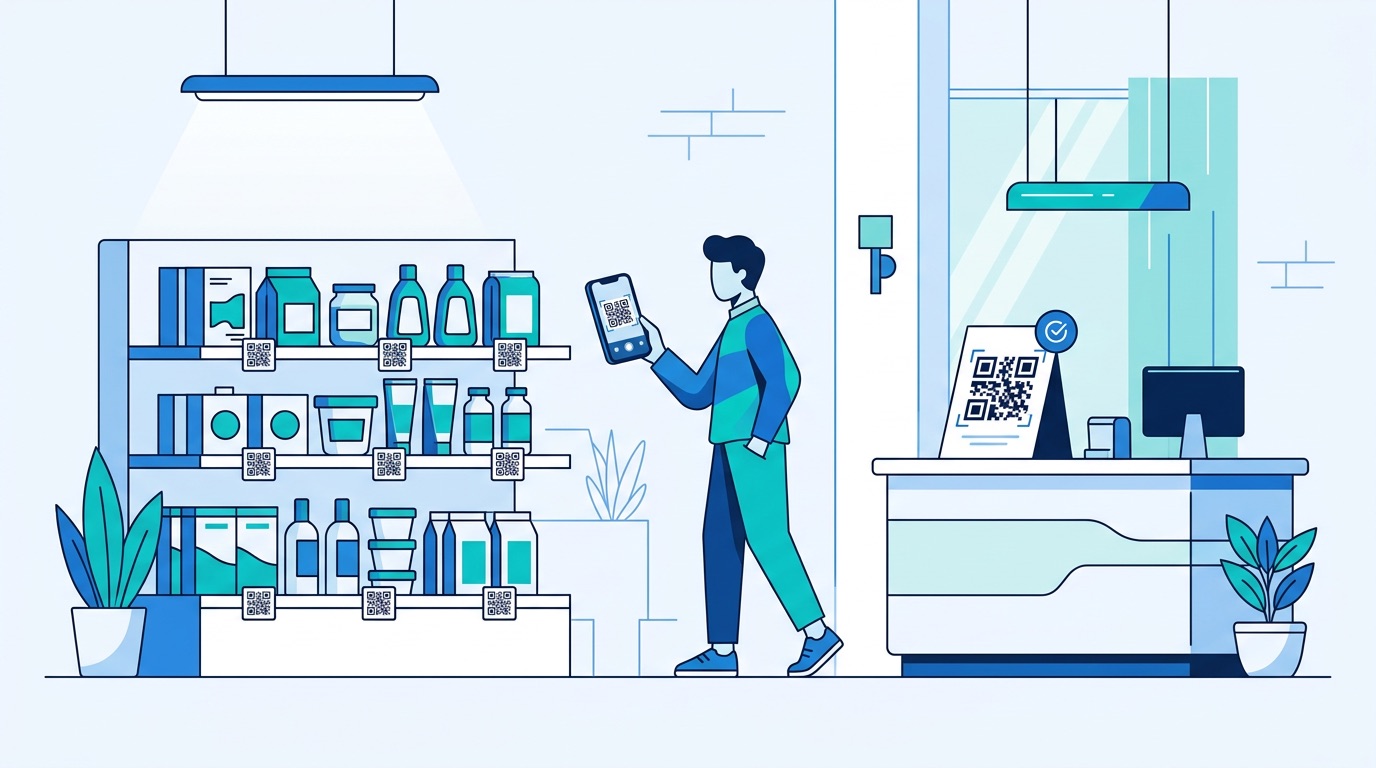
Scan rates are driven by three factors: visibility (the code must be large and well-contrasted against its background), context (prospects must understand what they will get), and incentive (a compelling reason to act now). Always include a clear call-to-action frame that explains the benefit: "Scan to get 20% off," "Scan to save my contact," or "Scan to enter the prize draw." Placement matters too — position codes at eye level and away from reflective surfaces.
Yes. QR codes do not directly integrate with CRMs, but the landing pages and forms they link to do. By sending QR-generated leads to a form built in HubSpot, Salesforce, Mailchimp, or any other CRM-connected tool, every scan that results in a form submission automatically populates your lead database. You can also use UTM parameters in your QR code destination URL to tag leads by campaign source in Google Analytics and your CRM.
Dynamic codes with full analytics are included on Supercode’s free plan. Supercode's free plan includes every feature — unlimited dynamic QR codes, full scan analytics, and custom design tools. Beyond that, the primary costs are printing and design for physical materials — far lower than equivalent paid digital advertising campaigns. Most businesses see a cost per lead 30-50% lower than paid search or social ads.
Any industry with physical customer touchpoints benefits significantly. The highest-performing sectors include retail (in-store promotions and loyalty sign-ups), hospitality and restaurants (reservation and newsletter sign-ups), B2B services (demo requests at events and trade shows), real estate (property inquiry forms via for-sale signage), and events and entertainment (competition entries and waitlists). See 15 practical QR code uses for business for vertical-specific strategies.
QR codes are one of the few marketing tools that can simultaneously reduce friction for prospects, lower cost per lead for your business, and provide the first-party data that is increasingly difficult to obtain through digital advertising channels. With 95% of businesses reporting successful data collection and scan volumes growing year over year, the question is no longer whether QR codes work for lead generation — it is how quickly you can deploy them across your most valuable touchpoints.
Whether you are starting with a vCard on your business card, a lead form on a trade show banner, or a competition code on a social media post, the principles are the same: make scanning effortless, make the value obvious, and use analytics to optimize continuously.
Create your first lead generation QR code with Supercode — free to start, with full analytics and dynamic code management available from day one. Explore our complete QR code solutions or browse the industry use cases to find the right strategy for your business.