QR code marketing ideas have never been more powerful than they are in 2026. Marketing and advertising QR code scans have grown 323% since 2021, over 2.2 billion people worldwide now scan QR codes regularly, and 94% of marketers consider them an effective engagement tool. The gap between brands that use QR codes tactically and those that deploy them as a central campaign pillar is widening fast. Whether you are launching a retail activation, growing a social media following, or bridging TV advertising with mobile conversion, this guide covers the 15 most effective QR code campaign strategies to deploy right now. Each idea is grounded in real-world data and designed to drive measurable results for your business.
Why QR Code Marketing Ideas Are a Must-Have in 2026

The numbers tell the story clearly. QR codes deliver a 37% average click-through rate on customer journeys, compared to 2–5% for traditional digital display advertising. According to Linkscan, businesses using dynamic QR codes are 3.5x more likely to track and optimise campaign performance, giving marketers real-time feedback loops that static media never could.
The scale of adoption is equally striking. Approximately 99.5 million US smartphone users are expected to scan a QR code in 2025, and 84% of mobile users have already scanned at least one. With the global QR code market valued at $13.04 billion and forecast to grow at 17% CAGR through 2030, building QR code marketing ideas into your campaigns today is a long-term competitive advantage, not a trend.
The following 15 strategies cover the full spectrum of QR code marketing applications — from shoppable e-commerce flows to connected TV advertising — so you can choose the tactics that fit your goals, channels, and budget. See our full QR code solutions overview to understand which features power each strategy.
1. Shoppable QR Codes for Instant Checkout

The fastest-growing QR code marketing idea in retail is the shoppable scan: a URL QR code that takes a customer from physical product discovery directly to a mobile checkout page, removing every friction point between intent and purchase. 64% of shoppers have scanned product packaging QR codes while shopping in-store, and 79% of consumers are more likely to purchase products that have QR codes providing additional product information.
How to build a shoppable campaign:
- Product packaging to cart — Place a QR code on product packaging that links directly to the product page with a pre-filled cart. Lancome famously used this to route from physical packaging to their e-store, driving immediate purchase intent.
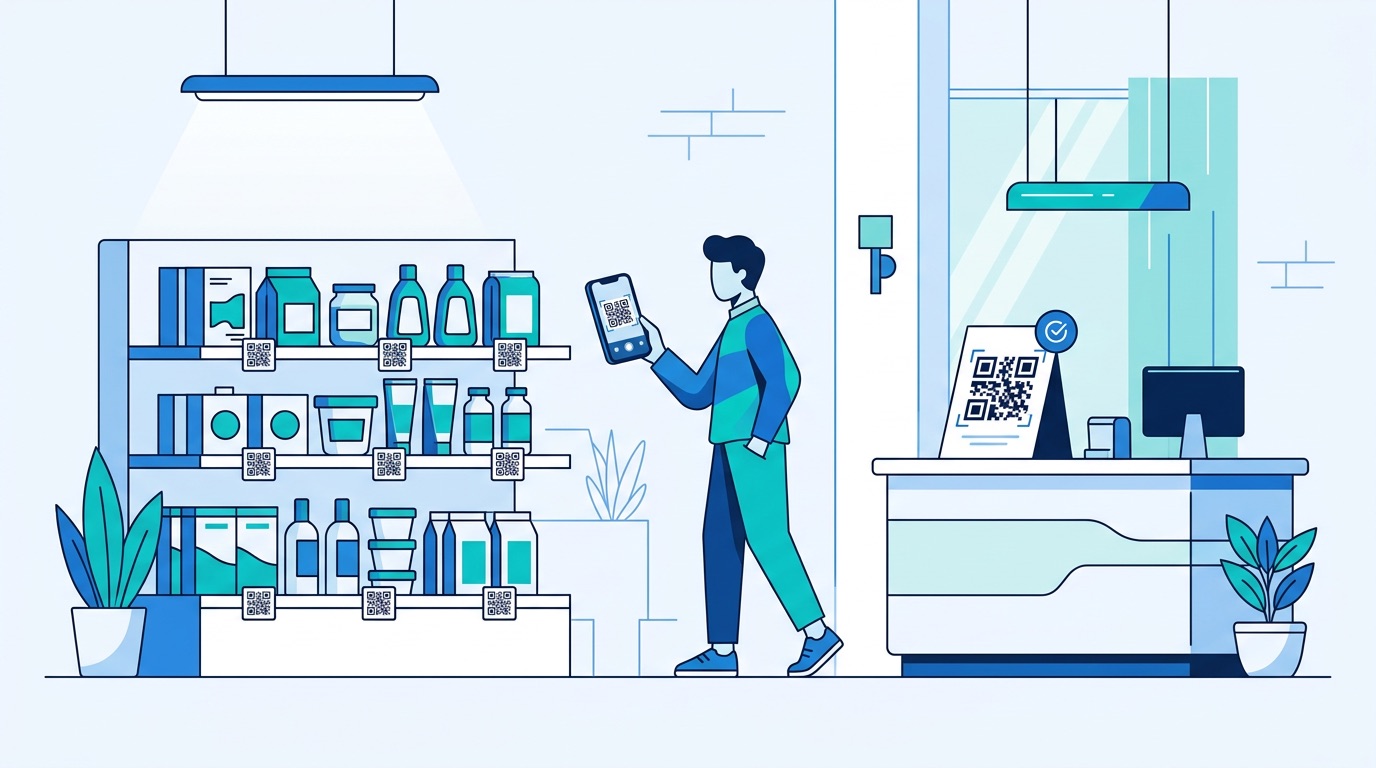
- Point-of-sale shelf tags — Deploy QR codes on shelf labels in retail stores that link to extended product specs, comparison guides, or limited-time offers unavailable on the pack.
- Receipts and packaging inserts — Add a dynamic QR code to receipts linking to a reorder page or cross-sell recommendation. This turns a one-time buyer into a repeat customer.
- Merchandise and branded items — Embed QR codes on branded merchandise that link to loyalty sign-up pages or exclusive members-only content.
Use dynamic QR codes for all shoppable campaigns so you can update the destination URL — swap in seasonal promotions, new product lines, or flash sale pages — without reprinting a single label.
2. Gamified QR Code Campaigns and Scavenger Hunts
Gamification transforms passive brand awareness into active, memorable participation. QR code scavenger hunts, where participants scan codes hidden at physical locations or embedded in packaging to unlock clues, prizes, or exclusive content, drive exceptional engagement because they combine physical movement with digital reward.
Major brands have proven the formula:
- Burger King hid QR codes on limited-edition meal boxes that unlocked collectible NFT game pieces for an interactive hunt.
- McDonald's (2024) placed QR codes on anime-themed packaging that unlocked exclusive weekly digital manga chapters — driving repeat purchases throughout the campaign window.
- Starbucks (2023) ran a 16,000-location in-store AR experience where customers scanned codes to view and share animated "kindness" messages.
- Samsung India embedded QR codes in print ads letting readers test the Galaxy S24 Ultra's "Circle to Search" feature directly from the magazine page.
To run your own scavenger hunt, create a series of dynamic URL QR codes, place them at different physical locations or on different products, and build a landing page sequence that rewards completion. Use Supercode's QR code tracking and analytics to monitor scan velocity at each touchpoint and identify where participants drop off.
For large-scale activations like events or multi-city campaigns, use bulk QR code generation to create hundreds of unique codes at once via CSV import, each linking to a different clue or reward page. Read our bulk QR code generator guide for setup instructions.
3. QR Codes for Social Media Growth

Growing a social following from physical touchpoints is one of the highest-ROI QR code marketing ideas for consumer brands. Instead of asking customers to search for your handle — and risk landing on a competitor — a social media QR code takes them directly to your profile or a curated multi-platform hub with a single scan.
Effective social media QR code campaigns:
- Multi-profile social hub — Create one QR code that opens a landing page showing all your social profiles (Instagram, TikTok, LinkedIn, WhatsApp). Place it on posters, packaging, and in-store displays. When you add a new platform, simply update the destination — no reprinting needed.
- Scan-to-follow activations — At events, trade shows, or pop-up shops, display an oversized QR code that triggers an Instagram or TikTok follow. Combine with a prize draw for following to boost conversion rates.
- UGC campaigns — Place QR codes on branded cups or packaging linking to a UGC submission page where customers share photos for a chance to be featured on your feed.
- Hashtag amplification — Link QR codes to a pre-populated social sharing page that includes your campaign hashtag, making it effortless for customers to post about your brand.
For a comprehensive playbook, see our guide to QR codes for social media marketing.
4. QR Code Campaigns for Events and Experiential Marketing
Events are one of the most natural environments for QR code marketing ideas. From conference badges to festival wristbands, physical touchpoints are everywhere — and QR codes turn every one of them into a data-collection and engagement opportunity.
Key event applications:
- Digital ticketing and check-in — Replace paper tickets with QR codes sent to attendees' phones. At the door, staff scan codes for instant, contactless check-in. This eliminates queues and generates real-time attendance data. The event management use case page covers the full setup.
- Interactive booth experiences — At trade shows, place QR codes on your stand that link to product demos, pricing PDFs, or booking forms — capturing leads without paper collateral.
- Session and speaker content — Display QR codes during presentations linking to slide decks, supplementary resources, or feedback forms. This extends content engagement beyond the room.
- Post-event follow-up — Print QR codes on event swag that link to an exclusive post-event landing page: recording access, discount codes, or a community sign-up. Keep attendees engaged long after they leave.
- Tourism and city guides — For city-based events, link QR codes at venues to tourism guides or city tour maps, helping attendees discover surrounding attractions.
Combine event QR codes with feedback QR codes at session exits to collect real-time satisfaction scores and open-ended comments — data that would otherwise take days to gather through post-event email surveys.
5. QR Codes on Product Packaging for Brand Transparency
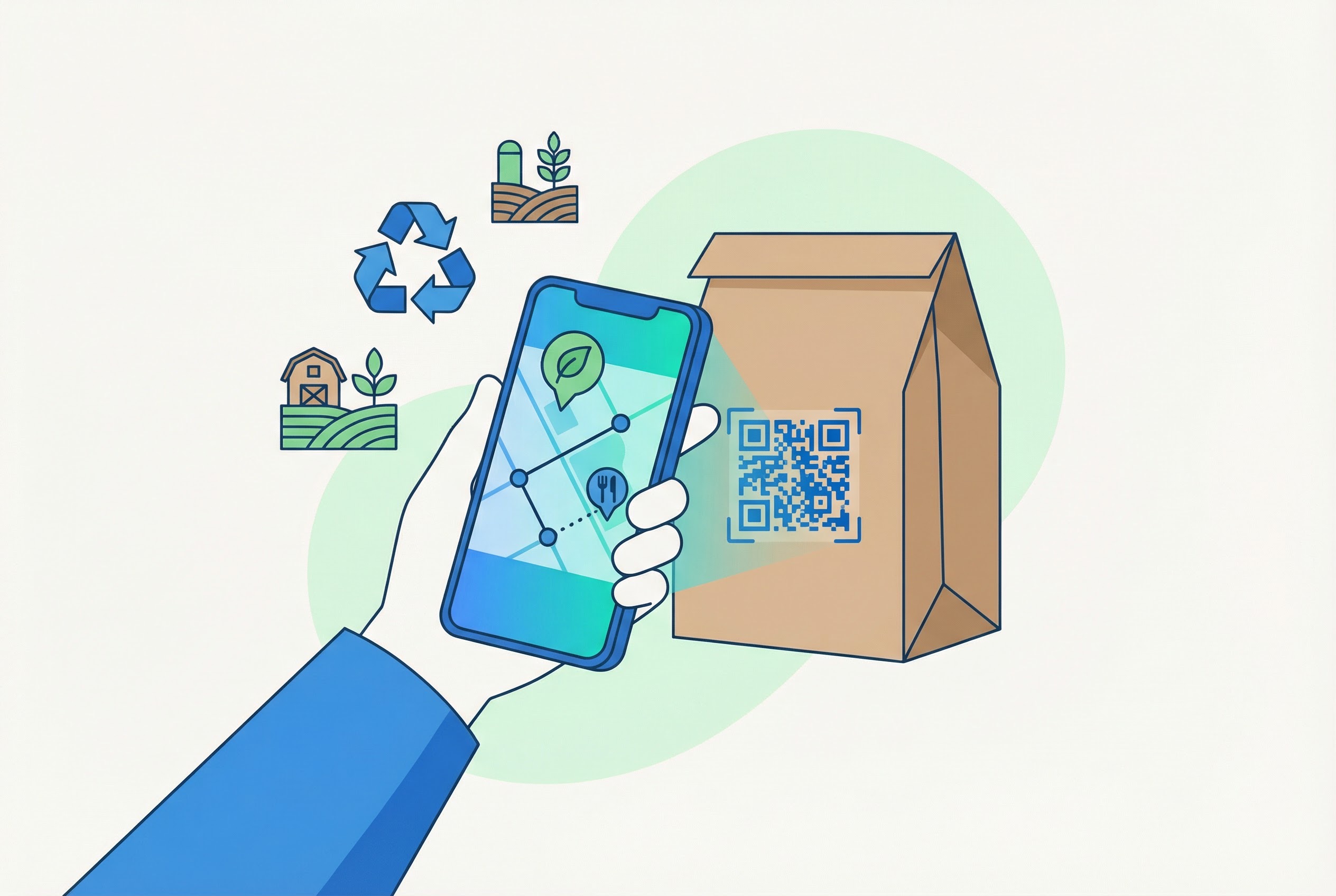
Transparency is a purchase driver, not just a compliance requirement. Retail saw an 88% year-over-year increase in QR code generation on packaging, driven by consumer demand for product origin, ingredient, and sustainability data. Brands that use food packaging QR codes effectively position themselves as trustworthy while creating a richer post-purchase experience.
Transparency use cases that convert:
- Ingredient sourcing maps — Link to an interactive page showing where each ingredient was sourced, with supplier certifications. This is particularly effective for food, beverage, and beauty brands.
- Sustainability storytelling — Connect product packaging QR codes to pages detailing your carbon footprint, recyclability, or ethical supply chain practices. See our deep-dive on QR codes for sustainable marketing.
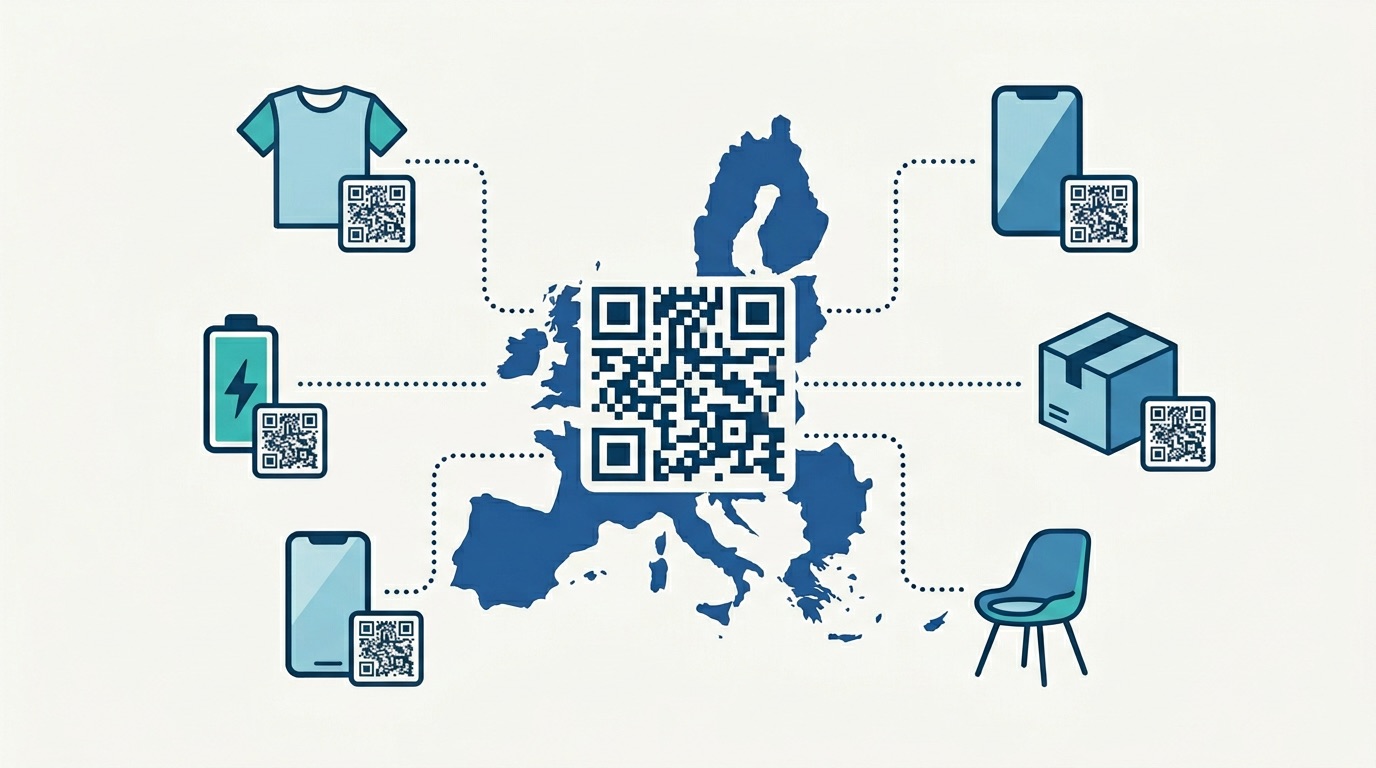
- EU Digital Product Passport (DPP) readiness — With the EU DPP registry becoming operational in July 2026, manufacturers selling into European markets will need machine-readable product data accessible via QR code. Dynamic QR codes on packaging make compliance seamless — update the data endpoint without changing the printed code. Learn how eco-aware consumers are embracing QR codes for this purpose.
- Track-and-trace logistics — For food safety or high-value goods, link QR codes to real-time batch tracking data that shows production date, facility, and distribution chain.
Dynamic QR codes are essential here. When product specifications change, certifications expire, or you need to update destination pages seasonally, a dynamic code lets you do so instantly — no new packaging required.
6. QR Code Campaigns for App Downloads
Getting consumers to download your app from a physical channel has always been difficult — until QR codes. A direct link from the real world to your app store listing removes every step between awareness and install. 47% of consumers who scan QR codes are specifically looking to access a mobile app, making this one of the highest-intent use cases in the toolkit.
Proven app download campaign formats:
- Packaging and in-store signage — McDonald's pioneered this strategy nearly a decade ago, placing QR codes on tray liners and cups to drive customers to their app for exclusive discounts. The result: significantly higher app adoption than digital-only campaigns.
- L'Oréal taxi cab campaign — By placing QR codes linked to their app inside New York City taxis with Glamour magazine, L'Oréal reported an 80% increase in app downloads during the campaign window — a high-dwell-time physical environment converted to a direct digital action.
- Out-of-home (OOH) placements — Billboard and street advertising QR codes that deep-link to your app store listing (iOS App Store or Google Play) work best when paired with a strong value proposition: "Scan to get 20% off your first order."
- Smart app store routing — Use a dynamic QR code that detects the user's device OS and automatically routes iOS users to the App Store and Android users to Google Play, preventing dead-end links.
For the complete app download strategy, read our guide: How to Boost App Downloads With QR Codes (2026).
7. QR Codes for Customer Feedback and Loyalty Programs
Collecting actionable feedback and building loyalty requires removing friction from the process. A feedback QR code placed at the right moment — on a receipt, at a table, after delivery — captures honest responses when the experience is still fresh, rather than days later when email surveys land in crowded inboxes.
Feedback and loyalty campaign ideas:
- Post-transaction feedback — Print a QR code on receipts or order confirmation pages that links to a short 3-question satisfaction survey. Star ratings, optional comments, and opt-in contact fields give you structured and qualitative data simultaneously.
- Table-side hospitality surveys — Restaurants and cafes place QR tent cards on tables linking to a feedback form. Customers who scan while still in-venue tend to provide more specific, actionable input than those who complete surveys later.
- Loyalty programme sign-ups — A QR code on packaging, receipts, or in-store displays that links directly to your loyalty registration page removes the barrier of manual form-filling. A short scan is dramatically more effective than asking customers to visit a URL.
- NPS and review generation — Use dynamic QR codes that route customers to your Google Business Profile, Trustpilot page, or G2 listing. Prompt happy customers at the right moment — post-purchase, post-service — and your review volume climbs organically.
Pair feedback QR codes with QR code analytics to understand scan timing, location breakdowns, and device types — context that helps you interpret the feedback you receive. See also our full guide on how QR codes improve customer experience.
8. QR Code Campaigns for Lead Generation
QR codes are among the most efficient tools for bridging offline outreach with digital lead capture. Whether you are running an event stand, a print ad campaign, or a direct mail programme, a well-designed QR code flow can transform passive exposure into a qualified lead in under 30 seconds.
Lead generation QR code ideas that work:
- Gated content downloads — Place QR codes on brochures and print materials linking to a landing page that requires an email address to download a whitepaper, guide, or case study. You exchange value for contact information.
- vCard networking — Replace paper business cards with vCard QR codes on your phone or printed cards. When scanned, the recipient's phone instantly saves your full contact details — name, title, company, phone, email, and social links. For the complete guide, see QR code business cards.
- Trade show lead capture — At trade show booths, display a QR code linking to a sign-up form or demo booking page. Follow up immediately with an automated email sequence. This outperforms badge-scanning tools that often deliver cold contact lists days after the show.
- SMS and email opt-in — Use an SMS QR code or email QR code to trigger a pre-drafted opt-in message. Customers scan, tap send, and are subscribed — the lowest-friction email or SMS list-building method available.
- Incentivised lead forms — Add a QR code to OOH advertising, packaging, or posters that links to a competition entry page. In exchange for an email address, users enter to win a prize relevant to your product. This builds highly targeted lists.
Read the comprehensive playbook in our guide: QR Codes for Lead Generation: The Complete 2026 Guide.
9. Connected TV and Out-of-Home QR Code Advertising

Connected TV (CTV) and out-of-home (OOH) advertising represent two of the fastest-growing channels for QR code campaigns. CTV advertising spend is forecast to reach $33.35 billion in the US alone in 2025, with QR code usage in CTV ads growing more than 3x year-over-year in 2024 according to Innovid's benchmarks report.
CTV QR code campaign strategies:
- End-card QR codes — Place a QR code in the final 5–10 seconds of a CTV ad. Pair it with a strong verbal CTA ("Scan now for 20% off") and ensure the landing page is mobile-optimised for instant conversion.
- Interactive overlay ads — Some CTV platforms support interactive overlays where viewers can scan a persistent QR code during ad playback. Interactive CTV formats with QR elements deliver up to 71 additional seconds of viewer engagement versus standard pre-roll ads.
- Drive-to-app ads — Use CTV QR codes to deep-link directly to your app install page, bridging the most-watched screen (TV) with the most-carried device (smartphone).
OOH QR code campaign strategies:
- Billboard campaigns — Large-format billboard QR codes work best in high-dwell environments: bus shelters, shopping centre entrances, and petrol station forecourts. Ensure the code is at least 40cm x 40cm for reliable scanning from 3–5 metres.
- Vehicle wraps — QR codes on vehicles parked outside stores or at events create passive impression campaigns. When the vehicle is stationary, passersby can scan to access offers or contact information.
- Transit advertising — Place QR codes in metro carriages, bus interiors, or airport dwell zones. Commuters with dwell time and their phone in hand are among the most receptive audiences for QR code campaigns.
10. WhatsApp and Conversational Commerce QR Codes
With over 3.2 billion global WhatsApp users and 98% message open rates, a WhatsApp QR code that instantly opens a pre-drafted conversation with your business is one of the most effective inbound lead generation tools available. A single scan removes the friction of saving a number, typing a message, or navigating a website — the customer is in conversation within seconds.
WhatsApp QR code campaign ideas:
- Instant customer support — Place WhatsApp QR codes on product packaging, receipts, and in-store displays. Customers with post-purchase questions scan and connect to your support team immediately, reducing friction and building trust.
- Sales and consultation booking — For high-consideration purchases (real estate, financial services, healthcare), a WhatsApp QR code on marketing materials connects prospects to a consultant who can qualify and convert them in real time.
- International phone-number routing — WhatsApp QR codes work across country codes, making them ideal for global campaigns. Users connect via internet rather than local phone networks, eliminating international dialling barriers.
- Conversational commerce sequences — Pre-fill the opening WhatsApp message with context ("Hi, I scanned your code at [event name]") so your team knows exactly where the lead came from and can personalise the response immediately.
For the complete WhatsApp QR code setup guide, including WhatsApp Business vs API comparison and analytics tracking, read: WhatsApp QR Code: The Complete Guide for Business in 2026.
11. QR Codes for Location Discovery and Tourism
One of the most practical and evergreen QR code marketing ideas is connecting people to locations, maps, and local experiences. A single URL QR code linking to a Google Maps pin eliminates the confusion of written directions and works for every industry from retail to hospitality.
- Store locator pages — Embed a QR code on national print advertising, packaging, or OOH campaigns that links to a store locator page pre-filtered for the user's region. Customers find the nearest location in seconds rather than navigating a website.
- Tourism and city experiences — The City of Amsterdam linked QR codes to 140 tourist sites across the city, routing visitors to rich content about each landmark. This model works for any city tour operator, museum, or tourism board.
- Hospitality check-in flows — Hotels and venues place QR codes at reception and in rooms that link to digital guest guides, local restaurant recommendations, and concierge booking forms — reducing front desk load while improving the guest experience.
- Dynamic event maps — At large events or multi-venue festivals, dynamic QR codes on signage link to live-updated maps and schedules. As the programme changes, update the destination URL — the printed codes remain valid throughout the event.
12. How to Measure QR Code Campaign Performance
Every QR code marketing idea is only as good as the measurement framework behind it. Without analytics, you cannot identify which placements are driving scans, which landing pages are converting, or where to reinvest your campaign budget.
Three levels of QR code analytics:
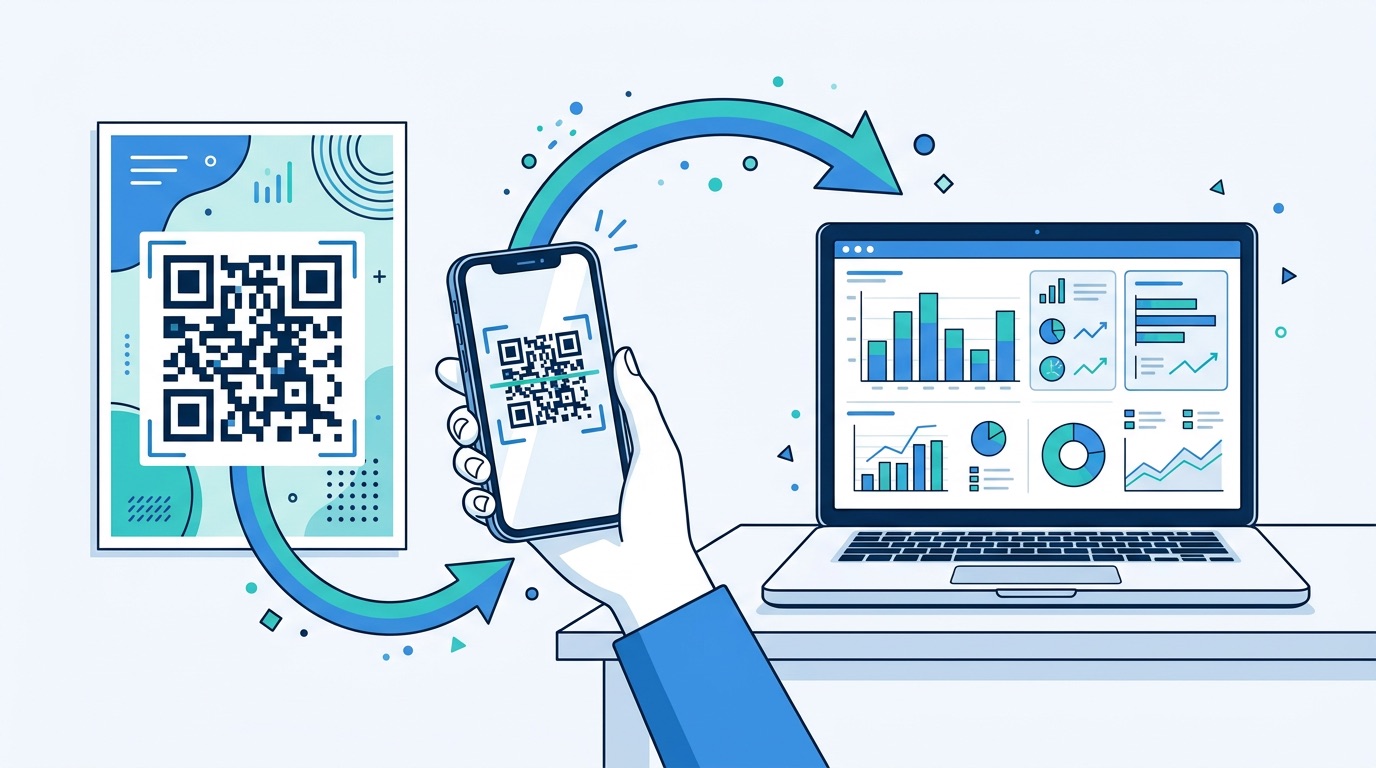
- Scan-level data — Supercode's QR code tracking dashboard captures total scans, unique scans, scan timestamps, device types (iOS vs Android), and geographic breakdown by city or country. This tells you where and when your campaign is generating attention.
- UTM parameter tracking — Append UTM parameters to your QR code destination URLs to pass campaign source, medium, and name data into Google Analytics or your preferred analytics platform. Use
utm_source=qr-code and utm_medium=print (or outdoor, packaging, etc.) so QR-driven conversions appear correctly in your attribution model. Read our QR code statistics overview for benchmarks to compare against. - Conversion tracking — Set up goal completions on your landing pages (form submissions, purchases, app installs) and trace them back to individual QR codes. This lets you calculate ROAS and identify which physical placements drive the highest-value conversions.
Key metrics to track for every QR code campaign:
- Total and unique scan count
- Scan-to-conversion rate (scans vs goal completions)
- Time-of-day and day-of-week scan distribution
- Top geographic markets
- Device type split (to inform landing page design)
- Cost per scan vs cost per conversion
Dynamic QR codes from Supercode update their destination URL in real time, allowing A/B testing of landing pages by rotating destinations and comparing conversion rates — without reprinting your campaign materials. This is one of the most practical uses of dynamic codes in performance marketing.
13. How to Launch a QR Code Campaign With Supercode
Supercode is a professional QR code generator built for marketers: design-customisable codes, real-time analytics, bulk creation, and dynamic code management — all in one platform. Here is how to go from zero to live campaign in under 30 minutes:
- Step 1: Choose your QR code type — Select from URL, social media hub, vCard, feedback, SMS, PDF, WhatsApp, and more based on your campaign objective.
- Step 2: Customise your design — Add your brand colours, logo, and a branded frame with a call-to-action prompt ("Scan for 20% off", "Scan for our menu"). Custom-designed codes scan at a higher rate than plain black-and-white defaults because they stand out and communicate clear value.
- Step 3: Set up tracking — Enable analytics on every code and append UTM parameters to your destination URL. Configure a conversion goal on your landing page so scans flow through to revenue attribution.
- Step 4: Test before deployment — Test the code at the exact print size you plan to use, under the lighting conditions of your placement environment. Common QR code mistakes at this stage include insufficient quiet zone margins and low contrast ratios.
- Step 5: Deploy and monitor — Once live, check your Supercode analytics dashboard daily during the first week to catch any placement or destination issues early. For multi-code campaigns, use Supercode's folder system to organise codes by channel, campaign, or placement type.
Need to run a campaign with hundreds of unique codes? Supercode's bulk code generator lets you create and customise codes in bulk from a CSV file. Review the pricing — every feature on every plan, choose the scan volume for your campaigns, or contact the enterprise team for custom solutions.
Explore all QR code use cases and industry applications to see which campaign types align best with your vertical and audience.
Frequently Asked Questions About QR Code Marketing Ideas
What is the best QR code marketing idea for a small business?
For small businesses, the highest-ROI starting point is a feedback QR code on receipts or table cards and a URL QR code on packaging or print materials linking to your Google Business Profile or online store. Both require minimal setup and generate immediate, measurable results in customer insight and online visibility.
Do QR codes actually work in print and OOH advertising?
Yes — and the data is compelling. QR codes in print and OOH campaigns deliver a 37% average click-through rate on the customer journeys they initiate, substantially outperforming digital banner ads. The key is pairing the code with a clear CTA, placing it in a dwell-time environment, and ensuring the destination page is mobile-optimised.
Should I use dynamic or static QR codes for marketing campaigns?
Always use dynamic QR codes for any campaign that involves printed materials. Dynamic codes allow you to update the destination URL at any time without reprinting, track scan analytics in real time, and run A/B tests. Static codes are only appropriate for information that will never change, such as a fixed WiFi password or permanent URL.
How do I track the ROI of a QR code campaign?
Track ROI by combining scan analytics from your QR code tracking dashboard with UTM parameters that feed conversion data into Google Analytics. Set up goal completions (purchases, sign-ups, app installs) on your landing pages and match them to specific QR codes. Divide revenue attributed to QR-driven conversions by total campaign cost to calculate ROAS.
What makes a good QR code campaign landing page?
A high-converting QR code landing page should load in under 3 seconds on mobile, have one clear CTA above the fold, match the promise made on the physical material ("Scan for 20% off" should go straight to a discount page — not the homepage), and be free of navigation that could distract from conversion. Avoid sending QR code traffic to your generic homepage — always use a purpose-built or campaign-specific landing page.
How many QR codes should I create for a multi-channel campaign?
Create one unique QR code per distinct placement or channel. A campaign running across packaging, in-store posters, and a print ad should have three separate codes — all pointing to the same destination, but tracked individually. This lets you measure which placement drives the most scans and conversions, enabling smarter budget allocation in future campaigns. Use bulk QR code generation to create large batches efficiently.
Start Your QR Code Campaign Today
The 15 QR code marketing ideas in this guide span every channel, budget, and industry — from shoppable product packaging to CTV advertising to gamified scavenger hunts. What they share is a common foundation: dynamic codes, real-time analytics, and a clear call to action. These are the three elements that separate a QR code campaign that drives measurable ROI from one that gets ignored.
Supercode gives you everything you need to execute any of these ideas: professional design tools, full analytics, bulk generation, and the flexibility to update campaigns without reprinting. Explore Supercode's features or dive into our full QR code marketing strategy guide for a deeper framework.
Sign up free today and launch your first QR code campaign in minutes.