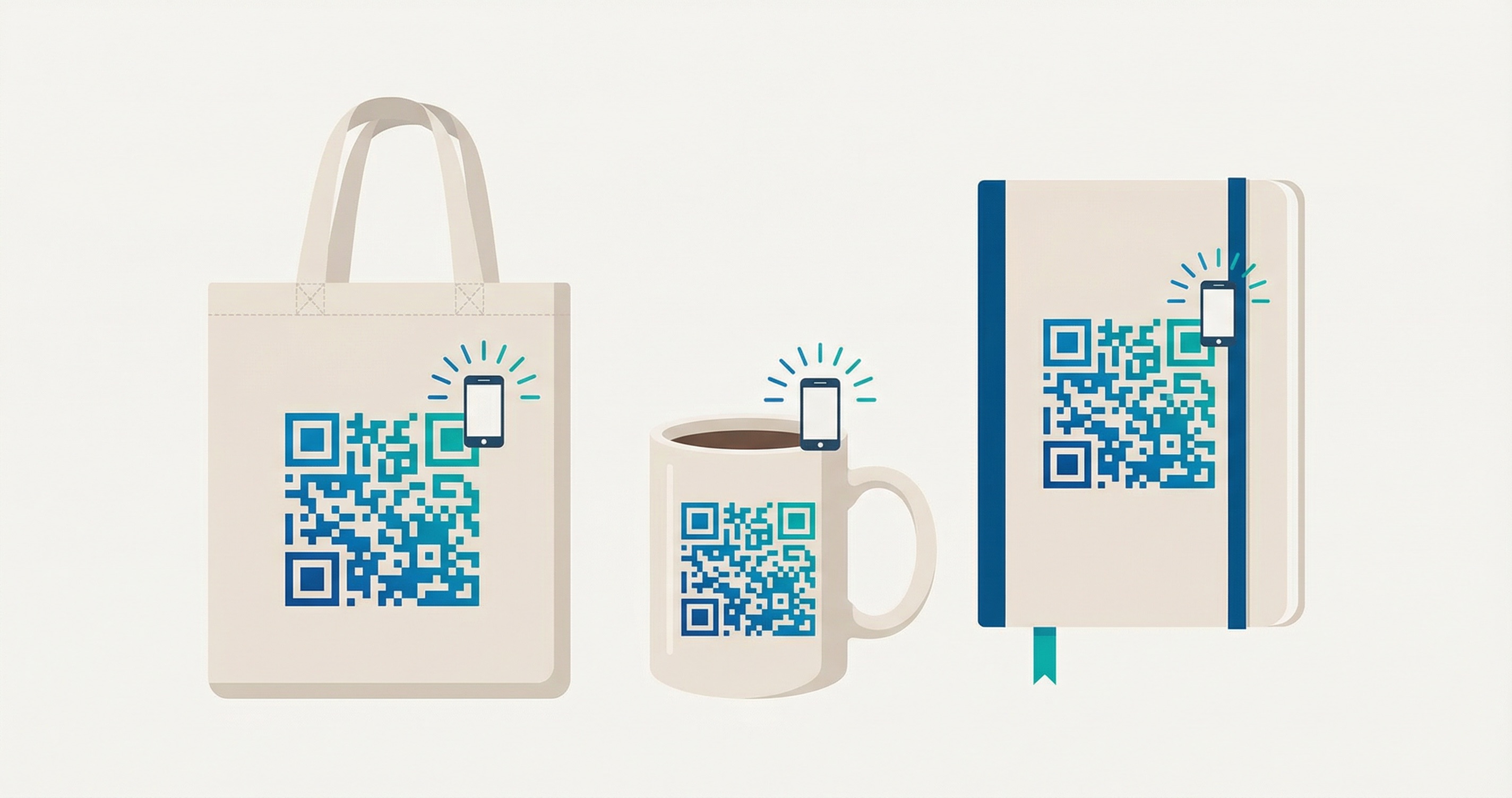
The global promotional products industry reached a record $27.7 billion in North American sales in 2025, according to the Advertising Specialty Institute (ASI) — and for good reason. Branded merchandise turns everyday objects into persistent marketing assets, keeping your brand in front of customers long after the initial interaction. But in 2026, the most forward-thinking brands are going one step further: adding QR codes to their merchandise to bridge the physical and digital worlds.
A QR code on a branded tote bag, mug, notebook, or event t-shirt transforms a static promotional item into an interactive experience. Customers can instantly access your website, social media profiles, special offers, or product demos with a single scan — and you can track every interaction in real time. Whether you're running giveaways at a trade show, selling band merchandise, or distributing corporate gifts, QR codes on merchandise make your physical marketing measurable, updatable, and far more engaging.
This guide covers the benefits, applications, statistics, and best practices for using QR codes on merchandise in 2026, plus a step-by-step walkthrough of creating trackable codes with Supercode's QR code generator.
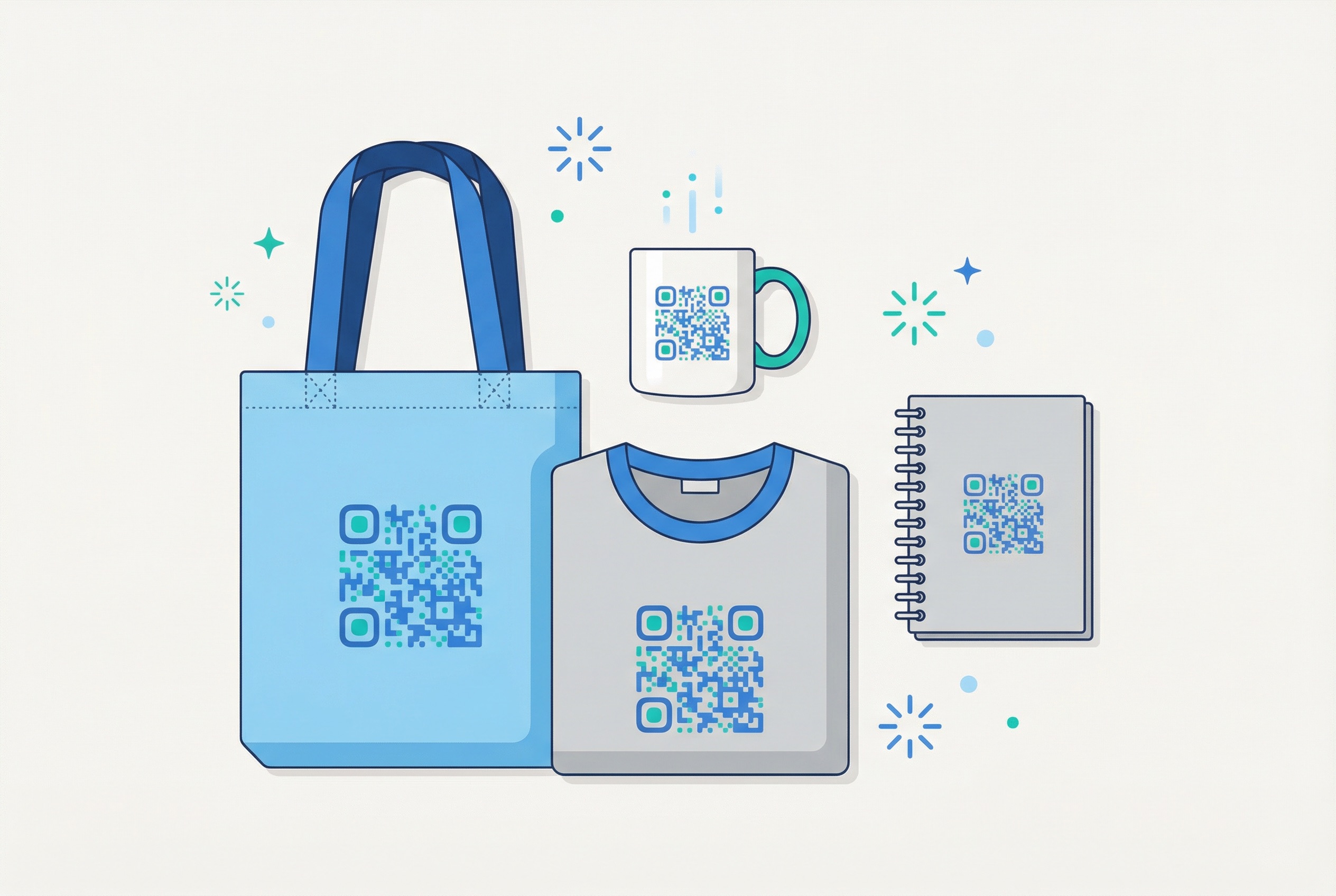
Adding a QR code to your branded merchandise unlocks a range of advantages that static promotional items simply cannot provide. Here are six key benefits for businesses in 2026.
Unlike a printed logo that vanishes into the recipient's home or bag, a QR code on merchandise gives you measurable data. Every time someone scans your code, Supercode's analytics dashboard records the time, location, and device — turning your giveaways into a data-rich marketing channel. You can see exactly which campaigns are driving engagement and optimize future merchandise orders accordingly. Learn more about QR code tracking and the metrics that matter.
Dynamic QR codes allow you to change the destination URL at any time — even after the merchandise has been printed and distributed. This means a QR code on a tote bag printed for a product launch can later link to a new product page, a seasonal promotion, or a loyalty rewards sign-up. You never have to discard or reprint items simply because a URL changed. Dynamic codes also deliver 60% higher engagement rates than static QR codes, according to URL QR code benchmarks.
Promotional merchandise already delivers one of the lowest cost-per-impression (CPI) rates of any advertising medium — as low as 1/10 of one cent per impression (ASI). A QR code amplifies this value further by giving each item an active digital component that can drive traffic, generate leads, and collect customer data long after the item is received. Compared to running repeat digital ad campaigns, a single well-designed QR code on a promotional item can deliver months of ongoing engagement.
A QR code on merchandise opens the door to immersive brand experiences that a printed URL or phone number cannot match. Link to product videos, augmented reality (AR) experiences, exclusive member content, or gamified promotions. Brands in fashion, music and entertainment, and luxury goods are already using QR codes on merchandise to deliver premium digital experiences that deepen consumer relationships.
QR codes reduce the need to print detailed information on every item. Instead of including paper inserts, instruction booklets, or additional printed materials, a single scannable code provides everything a customer needs directly on their smartphone. For brands committed to sustainable marketing, QR codes on merchandise reduce paper waste without sacrificing the quality of information delivered to customers.
Merchandise with a compelling QR code experience is inherently shareable. When someone scans a code and discovers exclusive content, a special discount, or an entertaining experience, they're likely to share it with friends and on social media. Link your merchandise QR codes to Social Media QR codes that encourage followers and grow your audience organically from every item you distribute. This kind of word-of-mouth reach extends the ROI of your promotional spend far beyond the original recipient.
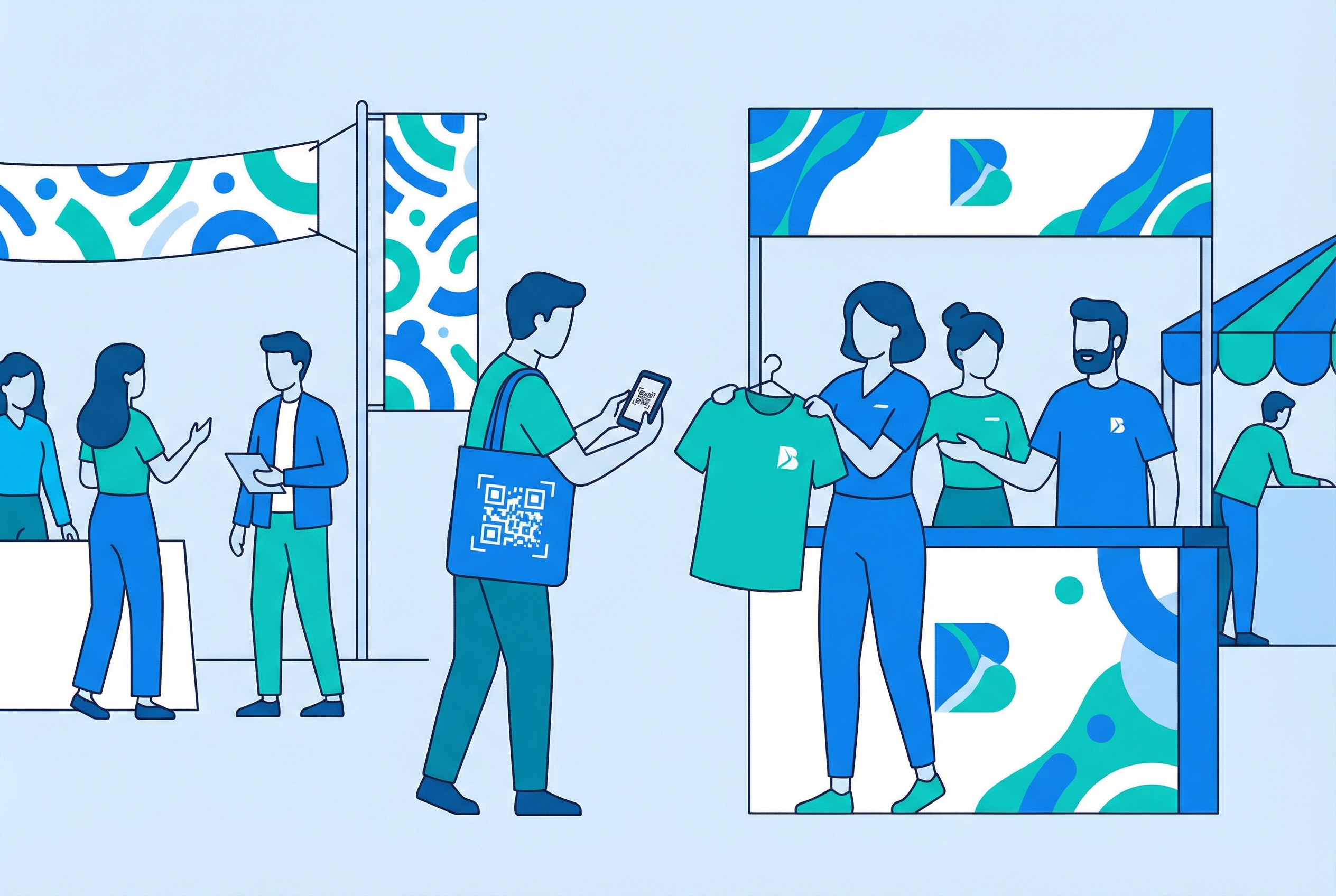
From indie musicians to global brands, businesses across every industry are integrating QR codes into their merchandise strategy. Here are the six most impactful applications.
QR codes supercharge giveaway campaigns by making every item part of an ongoing engagement funnel. Add a QR code to branded notebooks, USB drives, phone chargers, power banks, or tote bags that links to a product demo, a discount code, or a competition entry page. Unlike merchandise without a QR code, every scan is tracked so you can measure campaign performance and identify which events or audiences generate the most conversions. Pair giveaways with Feedback QR codes to collect valuable customer insights at the same time.
At events and conferences, branded merchandise is a staple — but QR codes make it interactive. Print QR codes on lanyards, branded bags, water bottles, or t-shirts that link to the event schedule, speaker bios, session recordings, or post-event surveys. After the event, dynamic QR codes can be updated to redirect attendees to future event announcements or exclusive follow-up content, giving your merchandise a second life long after the event closes. Trade shows especially benefit from merch QR codes that capture leads and drive booth traffic.
For musicians and artists, merchandise is a primary revenue stream and a fan engagement tool. QR codes on tour t-shirts, posters, vinyl sleeves, stickers, and hats can link to exclusive content: unreleased tracks, behind-the-scenes videos, merch shop discounts, or upcoming tour dates. A QR code on a sticker is also a cost-effective way to grow social media followings — link directly to a Social Media QR code landing page where fans can follow across all platforms in one tap.
QR codes on branded clothing are increasingly popular in fashion and retail. Brands embed QR codes inside garment labels, on sleeve patches, or printed directly onto fabric to provide care instructions, brand storytelling, sustainability credentials, or exclusive lookbook content. In the fashion industry, QR-enabled clothing is also a powerful anti-counterfeiting tool, allowing customers to verify authenticity with a single scan. Link your clothing QR code to a vCard, website, or product page using URL QR codes.
For business services and B2B companies, corporate gifts embedded with QR codes make a memorable impression. Add a QR code to a branded pen set, leather portfolio, calendar, or desk accessory that links to a vCard QR code with the sender's full contact details, a company introduction video, or a personalized welcome page. This turns a standard corporate gift into a networking tool and keeps the giver's brand top-of-mind every time the recipient uses the item at their desk.
Subscription box brands and e-commerce retailers are using QR codes on branded inserts, packaging tape, and promotional items included in shipments to enhance the unboxing experience. Scan to watch a how-to video, access a loyalty rewards portal, leave a product review, or unlock a discount on the next order. Link these to URL, Feedback, or Image QR codes depending on the content goal. For brands shipping at scale, Bulk QR code generation makes it easy to create unique codes for each product or campaign.

The data behind promotional merchandise and QR code adoption paints a compelling picture for marketers in 2026. Here are the key figures that justify integrating QR codes into every piece of branded merchandise you produce.
Together, these figures confirm that branded merchandise already enjoys exceptional reach and recall — and QR codes amplify every metric by making each item actively trackable and engaging. For an in-depth look at the broader market, see our QR code statistics for 2026 roundup.
Creating professional, brand-ready QR codes for merchandise with Supercode takes just a few minutes. Here's a step-by-step guide.
Select the QR code type that matches your merchandise campaign goal. For most merchandise applications, the best options are:
Log in to Supercode, select your QR code type, enter the destination URL or content, and click Save. Then use Supercode's design tools to customize your code: change colours to match your brand palette, add your logo to the centre of the QR code, adjust the eye and body styles, and preview how it will appear on your merchandise. A well-designed, branded QR code is 25-40% more likely to be scanned than a plain black-and-white code. For full design guidance, read our QR code design guide.
If you're running multiple merchandise campaigns simultaneously — trade shows, product launches, artist tours — keep your workspace organized by saving each QR code to a dedicated folder in Supercode's dashboard. Folders can be shared with your marketing and production teams so everyone has access to the right codes at the right time.
Before sending artwork to the printer, always test your QR code by scanning it with multiple devices (iPhone and Android) and in varying light conditions. Check that the destination loads correctly on mobile. For batch merchandise, print a test item first and scan from the intended scanning distance. Our QR code printing guide covers everything from minimum print sizes to colour contrast requirements.
Once your merchandise is in circulation, monitor scan performance in the Supercode analytics dashboard. Track total scans, scan locations, device types, and scan trends over time. This data helps you understand which events, audiences, and merchandise types drive the most engagement — giving you a clear picture of your campaign ROI. For a complete walkthrough of available metrics, see our guide to QR code tracking.
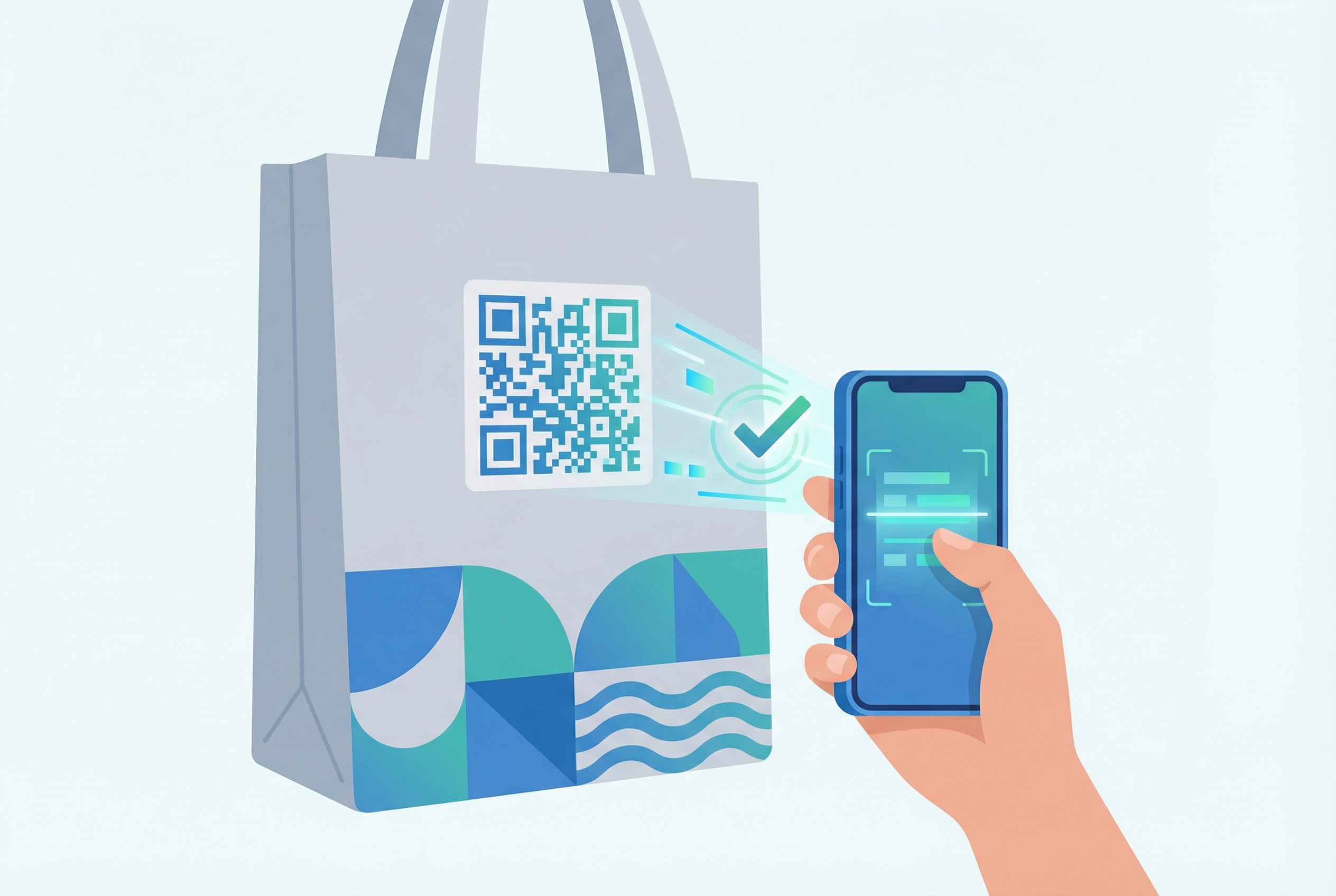
Following these best practices ensures your merchandise QR codes scan reliably, look professional, and deliver maximum engagement.
A QR code on merchandise must be at least 2 cm × 2 cm (approximately 0.8 inches) to scan reliably at arm's length. For items scanned from further away — like a banner, display stand, or outdoor t-shirt — scale up proportionally. Items like mugs, notebooks, and tote bags generally benefit from codes sized at 3-4 cm. Never scale a QR code so small that individual modules (the small squares) merge. Consult our printing guide for size recommendations by material type.
Because merchandise has a long physical lifespan — often 12 months or more — always use dynamic QR codes rather than static ones. Dynamic codes let you update the destination URL at any time without changing the printed code. If your event changes venue, your product page updates, or a seasonal promotion ends, you can redirect the code to the right content instantly — no reprinting required. This is especially important for high-volume merchandise runs where reprinting would be costly.
Your QR code is part of your brand asset, not an afterthought. Use Supercode's design tools to match the code colours to your brand palette, embed your logo, and ensure sufficient contrast for reliable scanning. Avoid placing the QR code on busy or patterned backgrounds — maintain a quiet zone (clear border) of at least four module widths around the code. For detailed design guidance, read our custom QR code design guide.
A QR code without context is often ignored. Always include a short CTA near the code: "Scan for 10% off", "Scan to follow us", "Scan for exclusive content", or "Scan to register". The CTA should be printed directly on the merchandise or on an accompanying label. Research from Supercode's own campaigns and broader industry data shows that QR codes with a clear CTA achieve significantly higher scan rates than unaccompanied codes.
Place QR codes where they are easy to see and scan. On tote bags and apparel, the front side at chest height is ideal. On mugs and cups, avoid wrapping the code around the curve — place it on the flattest part of the side. On notebooks, the back cover or inside front page works well. For flat items like stickers, placemats, and coasters, any surface works. Avoid placing codes on seams, zips, or highly curved surfaces where distortion could prevent scanning.
QR codes work best on flat, smooth surfaces with sufficient space for the minimum 2 cm × 2 cm size requirement. The most effective merchandise types include tote bags, notebooks, mugs and drinkware, t-shirts (front chest area), stickers, USB drives, lanyards, phone cases, and branded coasters. Items that people use daily — like drinkware and bags — generate the highest number of repeat scans and ongoing brand impressions. Items distributed at events and trade shows also perform well due to the high concentration of engaged recipients in one place.
The minimum recommended size for a merchandise QR code is 2 cm × 2 cm (0.8 × 0.8 inches). For items likely to be scanned from further away, or on larger items like tote bags and clothing, aim for 3-5 cm. The key rule is that the code must be large enough that individual modules (the small black squares) are clearly distinct and not merging. Always test scan your printed code before full production runs. See our QR code printing guide for detailed size recommendations by item type.
Yes — if you use a dynamic QR code (available on all Supercode paid plans). Dynamic codes store a redirect URL on Supercode's servers, not inside the code itself, so the printed code never changes but its destination can be updated at any time from your dashboard. This is essential for merchandise with a long shelf life. Static QR codes cannot be updated after printing, which is why dynamic codes are always recommended for physical merchandise campaigns.
Supercode's analytics dashboard tracks every scan on your dynamic QR codes in real time. You can view total scans, unique scans, scan timestamps, geographic locations, and device types (iOS vs Android). For merchandise distributed across multiple events or regions, this data helps you understand where your items are generating the most engagement. Set up scan notifications to be alerted when a code reaches a certain scan threshold, or export data for use in your broader marketing analytics. Read our full QR code tracking guide for more detail.
Yes. QR codes can be printed directly onto clothing and fabric using standard screen printing, digital textile printing, or embroidery (for high-contrast woven designs). For best results, print on flat, light-coloured sections of the garment — the front chest, back panel, or sleeve — and ensure the contrast between the code and background is high enough for reliable scanning. Avoid stretchy or heavily textured fabrics that may distort the code. Test the printed code on a sample garment before full production.
For giveaway merchandise, the best QR code type depends on your campaign goal. Use a URL QR code to direct recipients to a landing page with a competition entry form or product page. Use a Social Media QR code to grow your following. Use a Feedback QR code to collect customer opinions. For large-scale giveaways with unique codes per recipient, Bulk QR code generation lets you create hundreds of unique codes at once from a CSV file. All these types are available on Supercode's plans.
Branded merchandise is already one of the most cost-effective and enduring marketing channels available — but adding a QR code makes every item work harder for your brand. From trackable giveaways and interactive event merch to corporate gifts that double as networking tools, QR codes on merchandise connect the physical and digital in ways that drive measurable results in 2026 and beyond.
Supercode makes it easy to create professional, fully customized QR codes for any type of merchandise. Design your code to match your brand, track every scan in real time, and update your destination URL at any time — all without reprinting. Explore the full range of QR code solutions or browse our use cases by material for more inspiration. Ready to get started? Sign up for free on Supercode and create your first merchandise QR code in minutes.
Head to our FAQs section or reach out to us directly on info@supercode.com
Sign up for free