
For years, QR codes were treated as a throwaway marketing gimmick — a quick link to a landing page, printed on a poster and forgotten. That story is over. In 2026, the global QR code market is projected to reach $15.23 billion, growing at 16.82% annually through 2031 — and the forces driving that growth have nothing to do with temporary campaigns. They are rooted in enterprise infrastructure, government mandates, payment systems, and security. This guide cuts through the noise to deliver the validated QR code trends that are genuinely reshaping business in 2026.
The QR code market's trajectory is no longer speculative. Mordor Intelligence data confirms the market grew from $13.04 billion in 2025 to $15.23 billion in 2026, with a clear path to $33.14 billion by 2031. Three structural forces are driving this growth simultaneously: the mass adoption of QR payments, the imposition of government compliance mandates, and the enterprise-level demand for centralized QR code governance.
What makes 2026 a genuine inflection point is the convergence of all three. Payments, regulation, and enterprise management are no longer isolated trends — they are reinforcing each other. A business that deploys QR codes for payment also needs them for EU Digital Product Passport compliance, and both use cases require the same centralized governance infrastructure. Understanding each trend individually, and how they interconnect, is essential for any serious QR code strategy this year.
For a deeper look at the underlying numbers, our QR code statistics 2026 report covers the full market analysis, consumer adoption data, and industry-by-industry breakdown.

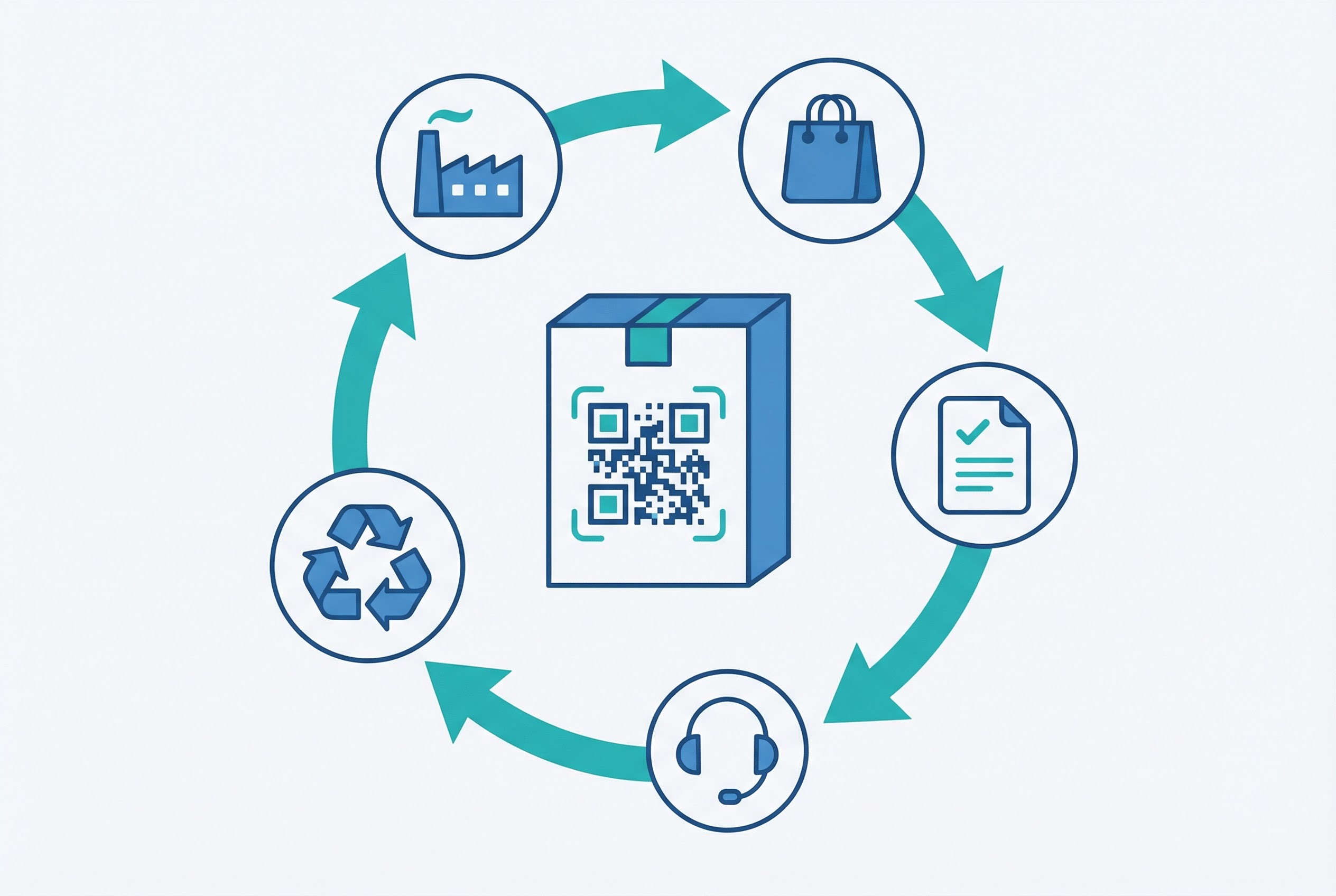
The single most important conceptual shift of 2026 is this: QR codes are no longer disposable assets tied to a single campaign. They are now deployed as permanent digital entry points embedded into products, packaging, and physical assets for their entire lifecycle.
Consider what a single QR code on a product can do across its lifespan:
This lifecycle management model imposes two non-negotiable requirements: codes must be updatable without reprinting, and they must be centrally governed. A QR code printed on millions of product units cannot be reprinted every time regulations change or a URL breaks. This is why enterprises have made dynamic QR codes their default — and why platforms like Supercode's QR code generator are built to treat codes as managed digital assets with ownership, update protocols, and audit trails.
The packaging industry is at the forefront of this shift. QR codes on product packaging are transitioning from optional brand enhancements to mandatory compliance tools, particularly under EU regulations explored below. Brands that have already established lifecycle-aware QR workflows will have a significant head start.
QR code payments are no longer emerging — they are mainstream. The global QR payment market was valued at $12.54 billion in 2024 and is projected by Grand View Research to reach $61.73 billion by 2033, growing at a 20% CAGR. That growth rate reflects structural adoption, not hype.
The reasons are compelling for both sides of the transaction. Businesses benefit from lower transaction fees than traditional card networks, hardware-free checkout infrastructure, and faster throughput. Consumers get a fast, contactless payment experience that requires nothing beyond their smartphone camera. In restaurant settings, 78% of diners now prefer QR codes for ordering and payment — a remarkable shift from the 2020 perception of QR menus as a temporary pandemic fix.
Standardization is accelerating adoption further. The EU Payment Standard EN 18184:2025 defines exactly how payment information must be structured within a QR code, ensuring interoperability across payment providers throughout Europe. This removes the fragmentation friction that previously slowed adoption and builds the trust needed for consumers to scan confidently.
For businesses in restaurants, retail, and hospitality, QR-based payment integration is moving from competitive advantage to baseline expectation. Customers arriving at a venue with no QR payment option in 2026 are increasingly likely to notice its absence.

Perhaps the most powerful — and least optional — driver of QR code adoption in 2026 is government regulation. Across the globe, authorities are mandating QR codes to enhance transparency, safety, and compliance, converting the technology from a marketing choice into a legal necessity.
Chile SUBTEL Resolution 737 makes QR codes mandatory on all short-range wireless devices sold in the country, effective February 22, 2026. This covers products using WiFi, Bluetooth, and RFID. The QR code must link to a public webpage containing detailed technical specifications, test reports, and legal information — all kept current. Non-compliance carries fines reaching $75,000 USD.
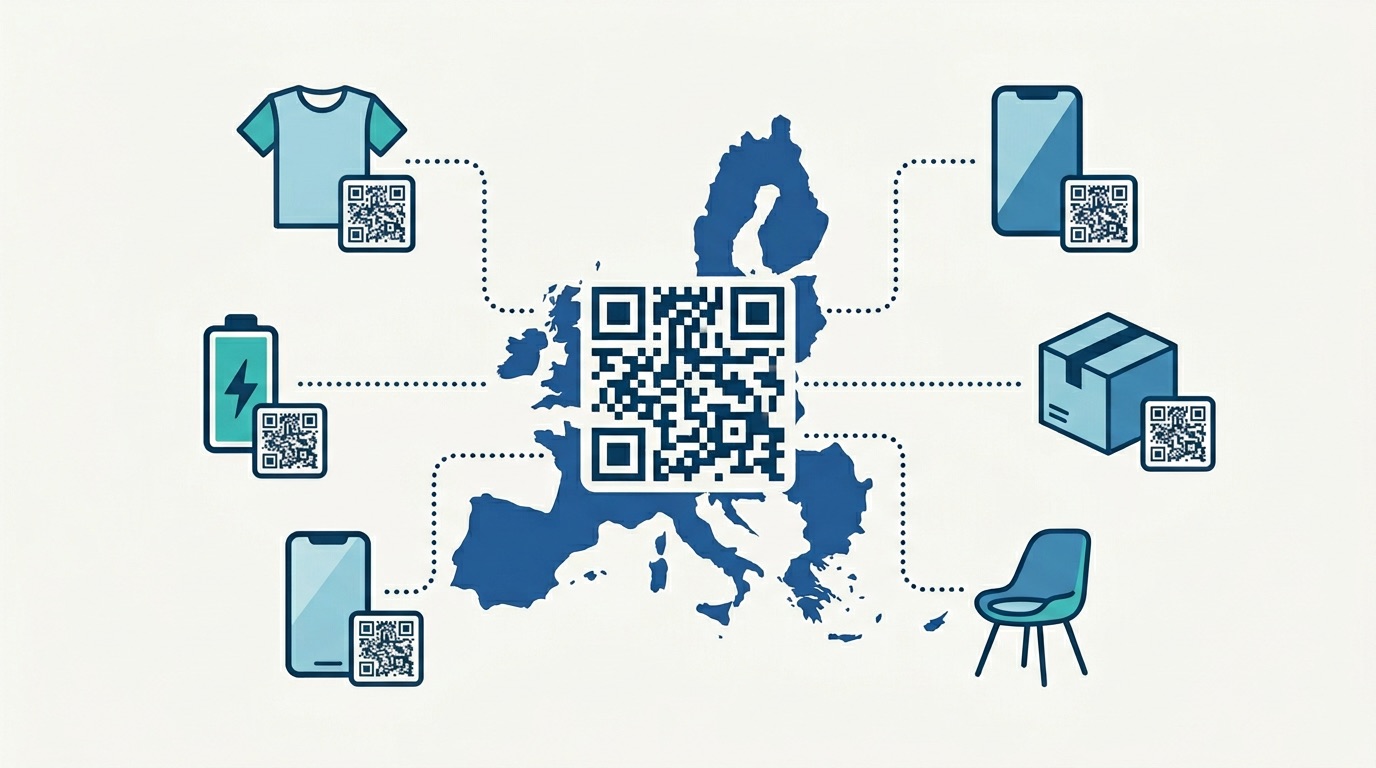
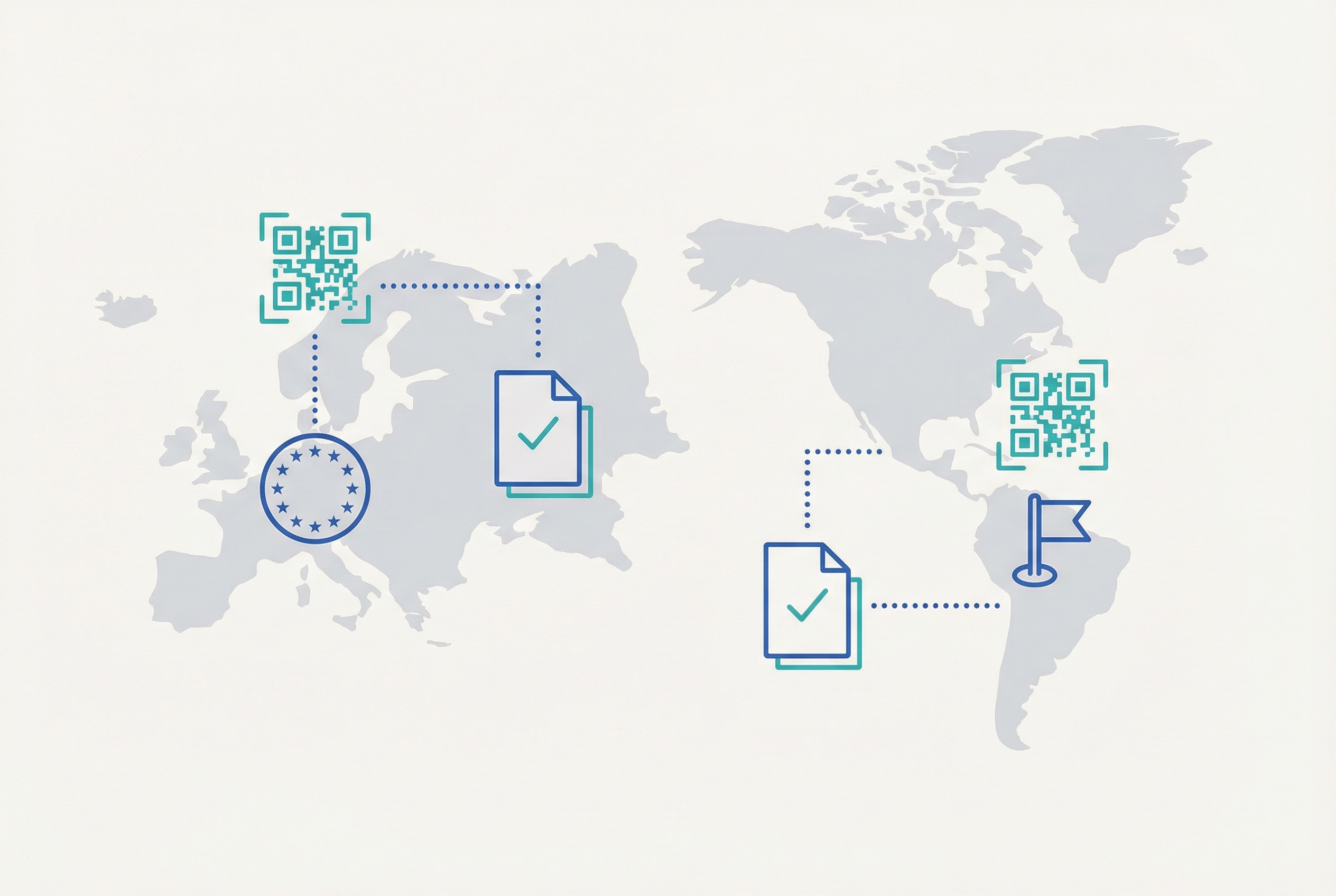
EU Digital Product Passport (DPP) is the larger structural mandate. According to ITICP, the EU establishes a central DPP registry in July 2026, with batteries and energy-intensive industrial products as the first mandatory categories. Textiles, footwear, iron, steel, aluminum, and tires follow in 2027, with all products sold in the EU required to carry a DPP by 2030. The DPP is primarily linked via QR codes, NFC, or RFID — and QR codes are the most practical, low-cost carrier for most product categories.
The DPP must contain a product's full identity: raw materials, production methods, environmental impact, carbon footprint, recyclability, and compliance certificates. Critically, the data must remain accessible for up to 10 years after point of sale. This is not achievable with a static QR code pointing to a fixed URL. It demands a dynamic QR code system with version history, access controls, and audit trails.
For any business selling into the EU, this is no longer a future consideration — it is an immediate compliance requirement. Our dedicated guide to sustainable marketing with QR codes explores how forward-thinking brands are already using DPP-ready QR code infrastructure to build environmental credibility alongside legal compliance.
As QR code usage scales from dozens to thousands or millions of codes across an organization, the chaos of ad-hoc creation becomes a serious business risk. Different teams generate codes with different tools, pointing to different domains, with no central oversight. Links break. Brand guidelines go ignored. Codes pointing to outdated content remain printed on products in the field. This phenomenon — QR code sprawl — is the defining enterprise QR problem of 2026.
The antidote is centralized governance. Enterprises are rapidly consolidating QR code creation, management, and tracking onto unified platforms that provide a single source of truth. This shift enables four critical capabilities:
Enterprise-grade bulk QR code management is no longer a nice-to-have feature. Enterprises running global campaigns across retail, healthcare, logistics, and manufacturing need infrastructure — not individual code generators. Our comprehensive guide to enterprise QR code strategy details how large organizations are building governance frameworks that scale.

Dynamic QR codes held a 64.35% market share in 2025 according to Mordor Intelligence — and that share is growing at 18.85% CAGR through 2031. The market has decisively moved on from the debate between dynamic vs. static QR codes. For any serious business use case, dynamic is the standard.
The reasons are structural, not preferential. Static QR codes encode the destination permanently. If the URL changes, the code is dead. There is no analytics, no ability to A/B test destinations, and no way to update content after printing. For a company that prints QR codes on product packaging at scale, static codes represent a permanent liability.
Dynamic QR codes solve all of this. The code itself never changes — only the destination it resolves to. This means:
For organizations managing regulatory content — like EU DPP compliance data — dynamic codes are the only viable path. Regulatory requirements evolve, and the information linked from a printed QR code must be updatable long after the product leaves the factory floor.
With governance and dynamic capability as the foundation, the next evolution is intelligence. In 2026, a single QR code rarely points to a single static webpage. Instead, it serves as an entry point to a context-aware experience that adapts based on who is scanning, where they are, and when.
A QR code on industrial machinery can deliver different content to four different audiences from the same physical code:
This is achieved through rules engines within advanced QR management platforms that factor in user role, geographic location, time of day, device type, and the known status of the asset being scanned. AI personalisation layers are now being integrated into these systems, allowing the destination experience to adapt dynamically based on prior scan behavior — serving a first-time scanner a product overview while serving a repeat user a loyalty reward.
For marketers, context-aware QR codes fundamentally change the value proposition of a scan. The jump from "link to a webpage" to "deliver the right information to the right person at the right moment" is the difference between a QR code as a passive redirect and as an active, intelligent customer touchpoint. This approach transforms customer experience at every physical interaction point.
Web-based Augmented Reality (WebAR) is the most visually dramatic evolution in QR code experiences for 2026. By scanning a QR code, users can launch immersive 3D experiences directly in their mobile browser — no app download required. This removes the single biggest barrier to AR adoption: installation friction.
The applications are genuinely transforming customer engagement across categories:
For brands competing on experience differentiation, WebAR via QR codes represents a meaningful capability gap. Early adopters in luxury, FMCG, and retail are already using it to turn packaging into a media channel. The barrier to entry has dropped dramatically as WebAR frameworks have matured, making this accessible beyond enterprise-scale budgets.
The explosive growth in QR code adoption has attracted an equally explosive growth in QR-based attacks. QR code phishing — known as quishing — surged dramatically in 2025. According to Keepnet Labs, quishing incidents grew 5x between August and November 2025 alone, jumping from 46,000 to 250,000 cases. QR codes now account for 12% of all phishing attacks, and 68% specifically target mobile users.
Quishing exploits a critical security gap: traditional email security filters scan for malicious URLs in message bodies, but a QR code image bypasses these filters entirely. The malicious link is embedded in the image, not the text, and executes on a personal smartphone that is typically outside corporate security controls. Business executives are targeted 42 times more often than regular employees.
The enterprise response to quishing centers on three controls:
For a comprehensive breakdown of QR code security risks and how to mitigate them in 2026, see our guide to QR code safety and quishing.

Across all eight trends above, a common thread emerges: the businesses best positioned in 2026 are those that treat QR codes as managed infrastructure, not one-off graphics. Acting on these trends requires a platform built for governance, analytics, and scale. Here is how to get started:
Supercode is built for every stage of this progression — from generating your first QR code marketing campaign to managing enterprise-scale deployments with governance controls, branded domains, and real-time analytics. Explore Supercode's features and pricing — every feature on every plan, or start building your 2026 QR code infrastructure today.
The most significant trend is the shift of QR codes from disposable marketing assets to permanent, mission-critical enterprise infrastructure. Organizations are now deploying QR codes as managed digital assets that serve a product's entire lifecycle — from manufacturing to end-of-life — rather than treating them as campaign-specific graphics to be discarded.
For any business or enterprise use case, static QR codes present a serious liability. They cannot be updated after printing, provide no analytics, and cannot be deactivated if compromised. Dynamic QR codes — which held 64.35% market share in 2025 — are the undisputed standard. Static codes are only appropriate for permanent, never-changing information such as a personal contact card.
Quishing is QR code phishing — attackers embed malicious URLs inside QR code images to bypass traditional email security filters. In late 2025, quishing attacks grew 5x in just three months, and QR codes now account for 12% of all phishing incidents globally. Mitigation requires branded domains, centralized monitoring, and dynamic codes that can be instantly deactivated.
The EU Digital Product Passport (DPP) is a mandatory digital record containing a product's full identity: materials, production, environmental impact, and compliance data. The EU establishes a central DPP registry in July 2026, with batteries as the first mandatory category. QR codes are the primary carrier technology. Any business selling products in the EU must plan for DPP compliance — and dynamic QR codes are the only practical way to keep DPP content updated over a product's multi-year market life.
QR payment adoption is accelerating because of a genuine win-win: businesses gain a hardware-free, low-fee payment channel, while consumers get the fastest contactless checkout experience available. The market is projected to grow from $12.54 billion in 2024 to $61.73 billion by 2033. EU payment standardization (EN 18184:2025) is removing the last significant adoption barrier by ensuring interoperability across providers.
Web-based Augmented Reality (WebAR) delivers immersive 3D experiences directly in a mobile browser — no app download required. QR codes are the primary launch mechanism for WebAR, making a physical product or printed piece the entry point to an interactive brand experience. Leading brands are using WebAR via QR on packaging, fashion labels, billboards, and furniture to create experiences that drive engagement and reduce purchase hesitation.
Centralized governance means managing all of an organization's QR codes from a single platform, with defined ownership, access controls, standardized templates, branded domains, and full audit trails. It is the antidote to "QR code sprawl" — the disorder that occurs when different teams create codes with different tools, leading to broken links, inconsistent branding, and zero accountability. At scale, governance is not optional; it is the difference between a QR code strategy and QR code chaos.
Start by auditing every QR code currently deployed across your organization — identifying static codes, broken destinations, and any codes with no analytics. Migrate ongoing use cases to dynamic codes, establish a governance policy with defined ownership and approval workflows, and connect every code to measurable analytics goals. Supercode provides the full stack: dynamic code creation, bulk generation, branded domains, real-time analytics, and team access controls — all from one platform.