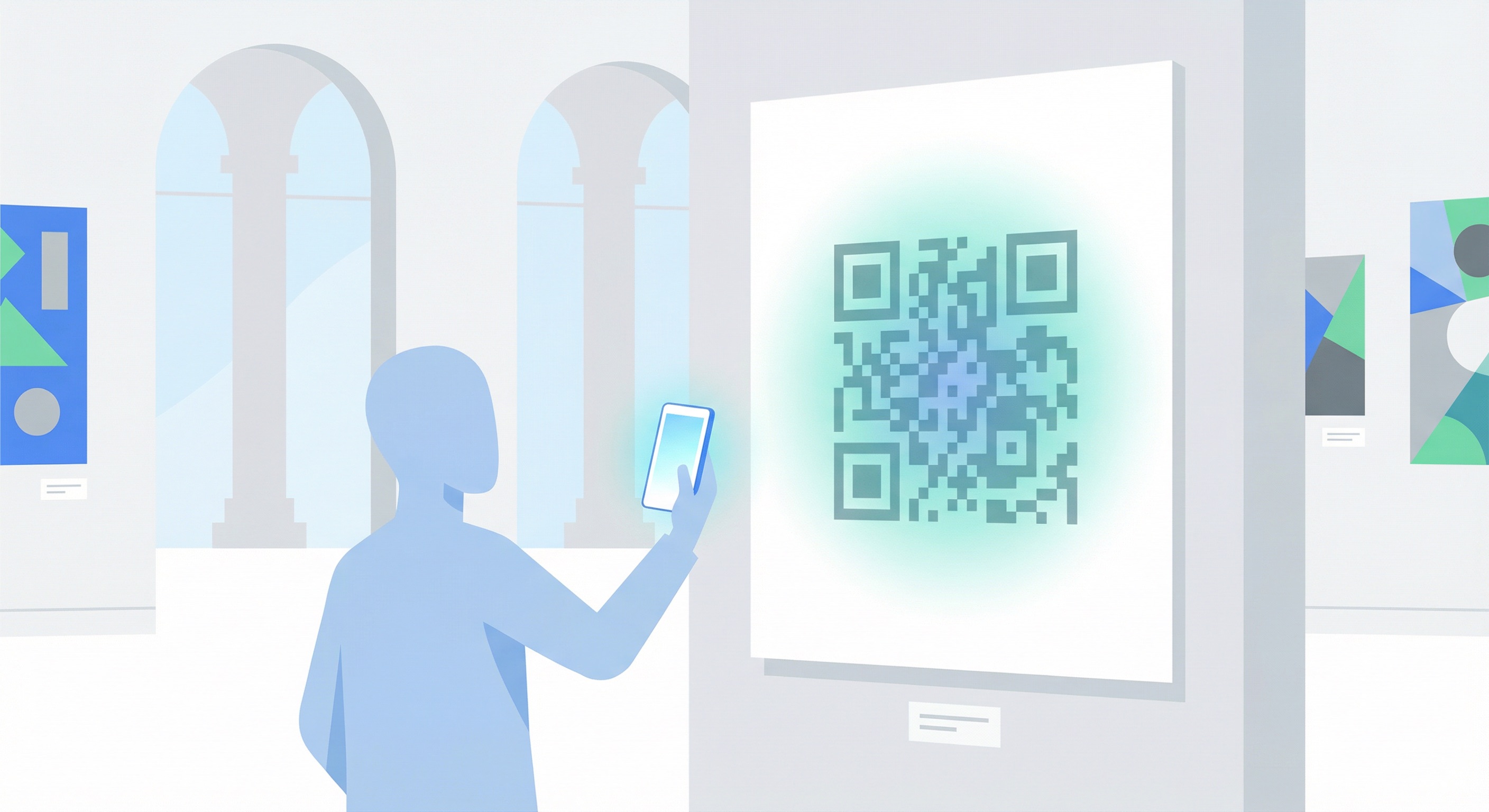

QR codes have fundamentally changed how visitors engage with museums, galleries, zoos, aquariums, planetariums, and leisure attractions of every kind. With QR code adoption among cultural venues surging from 35.4% before 2020 to 97.9% today — a 62.5% jump driven by the pandemic-era touchless revolution — places of leisure are now using dynamic QR codes to deliver richer visitor experiences, slash operational costs, and gather meaningful analytics. In 2026, QR codes are no longer a novelty at cultural venues; they are an essential engagement infrastructure. According to the Attractions.io Digital Guest Experience Report 2024, 72% of guests say that high-quality digital experiences increase their brand trust — and 63% are willing to pay more for tickets when their digital needs are met.
Whether you manage a natural history museum, a contemporary art gallery, a wildlife park, or a seasonal science fair, this guide covers everything you need to know about deploying QR codes effectively — from the key benefits and real-world applications through to a step-by-step creation guide and QR code marketing best practices. You can explore the broader use case library or jump straight to our QR code generator to get started.
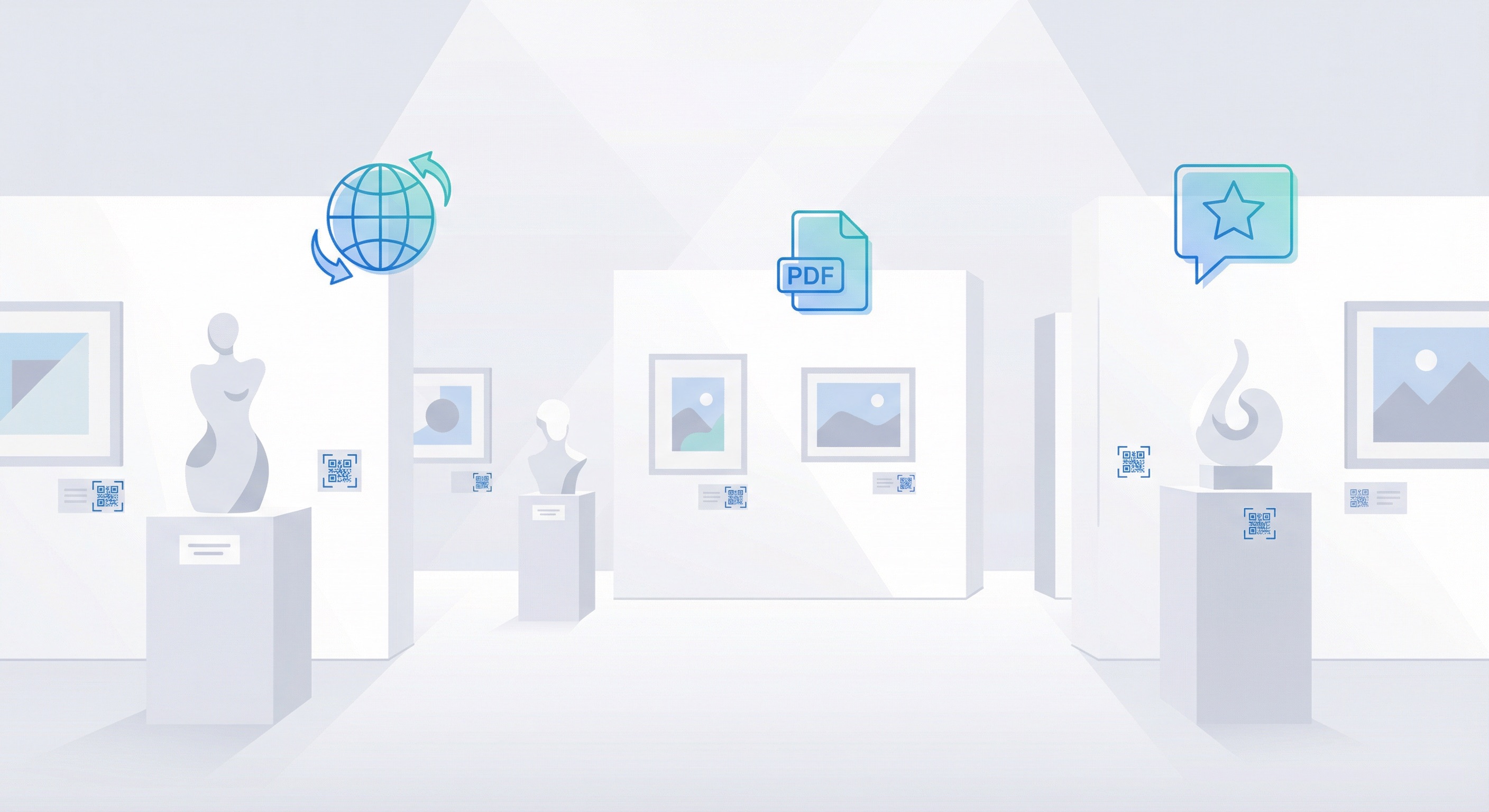
Physical exhibit labels can only hold so many words before they overwhelm visitors. URL QR codes placed next to each exhibit, habitat, or artwork give curious visitors an on-demand gateway to deep-dive content — curator interviews, video documentaries, interactive timelines, and augmented reality (AR) experiences — without cluttering the space with text-heavy panels. Visitors who want more can get it instantly; those who prefer to move on are not held back. This approach is especially valuable for education-focused institutions where field-trip students can scan codes and access curriculum-aligned worksheets or follow-up activities they can complete at home or in class.
Printed guides, audio tour booklets, and information leaflets represent a significant recurring cost for leisure venues — and they end up in the bin at the end of every visit. Replacing or supplementing printed materials with PDF QR codes and QR code brochures dramatically reduces paper consumption and printing budgets. Visitors scan once and store the guide on their own smartphone, eliminating litter from beautiful public spaces while giving staff one less operational burden to manage. This also aligns with sustainability goals that are increasingly important to modern visitors and funders alike.
Seasonal exhibitions rotate. Animal habitats change. Conservation stories evolve. With static printed information, any update requires reprinting and replacing physical materials. Dynamic QR codes decouple the physical code from its destination — you can update the URL, content, or landing page at any time from the Supercode dashboard without ever touching the printed code. A zoo's habitat sign can point to a springtime conservation campaign in April and a winter feeding schedule in December, all from the same physical QR code. This flexibility is invaluable for venues with rolling exhibitions or seasonal programming.
Leisure attractions, particularly those in major tourist destinations, welcome visitors from around the world. Printing multilingual guides for every language is impractical and expensive. QR codes bridge this gap elegantly: a single code can direct visitors to a landing page that auto-detects their device language, or they can manually select from a menu of languages. This is particularly powerful when combined with tourism-focused content strategies, where international visitors represent a significant portion of total footfall. WhatsApp QR codes offer another avenue — international visitors can message the venue directly via a platform they already use, at no cost, regardless of local calling rates.
Understanding what visitors love — and what frustrates them — is critical for improving exhibitions and operations. Feedback QR codes placed on exit signs, ticket stubs, or near café areas allow venues to collect star ratings, open-text comments, and structured survey responses with minimal friction. Supercode's analytics dashboard tracks every scan, giving venue managers data on which exhibits generate the most interest, what times of day see peak engagement, and which QR placements are most effective. This real-time data turns previously invisible visitor behaviour into actionable intelligence, helping venues allocate budgets and design better experiences. Read more in our QR code tracking guide.
The pandemic normalised touchless interactions, and visitor expectations have shifted permanently. QR codes enable entirely contactless ticketing, wayfinding, merchandise purchasing, and information access. For accessibility, audio guides delivered via QR codes serve visually impaired visitors without the logistical overhead of dedicated headset rentals. Self-paced audio and visual guides empower every visitor — from families with young children to older adults — to explore at their own speed and on their own terms. Pair these with display QR codes at key wayfinding points and you create a seamless, inclusive venue experience.
Museums use QR codes to bridge the gap between a physical artefact and the full story behind it. Place a URL QR code beside each exhibit and link to a rich landing page with high-resolution images, curator commentary, related video content, and downloadable PDF guides. The National Museum of China has integrated QR codes across more than 40 galleries, with every scan tracked to measure engagement per exhibit. Science centres can use QR codes on interactive stations to link to supplementary experiments, worksheets aligned with school curricula, or AR experiences that bring scientific concepts to life. For school groups, educational QR code applications are particularly effective for extending learning beyond the visit itself.
Art galleries benefit from QR codes placed beside individual works for deeper storytelling — artist biography, technique notes, provenance, and the option to purchase reproductions directly from a mobile-optimised store. Russia's Erarta Gallery does exactly this, placing QR codes beside each piece with links to educational content and purchase options, turning a gallery visit into a seamless commerce opportunity. Image QR codes work particularly well for showcasing high-resolution artwork details that are impossible to appreciate at viewing distance. Galleries can also use social media QR codes prominently in the entrance or gift shop to grow their following among engaged visitors.
Zoos and wildlife parks place QR codes at animal habitats to provide species profiles, dietary information, conservation status, and keeper diaries. Visitors — particularly children — love scanning to access fun facts, short videos, and AR experiences. The San Diego Zoo has pioneered QR-enabled tours, and Melbourne Zoo offers virtual zookeeper talks via QR links. Conservation messaging is especially powerful here: a QR code beside an endangered species habitat can link directly to a donation page or an adoption programme, turning curiosity into meaningful support. Bulk QR codes make it straightforward to generate unique codes for every habitat across a large park without manual repetition.
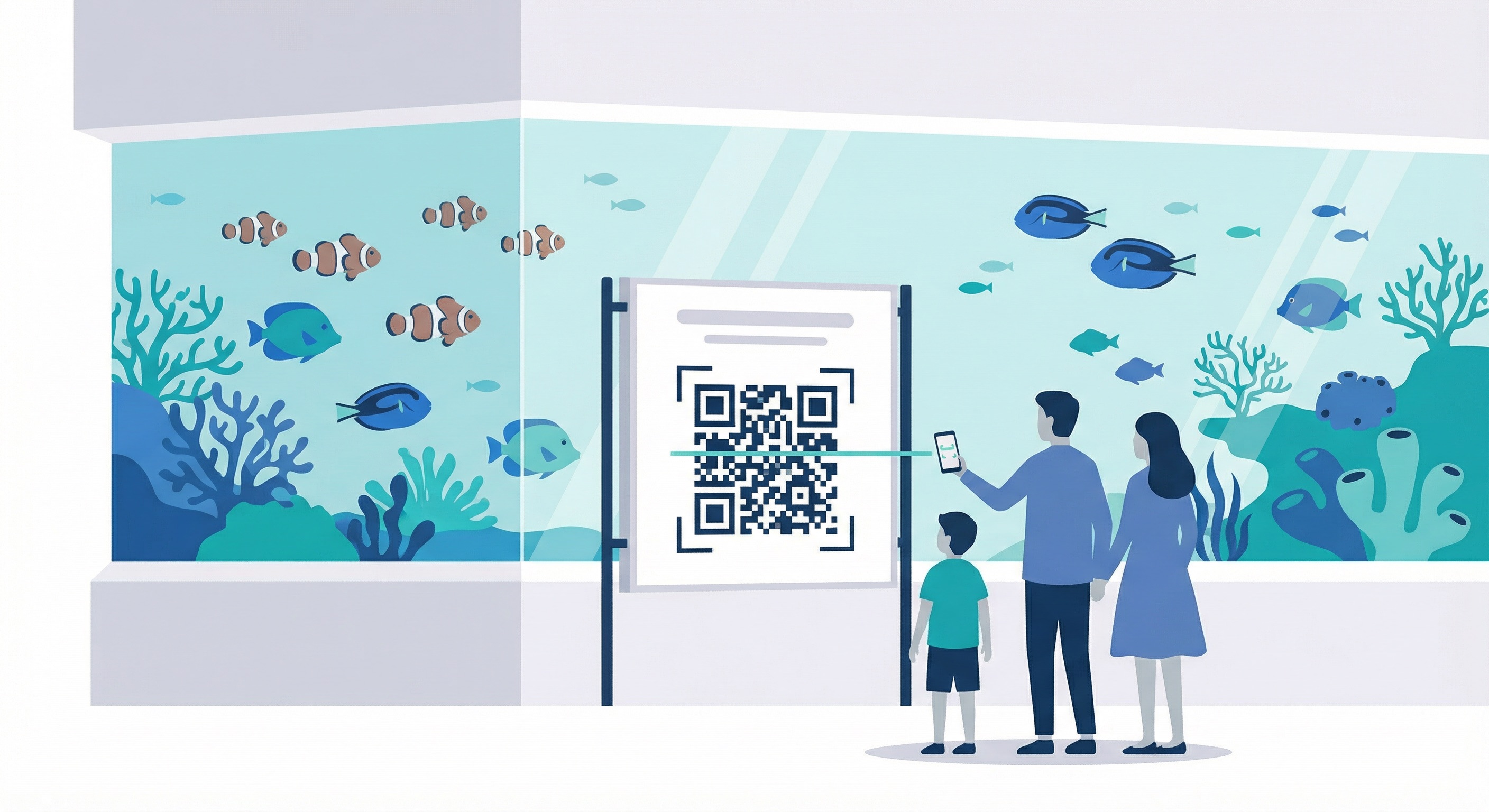
Aquariums use QR codes to enrich the underwater storytelling experience. Each tank or habitat can carry a code linking to species profiles, ocean conservation content, and behind-the-scenes aquarist videos. Visitors who are passionate about marine conservation can follow a dedicated learning path that continues well after they leave the building. QR codes on merchandise and café cups extend the brand interaction beyond the main exhibits and into take-home moments that sustain engagement.
The volume of scientific information available about astronomy is essentially unlimited, making planetariums ideal QR code environments. After a show, QR codes in the lobby or on seating cards can link visitors to the night sky maps shown during the programme, NASA resources, constellation guides, and related exhibitions. For children's programmes, gamified QR code trails through the facility can turn an astronomy lesson into an interactive adventure. Planetariums with regular touring shows can use dynamic QR codes to keep programme-specific content up to date without reprinting any physical materials.
Historic sites, heritage trails, and city attractions use QR codes to deliver audio tours, historical photography, and interactive timelines at specific points of interest. This synergy with city tour QR code strategies and tourism use cases is significant: visitors exploring an outdoor heritage trail can scan codes mounted on durable outdoor signage at each point of interest to receive rich multimedia content. A URL QR code can also link to a Google Maps route for the next stop, making self-guided navigation effortless. QR codes on posters and display signage work exceptionally well for outdoor heritage environments.
Seasonal events — science fairs, outdoor festivals, travelling exhibitions — benefit enormously from the flexibility of QR codes. Event organisers can use event management QR codes for ticketing, check-in, event schedules, and sponsor activations, all without producing expensive printed programmes that become obsolete the moment the schedule changes. Plain text QR codes are ideal for quick descriptions of individual installations, while feedback QR codes placed at exit points give event organisers actionable post-event data to improve future editions.
The data makes a compelling case for QR code investment in the leisure sector:
These figures underscore why leisure venues that delay QR adoption risk falling behind visitor expectations. The 15 most practical QR code uses across industries consistently highlight cultural and leisure venues as among the highest-impact deployment environments.

Creating professional, branded QR codes for your leisure venue takes minutes with Supercode's QR code generator. Here's a step-by-step guide:
Select the QR code type that matches your goal. For leisure venues, the most useful types are:
Enter your destination URL or content, then use Supercode's design tools to customise the code's colours, corner shapes, and logo so it matches your venue's brand identity. A well-designed QR code is more likely to be scanned — visitors respond better to codes that look intentional and professional rather than generic black-and-white squares. Visit our custom QR code design guide for tips on colour contrast, sizing, and logo integration. Learn how to create a QR code with our full step-by-step walkthrough.
Large venues may have dozens or even hundreds of QR codes across multiple galleries, floors, or seasonal campaigns. Supercode's folder system lets you organise every code into labelled collections — for example, "Permanent Collection", "Temporary Exhibition — Spring 2026", and "Visitor Services". Team members can access and manage specific folders without affecting unrelated campaigns, keeping your workspace clean and operational handovers simple.
Always test each QR code on multiple devices before printing. Print the code at sufficient size for the scanning distance at your venue — a wall-mounted panel in a large gallery hall requires a larger code than one on a tabletop information card. Outdoor venues should use weatherproof laminated or UV-resistant print materials. See our QR codes on posters and display QR codes guides for placement-specific advice. Check our pricing plans to find the right tier for your venue's scale.
QR codes work best where visitors already slow down or stop — beside exhibits, at habitat signs, near ticket collection points, or at café tables. Avoid placing them in high-traffic throughways where visitors won't pause to scan. For large outdoor venues like zoos or heritage parks, mount codes at eye level on weather-resistant signage at each point of interest. Studying your visitor flow data from Supercode's analytics can reveal exactly which placements drive the most scans and which need repositioning.
A QR code with no surrounding context will be ignored. Always pair the code with a brief, compelling call to action printed beside it: "Scan for the full story", "Hear from our curator", "Watch the feeding time video", or "Download your activity sheet". The CTA should make the benefit of scanning immediately obvious. This is one of the most important principles in QR code marketing and applies equally to leisure venues.
Every QR code scan starts a mobile journey. If your landing page is slow, hard to read, or not mobile-optimised, visitors will abandon it immediately. Ensure pages load in under three seconds on a mobile network, use large readable fonts, and avoid overwhelming visitors with the same information overload that QR codes were introduced to solve. Progressive web apps (PWAs) and responsive landing pages are the gold standard for QR-driven content delivery at attractions.
Any QR code that will be printed on permanent or semi-permanent signage — wall panels, wayfinding boards, habitat signs — should be a dynamic code. This means you can update the content it delivers at any time without replacing the physical code. If an exhibition changes, a species moves habitats, or a seasonal event ends, you update the destination in Supercode rather than reprinting physical materials. This is the single biggest operational advantage of dynamic QR codes over static alternatives.
Supercode's analytics dashboard gives you real-time data on scan volumes, device types, locations, and time-of-day patterns for every QR code in your venue. Use this data to identify your highest-performing codes (and replicate what makes them successful) and your lowest-performing placements (and investigate whether the code, the CTA, or the content needs to change). For a complete guide to QR code performance measurement, see our QR code tracking and analytics guide. This analytical approach mirrors best practices seen across retail and event management QR deployments.
URL QR codes are the most versatile and widely used in museums and galleries, linking visitors to exhibit pages, multimedia content, or audio guides. PDF QR codes are excellent for downloadable worksheets and digital brochures. For revenue-generating opportunities, image QR codes can link to a shop where visitors can purchase reproduction prints. Feedback QR codes are ideal for collecting visitor satisfaction data. Most venues deploy a mix of these types, each tailored to a specific touchpoint in the visitor journey.
QR codes improve the visitor experience by delivering rich, contextual information at the exact moment visitors want it — beside the exhibit, habitat, or artwork they are engaging with. They remove the friction of downloading dedicated apps (which only 2.47% of visitors do), enable self-paced exploration, support multiple languages, and allow visitors to save content for later use at home. Venues that deploy QR codes well report higher visitor satisfaction scores and increased likelihood of repeat visits and social media sharing.
QR codes can fully replace printed guides for most visitors and substantially reduce the need for dedicated audio tour devices. Since 91% of active iOS users have built-in QR scanners and Android has offered the same since 2017, the vast majority of visitors can access QR-linked content without any additional equipment. Progressive web apps delivered via QR codes can replicate the full functionality of a dedicated audio guide — including turn-by-turn navigation, audio commentary, and downloadable maps — without the cost or hygiene concerns of shared hardware. Many venues maintain a small stock of loan devices for visitors without smartphones as an accessibility backup.
Yes. QR codes work extremely well in outdoor environments when printed on weather-resistant materials such as UV-resistant laminate, aluminium signage, or engraved panels. For high-footfall outdoor placements, ensure the code is large enough to scan comfortably from standing distance (minimum 3 × 3 cm for close-range signs, larger for panels viewed from further away). Dynamic QR codes are particularly valuable outdoors because their content can be updated seasonally without replacing the physical sign. Columbus Zoo's 97% digital membership adoption demonstrates that even large, complex outdoor venues can achieve full QR implementation successfully.
Supercode's analytics dashboard automatically tracks every scan on your dynamic QR codes in real time, showing total scans, unique visitors, device types (iOS vs Android), geographic location of scanners, and scan patterns by time of day and day of week. This data enables leisure venues to measure engagement per exhibit, compare performance across galleries or zones, and identify which placements and content types generate the most visitor interest. Static QR codes do not offer scan tracking — only dynamic codes include built-in analytics. For a full breakdown of what QR analytics can reveal, see our QR code tracking guide.
Supercode offers a range of plans to suit venues of every size. You can create and test QR codes for free to evaluate the platform, and paid plans start at £29/month, providing access to dynamic QR codes with full analytics, custom branding, folder management, and bulk generation. For larger venues with multiple departments or high-volume code requirements, Enterprise plans include dedicated support and custom feature sets. Visit the pricing page for a full comparison, or contact the team to discuss a venue-specific solution.
Places of leisure that embrace QR codes in 2026 are giving their visitors something genuinely valuable: richer stories, more accessible information, and a more engaging, memorable visit. From a single museum gallery to a multi-site wildlife park, Supercode makes it straightforward to create, deploy, brand, organise, and track QR codes at any scale. Join the venues already using dynamic QR codes to modernise their visitor experience — and start turning every exhibit sign into an interactive gateway. Explore how QR codes are transforming other industries such as tourism, education, and events, or visit our solutions hub for the full picture.
Create your first leisure venue QR code free with Supercode →
Head to our FAQs section or reach out to us directly on info@supercode.com
Sign up for free

